
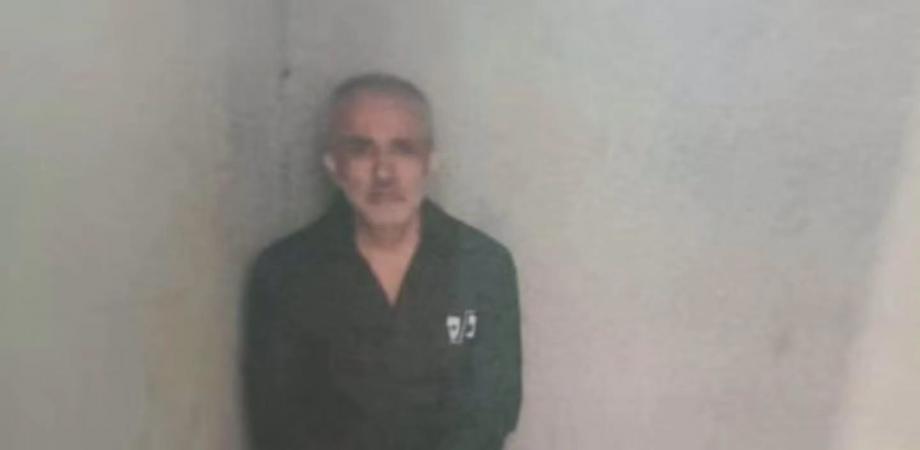
SAFA — Israeli forces used a photograph of Palestinian prisoner Ibrahim Hamed inside his solitary confinement cell to threaten Palestinians during field interrogations in the town of Silwad, northeast of Ramallah, on Tuesday night, in a practice the Palestinian Prisoner’s Society described as an attempt to exploit prisoners’ suffering to intimidate Palestinian society and target its collective consciousness.
In a statement issued Wednesday, the Palestinian Prisoner’s Society said Israeli soldiers showed the photograph to detainees and threatened them over Hamed’s fate in prison, using the conditions of imprisonment and the abuses endured by Palestinian prisoners as a means of psychological pressure and intimidation.
The incident occurred during an Israeli military raid on Silwad, where forces detained approximately 25 Palestinians and subjected them to field interrogations involving beatings and abuse. Three detainees were subsequently transferred to a hospital because of injuries sustained during the assaults.
The Palestinian Prisoner’s Society said the use of Hamed’s photograph went beyond directly threatening those detained, as it also targeted the place of Palestinian prisoners and resistance figures in the collective consciousness by attempting to associate them with fear, punishment, and the suffering they face inside Israeli prisons.
The organization stressed that this practice comes amid escalating torture, solitary confinement, and deprivation of basic rights in Israeli prisons, exposing the connection between the methods of repression used against Palestinians both inside and outside detention facilities.
It said these practices target Palestinians’ freedom, dignity, and collective consciousness.
According to the society, field interrogations conducted during Israeli military raids have increasingly become a means of abuse, accompanied by physical assaults and psychological pressure that threaten detainees’ safety and dignity.
The organization emphasized that the subsequent release of most detainees does not diminish the seriousness of the abuses they endured or erase the physical and psychological consequences of their detention and interrogation.
From Tuesday night until dawn Wednesday, Israeli arrest operations, detentions, and field interrogations affected more than 60 Palestinians across the occupied West Bank.
In addition to Silwad, the operations targeted Immatin, east of Qalqilya; Beit Dajan and Beit Furik, east of Nablus; and Al-Fawwar refugee camp, south of Hebron.
In another incident, the Palestinian Prisoner’s Society reported that Israeli forces arrested Yamen Amro from his home in the town of Dura, southwest of Hebron, after he had spent the day beside his father, who was suffering from cancer.
According to the family’s account, which was shared by the society, Amro’s father died at 6 a.m., while Yamen was denied the opportunity to say goodbye and remained unaware of his father’s death when the statement was issued.
The society said the timing of these incidents, alongside escalating abuses against Palestinian prisoners, reflects a policy of pressure that extends beyond detainees themselves to their families and communities through arrests, physical and psychological abuse, and intimidation.
Ibrahim Hamed’s Imprisonment and Years in Solitary Confinement
Ibrahim Hamed, born in 1965 in Silwad, northeast of Ramallah, is a prominent leader in Hamas, the Al-Qassam Brigades, and the Palestinian prisoners’ movement.
Israeli forces arrested him on May 23, 2006, after an eight-year pursuit, and an Israeli court subsequently sentenced him to 54 life terms.
Hamed had previously been arrested several times, while Israeli persecution also extended to members of his family, including his wife and two children.
Before his imprisonment, Hamed earned a bachelor’s degree in political science from Birzeit University, enrolled in a master’s program in international relations, and worked at research centers, where he prepared studies on the Palestinian cause.
Hamed has endured prolonged periods of solitary confinement. As of May 2024, the Palestinian Prisoner’s Society had documented approximately eight years of his detention in isolation, including seven consecutive years.
Source : Safa News


