
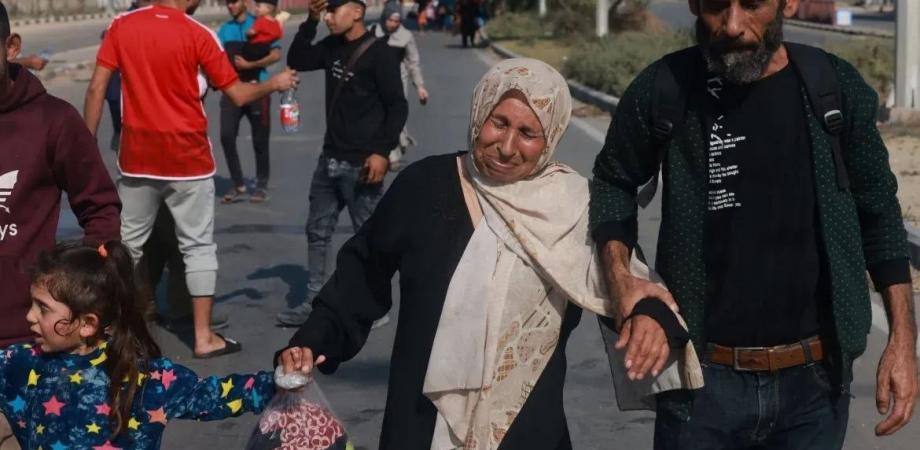
SAFA — Israel’s ongoing war on the Gaza Strip has devastated far more than homes and infrastructure. It has dismantled the economic foundations of Palestinian society, eroding the middle class, destroying livelihoods, and pushing thousands of families into poverty and a daily struggle for survival.
The destruction of businesses, widespread job losses, shrinking salaries, and the collapse of purchasing power have transformed the lives of families who once relied on regular incomes and stable employment.
Gaza’s middle class, long a driving force behind education, investment, local commerce, and social stability, now faces an unprecedented economic crisis.
Samih, a restaurant employee in Gaza, is among those struggling with the consequences of this economic collapse. Before the war, the restaurant employed more than 15 workers.
As sales plummeted and revenues declined, management was forced to scale back operations, lay off several employees, and reduce the salaries of those who remained.
Samih said workers were given two choices: lose their jobs entirely or accept wages determined by the restaurant’s monthly revenue. With virtually no alternative employment opportunities, they were forced to accept reduced and unpredictable payments.
Salaries Disappear as Families Struggle to Survive
The crisis has also engulfed government employees who once belonged to Gaza’s relatively financially secure middle class. Irregular salary payments, declining purchasing power, and difficulties using cash in local markets have placed additional pressure on struggling households.
Government employee Abu Osama Abed told the Palestinian newspaper Felesteen that he receives a partial salary payment of approximately 1,000 Israeli shekels every 80 to 90 days, an amount on which he must support a family of six.
Even receiving the money does not end his difficulties. Some merchants refuse to accept worn banknotes, while others increasingly favor electronic payments, making it harder for families to spend their already limited incomes on essential goods.
The scale of Gaza’s economic devastation is reflected in international assessments. A September 2026 report by the United Nations Conference on Trade and Development (UNCTAD) found that 92% of Gaza’s economic establishments had been destroyed or damaged, while unemployment had reached 78%.
Annual gross domestic product (GDP) per capita fell to approximately $212, equivalent to just 17% of its 2022 level.
The World Bank’s October 2026 Poverty and Equity report also documented a dramatic rise in poverty, from 63.7% before the war to levels approaching universal poverty across Gaza’s population.
Gaza’s Middle Class Loses Its Capacity to Recover
Economist Dr. Samir Abu Mdalala said Israel’s war had fundamentally transformed Gaza’s economic and social structure, identifying the erosion of the middle class and the widespread expansion of poverty among its most devastating consequences.
He explained that salaried employees, academics, teachers, independent professionals, merchants, and small-business owners had suffered enormous financial and professional losses.
Families that once relied on stable employment and regular earnings are now struggling to afford food, healthcare, and education.
Abu Mdalala stressed that the damage extends far beyond declining incomes. Workers have lost their jobs, business owners have lost their enterprises and capital, and professionals have been deprived of opportunities to use their skills and expertise.
This destruction of productive capacity threatens to undermine Gaza’s long-term economic recovery and reconstruction.
The economic collapse has also created a vicious cycle. As household purchasing power declines, demand for goods and services falls, forcing businesses to reduce operations or close entirely. This, in turn, leads to further unemployment, declining incomes, and deepening poverty.
Many households are now forced to borrow money, sell personal belongings, and cut spending on food, healthcare, and education simply to survive.
Rebuilding Gaza Requires Restoring Livelihoods, Not Just Providing Aid
Abu Mdalala outlined four key priorities for economic recovery, emphasizing that rebuilding Gaza must extend beyond emergency humanitarian assistance to restoring its devastated productive economy.
The first priority is restoring employment and income-generating opportunities by reopening businesses, supporting small and medium-sized enterprises, providing affordable financing, and helping workers, professionals, and graduates reenter the labor market.
The second is protecting household incomes and purchasing power through regular salary payments, expanded social protection programs, cash assistance, and measures to curb monopolistic practices and rising prices.
The third involves investing in education and human capital by protecting educational and healthcare institutions, expanding vocational training and employment opportunities, and supporting young people through digital and remote work opportunities.
The fourth is developing a comprehensive national economic and social recovery program focused on rebuilding the middle class rather than merely alleviating extreme poverty.
Such a program, he explained, must support economically productive households and sustainable businesses through clearly defined objectives and transparent implementation.
Gaza’s economic devastation cannot be measured solely in destroyed buildings, shuttered businesses, or unemployment figures. It is also reflected in families surviving on irregular salaries, workers accepting wages that cannot meet their basic needs, and parents forced to sacrifice their children’s education and healthcare to put food on the table.
Beyond the destruction of Gaza’s physical infrastructure, Israel’s war has shattered the livelihoods, financial security, and economic independence that Palestinian families spent generations building.
Source : Safa News


