
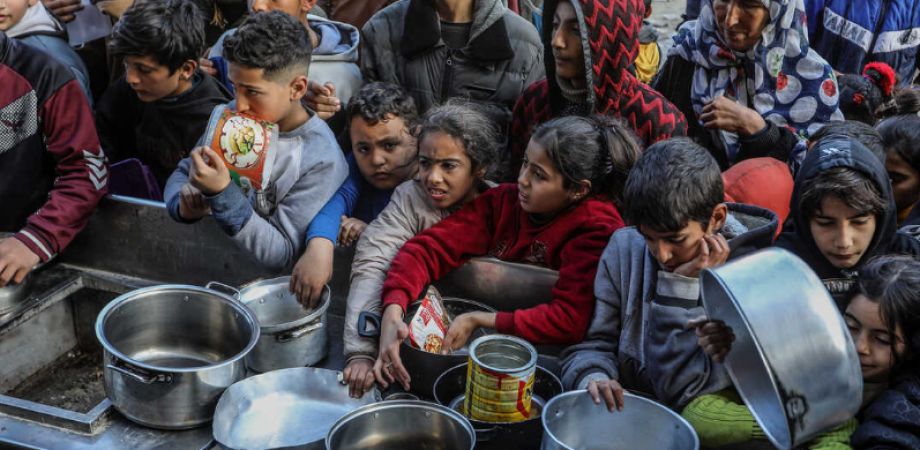
SAFA — The United Nations World Food Programme (WFP) has slashed food assistance in Gaza by nearly one-third amid a severe funding crisis, leaving approximately half a million Palestinians without its support as hunger threatens families already devastated by Israel's genocidal war.
In a statement issued Monday, WFP announced that the number of Palestinians receiving its food and cash assistance had fallen from 1.6 million in September to 1.1 million in October.
The cuts come as approximately 1.4 million Palestinians continue to face crisis-level food insecurity or worse, while 200,000 remain in emergency conditions requiring urgent assistance.
WFP warned that the limited improvements in Gaza's food security since the October 2025 ceasefire remain fragile and could quickly disappear as humanitarian funding declines and winter approaches.
Half a Million Palestinians Lose WFP Assistance
The funding shortage has forced WFP to reduce both the number of people receiving assistance and the amount of food distributed to families.
Food parcels have been halved, leaving households with one food basket instead of two.
Wheat flour allocations have also been reduced, while daily hot meal distributions have dropped from 250,000 to 150,000.
For Palestinians living in hard-to-reach areas, including communities near the Israeli-controlled "yellow line," hot meals will now be distributed every other day instead of daily.
WFP has also reduced the value of cash assistance provided to 75,000 families.
These reductions place additional pressure on displaced households that depend on humanitarian assistance to meet their basic food needs.
1.4 Million Palestinians Face Severe Food Insecurity
According to WFP, approximately 1.4 million people in Gaza, representing 67% of the population, face crisis-level food insecurity or worse under the Integrated Food Security Phase Classification (IPC).
The figure has declined from 1.6 million people, or 77% of the population, at the end of 2025.
However, WFP warned that these improvements remain extremely vulnerable to reversal.
Around 200,000 Palestinians continue to face emergency food insecurity, classified as IPC Phase 4, a condition associated with severe food shortages, acute malnutrition risks, and increased danger of hunger-related deaths.
The agency cautioned that further reductions in humanitarian assistance could rapidly worsen conditions for families already struggling to survive.
Only One in Five Children Receives a Diverse Diet
Gaza's children remain among those most vulnerable to the food crisis.
WFP reported that only one in five children receives a sufficiently diverse diet, raising concerns about malnutrition and long-term health consequences.
Limited access to healthcare, clean water, sanitation, and hygiene services has further increased the risks facing children and their families.
Pregnant women and breastfeeding mothers are also particularly vulnerable to inadequate nutrition.
Despite the funding cuts, WFP said it continues to provide nutritional assistance to approximately 300,000 women and children.
The agency also distributes nutritious snacks to around 200,000 schoolchildren and supports bakeries that supply roughly one-third of Gaza's bread needs.
However, the continuation of these programs depends on securing sufficient funding.
Unemployment Above 80% Deepens Gaza's Hunger Crisis
The collapse of Gaza's economy has left many families unable to purchase food even when it is available in local markets.
According to WFP, unemployment exceeds 80%, depriving households of the income needed to buy fresh vegetables, meat, eggs, and other nutritious foods.
For families who have lost their homes, businesses, farmland, and livelihoods during Israel's war, humanitarian assistance remains essential to survival.
The latest reductions in food parcels, flour, hot meals, and cash support threaten to deepen their hardship.
With colder months approaching, displaced Palestinians living in damaged buildings, overcrowded shelters, and makeshift tents face additional challenges in securing adequate food and protecting their families.
Food Assistance Also Halved in the West Bank
The funding crisis is not limited to Gaza.
WFP said it halved the number of people receiving assistance in the occupied West Bank in September, reducing beneficiaries from 400,000 to 200,000.
The cuts have placed further pressure on Palestinian families already facing economic hardship.
The agency warned that continued funding shortages threaten its ability to provide essential assistance across the occupied Palestinian territory.
WFP Appeals for $450 Million to Prevent Further Hunger
WFP said it has received less than half the funding previously available for its operations in Gaza and the West Bank.
The agency is urgently seeking $450 million to sustain lifesaving food and nutrition assistance between October 2026 and March 2027.
The funding is needed to maintain emergency food distributions, cash assistance, bakery support, and nutrition programs for vulnerable groups, particularly children, pregnant women, and breastfeeding mothers.
WFP warned that without additional resources, the progress made in reducing food insecurity could quickly be reversed.
For hundreds of thousands of Palestinian families, the latest cuts mean smaller food parcels, fewer hot meals, and growing uncertainty over how they will feed their children.
As winter approaches, the agency's warning underscores the urgent need to sustain humanitarian assistance before Gaza's fragile food security deteriorates further.
Source : Safa News


