
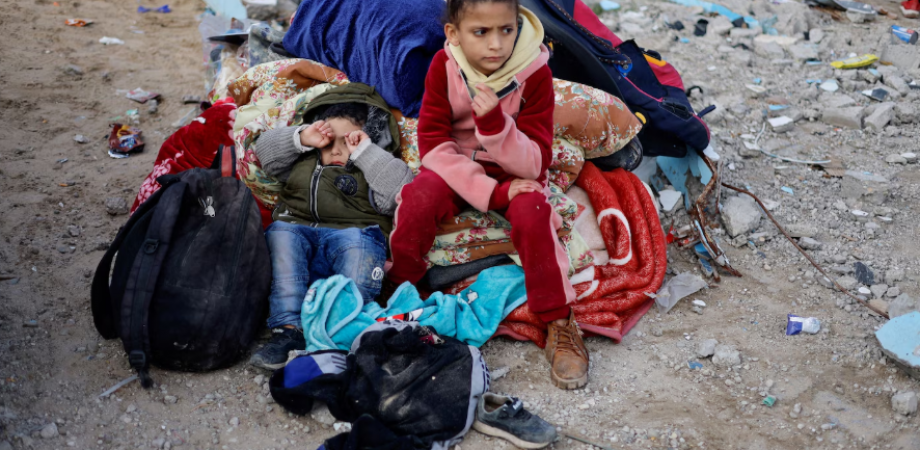
SAFA — Hundreds of thousands of displaced Palestinians in the Gaza Strip face worsening hunger as the World Food Program (WFP) scales back food and cash assistance amid severe funding shortages, leaving families already devastated by Israel's genocidal war and suffocating siege struggling to secure even their most basic daily needs.
The reductions come as displaced families remain trapped in overcrowded camps, unemployment is widespread, and Israeli restrictions continue to obstruct the entry of humanitarian supplies, raising fears that Gaza could face another devastating wave of hunger and malnutrition.
For 70-year-old Mahmoud Abu Tawahine, who suffers from illness and lives in a displacement tent, humanitarian assistance is not a temporary supplement but his only means of survival.
“I’m a sick man, I’m 70 years old. How am I supposed to live?” he asked while standing outside his tent. “We are still in the camps, there is no work, and our need for aid has not ended.”
Until recently, basic food supplies, including rice, lentils, and flour, provided a lifeline for Abu Tawahine and his family. With assistance now being reduced, even these essential staples have become increasingly difficult to obtain.
His situation reflects the hardship facing countless displaced Palestinians who have lost their homes, livelihoods, and sources of income during Israel's war and remain unable to provide for themselves without humanitarian support.
Displaced Families Fear Losing Their Only Source of Food
Um Yasser, a displaced Palestinian mother, said the assistance her family previously received was already insufficient to meet their basic needs, with some households waiting months between food distributions.
Now, she fears that further reductions could leave families without the food parcels and financial support they depend on to survive.
She urged the WFP to reverse the cuts and expand assistance instead, warning that reducing aid while families remain displaced and unemployed could push Palestinians back into even more severe food insecurity.
The fear is shared by other residents who say the collapse of employment opportunities and local markets has left them with no realistic alternative to humanitarian assistance.
A displaced Palestinian from Rafah, in southern Gaza, warned that the reductions were intensifying fears of renewed hunger among families who had lost everything during the war.
He appealed to international humanitarian organizations to intervene and ensure the continuation of food and cash assistance, stressing that Gaza's current conditions do not allow families to survive without the support they have relied on for months.
Another displaced resident, Mohammad Diab, rejected the cutbacks and called on international aid agencies to reconsider the decision in light of the widespread poverty, displacement, and lack of employment opportunities across the Strip.
“People are still fully dependent on humanitarian aid,” he said.
Food Assistance Reduced for Half a Million Palestinians
The WFP has attributed its latest reductions in Gaza to severe funding shortages, a decision that has triggered protests and warnings from Palestinian civil society organizations.
Representatives of Palestinian national and Islamic factions, alongside local organizations and displaced residents, gathered outside the WFP's main office in Gaza to protest the cuts and demand that assistance be restored.
According to protest organizers and local humanitarian groups, the reductions are affecting approximately 500,000 Palestinians who depend on food distributions and cash support.
The cuts have also affected community kitchens, with the number of hot meals distributed daily reportedly falling from approximately 250,000 to 150,000.
Assistance involving flour, food parcels, and cash transfers has likewise been reduced, placing additional pressure on families who cannot afford to purchase food at local markets.
Protesters warned that scaling back humanitarian assistance while hundreds of thousands of Palestinians remain displaced risks worsening an already severe food crisis.
They called on the WFP, international donors, and humanitarian organizations to urgently mobilize additional funding and restore assistance to vulnerable families.
More Than 90% of Gaza's Population Depends on Humanitarian Aid
Mohammad Salha, general coordinator of the Palestinian NGO Network, warned that the reductions could have devastating consequences for families already struggling to survive under Israel's continuing restrictions.
According to Salha, more than 90% of Gaza's population, including displaced families, requires humanitarian assistance to meet basic needs.
He said approximately 1.6 million Palestinians depend on WFP food and cash assistance, making the reduction in support for around half a million people particularly alarming.
Salha explained that humanitarian organizations are facing a combination of severe funding shortages and continuing Israeli restrictions on the entry of essential supplies, preventing aid agencies from expanding operations to meet growing needs.
He said Palestinian civil society organizations have been holding discussions with the WFP to explore ways to restore assistance, secure additional funding, and increase the number of beneficiaries.
However, he warned that financial constraints and restrictions on humanitarian access continue to undermine efforts to improve conditions.
Gaza Needs More Than 600 Aid Trucks Daily
The reductions come as the volume of humanitarian assistance entering Gaza remains far below the level needed to meet the population's basic requirements.
According to Salha, only 150 to 200 trucks carrying food, medicine, and other essential supplies have been entering the Strip daily in recent weeks.
He said Gaza requires more than 600 aid trucks each day to address urgent humanitarian needs and prevent further deterioration in living conditions.
The gap between the supplies entering Gaza and the population's needs has left humanitarian organizations struggling to maintain food distributions and other essential services.
For displaced families, the shortages are compounded by rising food prices, the destruction of local livelihoods, and the continuing inability of many Palestinians to return to their homes or resume work.
Humanitarian groups warn that without increased funding and unrestricted access for essential supplies, more families could face severe hunger and further deterioration in their health and living conditions.
Israeli Siege Compounds Gaza's Humanitarian Catastrophe
The latest aid reductions are unfolding amid the devastating consequences of Israel's genocidal war on Gaza, which has killed and wounded hundreds of thousands of Palestinians, destroyed vast areas of civilian infrastructure, and displaced much of the population.
Israeli restrictions on the entry of food, medical supplies, reconstruction materials, and shelter equipment have further obstructed efforts to restore essential services and improve living conditions.
Palestinian humanitarian organizations warn that the combination of restricted supplies, reduced international funding, and the collapse of local economic activity is leaving displaced families increasingly vulnerable to hunger.
They are calling for urgent international action to secure adequate funding for humanitarian operations, ensure the sustained entry of essential supplies, and prevent further reductions in assistance to families who have no other means of survival.
For Mahmoud Abu Tawahine and thousands of other displaced Palestinians, the crisis is not simply about the size of a food parcel or the frequency of an aid distribution. It is about whether they will have enough to eat tomorrow.
“How am I supposed to live?” he asked.
As humanitarian assistance shrinks and Israel's siege continues to restrict supplies, that question is becoming an increasingly urgent reality for families across Gaza.
Source : Safa News


