
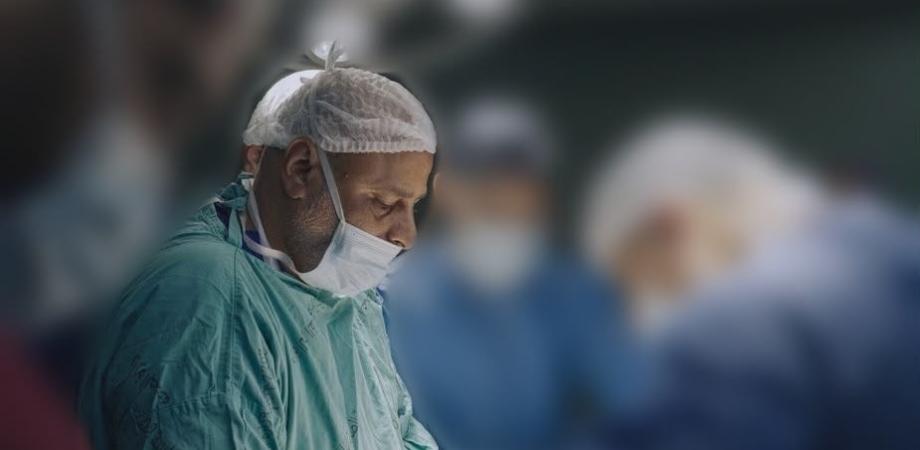
SAFA – Dr. Rizq Abu Shaaira spent his days trying to save lives inside Nasser Medical Complex in southern Gaza. On Thursday, the hospital where he had treated the wounded and performed lifesaving surgeries became the site of an Israeli airstrike that killed him and five other Palestinians.
Abu Shaaira, head of the hospital's general surgery department, was among six people killed when two Israeli missiles struck the Al-Yassin surgical building at Nasser Medical Complex in Khan Younis early on November 12.
More than 20 others were wounded, including medical workers and children, according to Palestinian medical officials.
The victims included patients and people accompanying them inside a hospital already struggling to provide essential care after years of Israeli attacks and severe shortages of medical supplies.
Hours before the bombing, Abu Shaaira had been performing surgeries, working alongside colleagues to keep patients alive.
By morning, those colleagues were mourning a surgeon whose life had been devoted to saving others.
From Saving Lives to Becoming a Victim
According to the Palestinian news agency SAFA, two missiles struck the Al-Yassin building, with one exploding near a floor housing surgical and intensive care departments.
The strike turned an area dedicated to treating critically ill and injured patients into a scene of death and destruction.
Abu Shaaira was killed alongside five other Palestinians, including patients and their companions.
For the medical teams who had worked beside him, the loss was both personal and devastating.
British volunteer surgeon Jawhar Rahbour, who had worked alongside Abu Shaaira just hours before the attack, described the shock of losing a colleague in the very hospital where they had been trying to save lives.
Their work had brought them together in operating rooms, confronting the injuries and suffering caused by the war.
The bombing left one of those surgeons dead and the other mourning a colleague whose absence would be felt by patients and medical staff alike.
A Doctor Who Never Returned Home
Gaza Health Ministry Director-General Munir al-Borsh mourned Abu Shaaira, describing the tragedy of a doctor killed at his workplace while his family waited for a return that would never come.
His words captured the suffering of a population already struggling with displacement, destroyed homes, and worsening winter conditions.
“Gaza had barely pulled its children from beneath collapsed rubble and wrung out its blankets after floodwaters before the bombing returned to pursue patients in their beds and doctors trying to save lives,” al-Borsh said.
The statement reflected the reality facing Gaza's healthcare workers, who continue treating patients despite the danger surrounding the medical facilities in which they work.
For Abu Shaaira's family, the strike meant losing a loved one.
For his colleagues, it meant losing a surgeon whose expertise was desperately needed.
For patients awaiting treatment, it meant another experienced doctor would no longer be there to help them.
1,724 Healthcare Workers Killed in Gaza
Abu Shaaira's death added another name to the growing list of medical professionals killed during Israel's military campaign in Gaza.
Gaza Health Ministry spokesman Zaher al-Wahidi said the surgeon was killed while working in the hospital's surgical department.
According to al-Wahidi, the number of healthcare workers killed since October 2023 has reached 1,724, including 155 doctors.
Behind those figures are surgeons, nurses, paramedics, technicians, and other medical personnel whose deaths have further weakened a healthcare system struggling to survive.
Each loss leaves fewer professionals available to perform emergency operations, care for critically ill patients, and respond to the continuing medical needs of Gaza's population.
The death of Abu Shaaira is particularly painful for Nasser Medical Complex, one of southern Gaza's most important remaining hospitals.
With medical facilities damaged or out of service across the territory, the loss of an experienced surgical department head carries consequences far beyond a single hospital ward.
The Doctors Who Stayed Until the End
Abu Shaaira was not the first doctor killed in an Israeli attack on a Gaza hospital.
On November 21, 2023, three doctors were killed in a strike on Al-Awda Hospital in northern Gaza.
Among them were Dr. Mahmoud Abu Nujaila and Dr. Ahmad al-Sahar, who worked with Doctors Without Borders (MSF), and Dr. Ziad al-Tatari.
Before his death, Abu Nujaila had written a message on a hospital whiteboard used to plan surgeries.
“Those who stay until the end will tell the story. We did what we could. Remember us.”
The words became a reminder of the extraordinary dangers facing medical workers who remained at their posts while hospitals came under attack.
Nearly three years later, the killing of Abu Shaaira at Nasser Hospital has brought renewed attention to that message.
Both stories reflect the same devastating reality: doctors who continued treating the wounded were themselves killed inside medical facilities.
When Hospitals Become Places of Mourning
Hospitals are supposed to offer safety to people at their most vulnerable.
For patients undergoing surgery, those receiving intensive care, and families waiting beside hospital beds, Nasser Medical Complex represented a place where lives might still be saved.
Thursday's strike shattered that expectation once again.
The killing of Abu Shaaira and five other Palestinians has left grieving families, wounded patients, and medical teams struggling to continue their work amid destruction.
It has also deepened concerns about the protection of hospitals and healthcare personnel under international humanitarian law.
For Gaza's doctors, the challenge is no longer simply how to save lives with dwindling resources. It is how to continue saving lives when the hospitals themselves remain exposed to deadly attacks.
Dr. Rizq Abu Shaaira spent his final hours doing what Gaza desperately needed him to do: caring for the wounded. His death is another reminder of the human cost of a war that has taken not only patients' lives but also the doctors trying to save them.
Source : Safa News


