
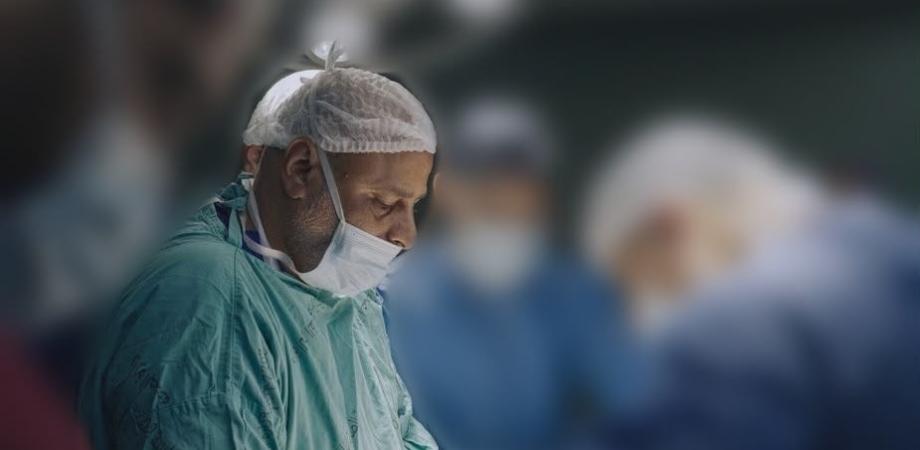
SAFA – Just hours after working alongside Palestinian surgeon Dr. Rizq Abu Shaira to save lives at Nasser Medical Complex in southern Gaza, British surgeon Jawhar Rahbour witnessed an Israeli airstrike tear through the hospital, killing his colleague and five other Palestinians.
The November 12 attack on the medical complex in Khan Younis left dozens of people injured, damaged critical hospital departments, and forced medical teams to respond to casualties amid smoke, rubble, and destruction.
Speaking to the Associated Press, Rahbour described the terrifying moment an explosion shook the building, sending smoke through its corridors and disrupting medical operations.
For the British surgeon, the bombing was more than another attack on Gaza's devastated healthcare system. It was the loss of a colleague with whom he had been treating patients only hours earlier.
Hours After Saving Lives Together, One Surgeon Was Killed
Dr. Rizq Abu Shaira worked in the general surgery department at Nasser Medical Complex, one of the few major hospitals still providing essential treatment in southern Gaza.
Despite shortages of medical supplies and the constant pressure of treating wounded Palestinians, Abu Shaira continued working alongside colleagues, including visiting international surgeons.
Rahbour had been working with him just hours before the strike.
By the time the explosion struck the surgical wing, the Palestinian doctor who had spent his day treating patients had become one of the casualties.
According to Gaza's Health Ministry, the attack killed six Palestinians, including Abu Shaira, and injured dozens more.
The ministry said the strike damaged several floors of the surgical building, including areas used for patient recovery and other essential medical services.
Images from the aftermath showed shattered rooms, debris-covered corridors, broken furniture, and damaged medical equipment.
Medical workers rushed to evacuate and treat the wounded while navigating damaged hospital departments.
The destruction further disrupted medical services at a facility already struggling to meet the needs of patients across southern Gaza.
British Surgeon Witnesses Gaza's Medical Crisis Firsthand
Rahbour, a consultant general surgeon with Britain's National Health Service (NHS), was already familiar with the extraordinary conditions facing medical teams at Nasser Hospital.
He previously volunteered at the complex between May and June 2025 through the British humanitarian organization Medical Aid for Palestinians.
During that mission, he treated patients suffering severe injuries while working with limited medical equipment, supplies, and essential medicines.
He later spoke publicly about the overwhelming number of casualties arriving at the hospital, including children with serious injuries, and the difficulties doctors faced in providing lifesaving care.
In July 2025, Rahbour participated in a British parliamentary briefing on Gaza's healthcare crisis, organized by the International Centre of Justice for Palestinians and the Muslim Workers Network.
Alongside other British doctors who had worked in Gaza, he described the scale of injuries treated at Nasser Hospital and shortages of basic medical supplies, including disinfectants.
His latest account illustrates how those conditions have been compounded by direct attacks on medical facilities.
The November 12 strike did not merely damage a building. It killed a surgeon, injured patients and others inside the complex, and disrupted services on which thousands of Palestinians depend.
Israeli Military Claims It Targeted Hamas Operatives
Following the strike, the Israeli military said it had targeted a Hamas commander and other individuals, alleging that the hospital had been used for military command activities.
According to the Associated Press account cited in the report, Israeli authorities did not provide evidence substantiating the allegation that Nasser Medical Complex had served as a command center.
The Israeli military's claims do not, by themselves, establish that the attack complied with international humanitarian law.
Hospitals, patients, and medical personnel are entitled to special protection under the laws of war.
A medical facility can lose its specific protection only under narrowly defined circumstances, including when it is used to commit acts harmful to the enemy outside its humanitarian function. Even in such cases, applicable legal requirements concerning warnings, precautions, distinction, and proportionality must be respected.
Rahbour's eyewitness account does not independently resolve the military's allegations, but it provides a direct account of the explosion's impact on doctors, patients, and the hospital's ability to function.
Nasser Hospital Faces Another Devastating Blow
Nasser Medical Complex has repeatedly been affected by Israeli military operations since the war began in October 2023.
Successive attacks, shortages of medical supplies, and the loss of experienced healthcare workers have severely weakened its ability to provide treatment.
The latest strike has added to those pressures, damaging essential departments and leaving medical teams to care for more casualties with fewer resources.
For Palestinian healthcare workers, the danger extends beyond overwhelming workloads and shortages of medicines and equipment.
Even while operating inside hospitals, doctors face the risk of being killed or injured as they attempt to save their patients.
Rahbour's experience captures that reality.
He had traveled to Gaza to provide medical care, worked alongside Palestinian colleagues under extraordinary conditions, and witnessed an Israeli strike kill a surgeon who had shared his duties just hours earlier.
At a hospital where every experienced doctor is urgently needed, Abu Shaira's death represents both a personal loss to his colleagues and another blow to Gaza's severely damaged healthcare system.
Source : Safa News


