
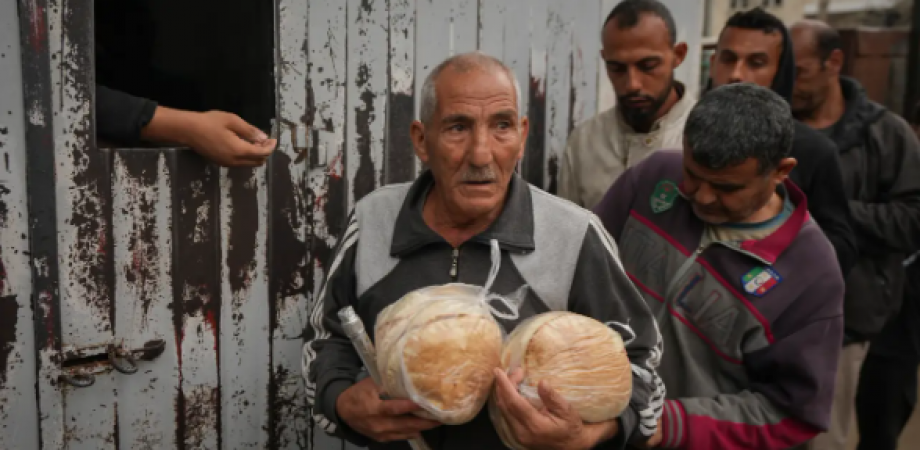
SAFA — Bakeries across the Gaza Strip could be forced to shut down within 48 hours as flour supplies and essential baking materials run critically low, Gaza's Bakery Owners Association warned Thursday, raising fears of another wave of hunger among Palestinian families already struggling with Israeli restrictions on food supplies, shrinking humanitarian assistance, and widespread displacement.
The association warned that the worsening shortages threaten the continued operation of bakeries, placing one of Gaza's most essential food sources at risk at a time when hundreds of thousands of Palestinians depend on humanitarian assistance to survive.
A shutdown would further restrict access to bread, a daily necessity for families whose purchasing power has collapsed after years of Israeli military attacks, the destruction of livelihoods, and repeated displacement.
The warning comes amid continuing Israeli restrictions on the entry of essential supplies into Gaza, alongside severe funding shortages that have forced international humanitarian organizations to reduce food assistance.
For families who rely on subsidized bread and aid distributions to feed their children, the simultaneous disruption of bakery operations and reductions in food assistance could make securing daily meals increasingly difficult.
Half a Million Palestinians Lose Food Assistance as WFP Cuts Support
The threatened bakery shutdown follows major reductions announced by the World Food Programme (WFP) on October 19, when the agency reported that funding shortages had forced it to scale back food assistance across Gaza.
The WFP reduced the number of Palestinians receiving monthly food support from 1.6 million to 1.1 million, leaving approximately 500,000 people without that assistance at a time when food insecurity remains widespread.
The agency also reduced food rations for households still receiving support, cutting distributions from two food parcels to one per family and providing a smaller bag of flour.
Meanwhile, the number of hot meals distributed daily across Gaza fell from approximately 250,000 to 150,000, further limiting access to prepared food for displaced families and those without adequate cooking facilities.
These reductions are particularly devastating for households that have lost their incomes and depend almost entirely on humanitarian assistance, with many families unable to purchase sufficient food even when limited quantities remain available in local markets.
The prospect of bakeries shutting down adds another layer of uncertainty, threatening to deprive Palestinians of affordable bread just as other food assistance programs are being reduced.
1.4 Million Palestinians Face Severe Food Insecurity
According to the WFP, approximately 1.4 million Palestinians in Gaza are experiencing acute food insecurity at crisis level or worse, including around 200,000 people facing emergency levels of hunger.
The agency also estimates that only one in five children receives a sufficiently diverse diet, reflecting the severe nutritional deprivation affecting families across the territory.
With unemployment exceeding 80%, large sections of Gaza's population have little or no reliable income, leaving them unable to afford basic food products even when supplies are available.
The combination of restricted humanitarian access, declining international funding, and widespread poverty has left Palestinian households increasingly vulnerable to disruptions in food distribution and bread production.
While flour and bread are essential to daily survival, they cannot provide the nutritional diversity required by children, pregnant women, older people, and patients suffering from chronic illnesses or malnutrition.
Nevertheless, maintaining bakery operations remains critical to preventing further deterioration in food access, particularly for families whose diets have already been reduced to a limited range of basic necessities.
The WFP has appealed for $450 million in urgent funding to sustain its humanitarian operations in Gaza and the occupied West Bank through March 2027, warning that insufficient resources threaten the continuity of essential assistance programs.
Winter Approaches as 300,000 Families Lack Adequate Shelter
The looming bread shortage comes as hundreds of thousands of displaced Palestinians face another winter without adequate protection from cold weather and heavy rainfall.
On October 13, Gaza's Ministry of Social Development warned that approximately 300,000 families lacked adequate shelter, while nearly 90% of the tents currently in use had become worn out and unsuitable for living.
Many displaced families remain in overcrowded camps, damaged buildings, and makeshift shelters, where access to cooking facilities, clean water, fuel, and other basic necessities is severely limited.
For these households, the reduction of hot meals and food parcels, combined with the threatened closure of bakeries, could further undermine their ability to secure sufficient food.
The approach of winter adds to the hardship, as families struggle to meet basic needs while facing deteriorating shelter conditions, limited financial resources, and continuing insecurity.
Bread Shortages Threaten Gaza's Most Vulnerable Families
The Bakery Owners Association's warning highlights the fragility of Gaza's remaining food supply system, where shortages of essential ingredients can threaten bakery operations and leave entire communities without reliable access to bread.
The threatened shutdown comes at a time when Palestinian families are already coping with reduced food rations, declining humanitarian assistance, and an inability to afford basic necessities.
Without an immediate and sustained supply of flour and other baking materials, the closure of bakeries could deepen hunger and place additional pressure on humanitarian organizations struggling to meet the population's needs.
The situation underscores the urgent need to ensure the uninterrupted entry of food supplies, restore adequate flour stocks, and secure sufficient international funding to maintain essential humanitarian assistance.
For families who have already endured prolonged periods of hunger and deprivation, the possibility of losing access to bread within the next 48 hours raises fears that Gaza could once again face an even more severe struggle for food.
Source : Safa News


