
SAFA — Israeli settlers and military forces carried out 13 attacks against Palestinian olive harvesters and their agricultural land across the occupied West Bank within a 12-hour period on Thursday, according to the Palestinian Authority's Wall and Settlement Resistance Commission.
The commission said the attacks, recorded between 6 a.m. and 6 p.m. across eight West Bank governorates, targeted farmers during the olive harvest season and included physical assaults, pepper-spray attacks, gunfire, arson, theft of crops and harvesting equipment, land bulldozing, and the detention of farmers.
Farmers Assaulted and Olive Trees Uprooted in Salfit and Jerusalem
In the Salfit governorate, Israeli settlers attacked Palestinian olive harvesters in the Wadi Abbas and al-Wad al-Qibli areas between Deir Istiya and Qarawat Bani Hassan.
The settlers beat farmers with sticks and sprayed them with pepper spray, leaving three Palestinians with bruises, according to the commission.
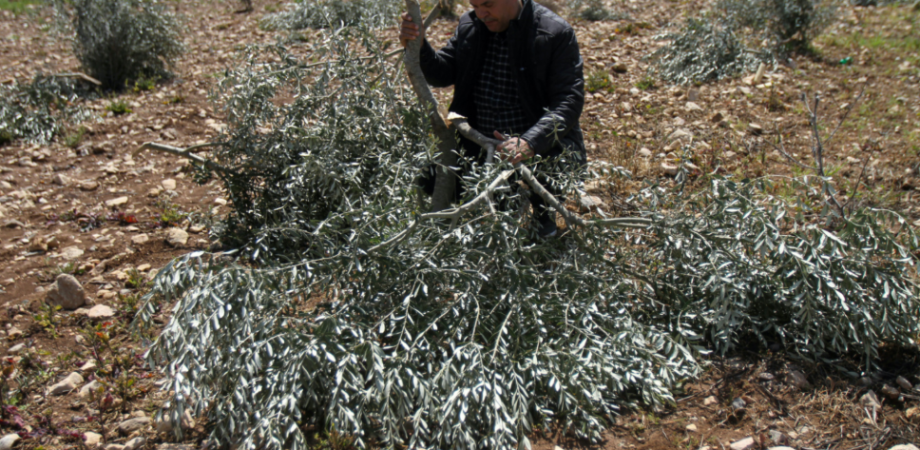
Northwest of Jerusalem, Israeli forces bulldozed agricultural land and uprooted olive trees near the military checkpoint at the entrance to Beit Iksa.
In the Hebron governorate, Israeli troops detained several members of the al-Adra family while they were harvesting olives in Khillet al-Amira, east of Yatta, preventing them from completing their work.
Settlers Open Fire and Assault Farmers in Tulkarem and Nablus
In the Tulkarem governorate, armed settlers attacked olive harvesters in the Ramin plain, attempted to steal harvested olives, tools, and tarps, and fired live ammunition into the air to intimidate farmers and force them off their land.
In a separate incident, settlers assaulted Palestinian farmers in the village of Beit Lid, injuring one person.
In the Nablus governorate, settlers targeted olive groves in Majdal Bani Fadel near a recently established settler herding outpost, attempting to prevent landowners from completing their harvest.
Settlers also assaulted a farmer in the Bir Salih area between Beita and Osrin, leaving him with wounds and bruises.
In al-Lubban al-Sharqiya, settlers entered agricultural land, prevented farmers from reaching their olive groves, and stole harvesting equipment.
Olive Crops Stolen and Agricultural Land Bulldozed in Jenin
In the Jenin governorate, three groups of settlers entered agricultural land in the al-Haraeq area of Arraba and stole olives from trees belonging to several Palestinian residents, the commission reported.
In nearby Deir Abu Da'if, Israeli forces continued bulldozing olive-planted land for the expansion of the Ganim settlement, while preventing Palestinian landowners from accessing their groves or harvesting their crops.
Ancient Olive Trees Burned Near Ramallah
In the Ramallah and al-Bireh governorate, settlers set fire to dozens of centuries-old olive trees in the village of Burqa, east of Ramallah.
In al-Mughayyir, Israeli forces fired tear gas at Palestinian farmers in the al-Aqaba area while settlers allowed their livestock to graze on cultivated farmland.
In the Qalqilya governorate, settlers stole four large olive-harvesting tarps belonging to Palestinian farmer Hammad Saleh Eid from his land near a settler outpost between Kafr Qaddum and Hajja.
Commission Warns of Systematic Dispossession
The Wall and Settlement Resistance Commission warned that the incidents reflect a growing connection between direct attacks on Palestinian farmers and broader efforts to take control of agricultural land.
According to the commission, the bulldozing of fields, burning of olive trees, theft of crops and equipment, and restrictions on access to farmland form part of a wider pattern of attacks targeting Palestinian farmers and their livelihoods.
The commission warned that continued attacks, including those carried out with the protection or direct involvement of Israeli forces, threaten Palestinian agricultural communities and could turn temporary restrictions on access to farmland into permanent dispossession.
It called on the international community to intervene urgently to protect Palestinian farmers and their land and to hold those responsible for the attacks accountable.
Source : Safa News


