
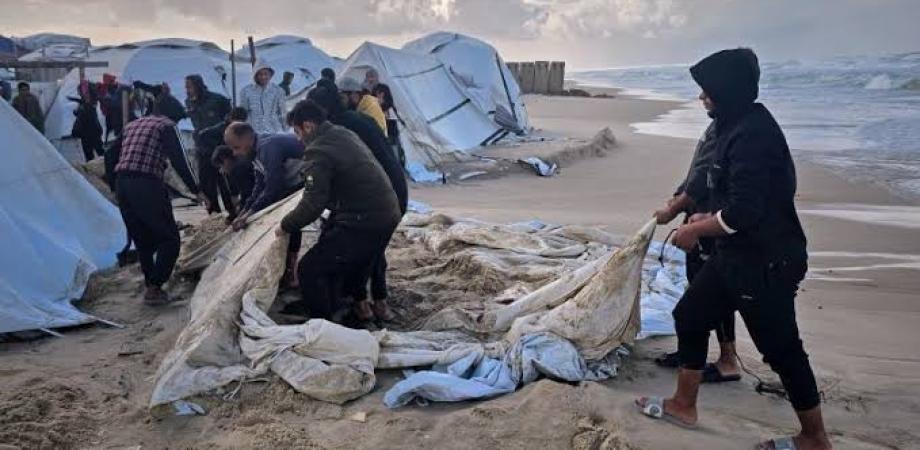
SAFA — Heavy winter rains have submerged displacement camps across the Gaza Strip, forcing Palestinian families to flee their flooded tents as Gaza's Civil Defense struggles to respond to more than 1,500 emergency calls amid severe shortages of rescue equipment and fuel.
In a statement issued Saturday, Civil Defense officials warned that entire displacement camps had been inundated by torrential rainfall, leaving thousands of already displaced Palestinians exposed to cold temperatures, rising floodwaters, and increasingly dangerous living conditions.
The agency said it had received more than 1,500 distress calls from residents and families in displacement shelters since the storm began, as rainwater swept through makeshift camps and damaged the few belongings families had managed to preserve.
The flooding has intensified Gaza's humanitarian crisis, with displaced families facing another emergency after months of destruction, repeated displacement, and severe restrictions on essential shelter supplies.
Entire Displacement Camps Submerged by Heavy Rain
According to Gaza's Civil Defense, heavy rainfall has flooded displacement camps in cities and communities throughout the Strip, with water pouring into tents and temporary shelters since early Saturday.
The agency described desperate scenes of families attempting to escape rising floodwaters while protecting their children and salvaging mattresses, blankets, clothing, and other essential belongings.
“Displaced citizens, along with their children and women, are now drowning while the rain is washing away their tents,” the Civil Defense said, describing the severity of the flooding.
The statement came despite repeated warnings and appeals for emergency assistance in the days leading up to the storm.
By Saturday morning, hundreds of tents had been inundated, forcing families to abandon their shelters and search for safer, drier locations.
Many of the affected families had already been displaced multiple times during Israel's military offensive and were living in overcrowded camps with inadequate drainage and little protection against severe weather.
Civil Defense Overwhelmed by More Than 1,500 Emergency Calls
Gaza's Civil Defense warned that its rescue teams lack the resources needed to respond to the scale of the flooding.
The agency cited critical shortages of water pumps, heavy machinery, emergency vehicles, and fuel, all of which are essential for draining flooded camps and reaching residents trapped in dangerous conditions.
Officials said emergency crews could not manage the disaster without immediate assistance from local and international humanitarian organizations.
They called for coordinated intervention to provide rescue equipment, fuel, and emergency relief supplies before further rainfall worsens conditions.
“The priority today is to protect civilians' lives, especially children, women, the elderly and the sick, and to prevent this weather depression from turning into a new humanitarian catastrophe added to the suffering of Gaza's residents,” the agency said.
The warning reflects the severe strain on emergency services operating amid widespread damage to roads, drainage systems, and other essential infrastructure.
Families Face Winter in Worn-Out, Leaking Tents
For displaced Palestinians, the arrival of winter has exposed the fragility of temporary shelters that were never designed to withstand prolonged exposure to heavy rain and strong winds.
Many families live in deteriorating tents made from thin fabric and plastic sheeting, often without waterproof flooring, insulation, heating, or adequate drainage.
As floodwaters enter these shelters, mattresses and blankets become soaked, leaving families struggling to find dry places to sleep.
Children, older adults, and people with medical conditions face particular risks from prolonged exposure to cold and damp conditions.
Humanitarian organizations have repeatedly warned that the shortage of durable shelter materials leaves displaced communities highly vulnerable to winter storms.
With homes and residential neighborhoods extensively damaged, many families have few alternatives to the flooded camps.
Israeli Restrictions Compound Gaza's Winter Emergency
The flooding comes amid continuing restrictions on the entry of essential supplies into Gaza, including shelter materials, reconstruction equipment, fuel, and machinery needed to repair damaged infrastructure.
Israel's military operations have also caused extensive damage to electricity networks, water systems, and municipal facilities, severely limiting the territory's capacity to manage heavy rainfall.
The destruction of drainage infrastructure and shortages of functioning pumps and generators have made it increasingly difficult for emergency crews to remove accumulated water from displacement camps.
Civil Defense officials warned that without the necessary equipment and supplies, further storms could overwhelm the already limited response capacity.
The combination of damaged infrastructure, inadequate shelter, and restricted access to essential materials has left displaced families facing the winter season with little protection.
Urgent Appeal to Prevent Further Humanitarian Disaster
Gaza's Civil Defense renewed its appeal for immediate intervention by local authorities, humanitarian agencies, and international organizations.
The agency called for the urgent delivery of water pumps, emergency vehicles, heavy machinery, fuel, and shelter supplies to protect families and prevent further flooding.
It emphasized that protecting civilian lives must take priority, particularly as additional winter storms threaten communities already living in extremely difficult conditions.
For thousands of displaced Palestinians, the first major winter rains have brought another wave of displacement, forcing families who have already lost their homes to flee shelters that can no longer protect them.
As winter intensifies, Gaza's humanitarian emergency is increasingly shaped not only by the destruction left by war, but also by the struggle to survive the rain, flooding, and cold.
Source : Safa News


