
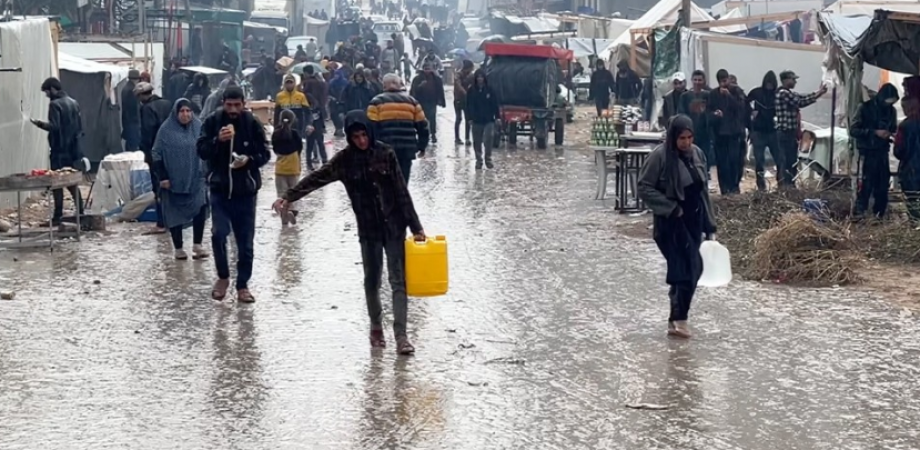
SAFA — Torrential rainfall has flooded and severely damaged 70 displacement camps in Jabalia, northern Gaza, leaving thousands of Palestinian families exposed to sewage-contaminated floodwaters, damaged shelters, and worsening winter conditions amid continuing Israeli restrictions on the entry of essential shelter supplies.
Mazen al-Najjar, head of Jabalia al-Nazla Municipality, said the powerful storm affected 70 of the 131 displacement camps within the municipality's jurisdiction, causing widespread flooding and the collapse of makeshift shelters.
The camps accommodate Palestinians displaced by Israel's military offensive on the Gaza Strip, many of whom have been living in fragile tents amid severe shortages of safe housing and basic necessities.
Sewage Floods Displacement Camps
Al-Najjar told local media that the heavy rainfall overwhelmed Jabalia's damaged sewage network, causing wastewater to overflow into displacement camps and surrounding areas.
He warned that the mixing of sewage with rainwater had created serious health and environmental risks for thousands of displaced residents.
The flooding left families struggling to protect their children and belongings from contaminated water, while damaged drainage infrastructure complicated efforts to remove the floodwaters.
Al-Najjar added that seawater surged toward coastal displacement camps, further worsening conditions for families already affected by the storm.
Winter clothing, blankets, mattresses, and essential household belongings were soaked or swept away, leaving many residents without basic protection against the cold.
Some families whose tents were destroyed or rendered uninhabitable were forced to sleep in the streets.
Forty-Five Homes Damaged, Residents Evacuated
The storm also caused structural damage to 45 homes in Jabalia, prompting municipal authorities to evacuate residents over safety concerns.
Al-Najjar warned that the affected families had no safe alternative accommodation, leaving them facing further displacement as winter weather intensifies.
The danger extends beyond flooded tents to residential buildings already weakened by Israeli bombardment, where heavy rainfall can worsen structural damage and increase the risk of collapse.
More Than 55 Millimeters of Rain in Hours
According to al-Najjar, more than 55 millimeters (approximately 2.2 inches) of rain fell within just a few hours.
He said the volume of rainfall overwhelmed both the fragile displacement tents and the municipality's heavily damaged infrastructure.
The destruction of drainage systems, sewage networks, roads, and residential buildings has left Jabalia particularly vulnerable to flooding during severe weather.
Municipal authorities face major challenges in responding to the emergency because of shortages of equipment, repair materials, and resources needed to restore essential services.
Israeli Restrictions Deepen the Shelter Crisis
The latest storm has intensified the suffering of displaced Palestinians in northern Gaza, where thousands of families remain in overcrowded camps and damaged homes.
Continuing Israeli restrictions on the entry of tents, prefabricated housing units, and reconstruction materials have hampered efforts to provide safer temporary accommodation.
With winter approaching and further storms possible, displaced families face growing risks from flooding, contaminated water, cold weather, and unstable buildings.
The crisis has renewed urgent calls for the entry of shelter supplies, emergency equipment, and materials needed to repair Gaza's damaged sewage and drainage networks.
For families in Jabalia, the storm has brought another wave of displacement, leaving many without dry bedding, adequate shelter, or a safe place to protect their children from the rain.
Source : Safa News


