
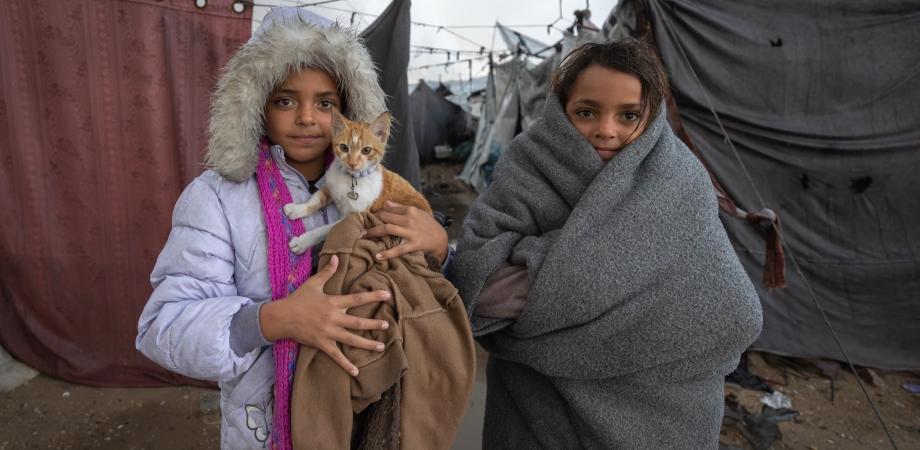
DaysOfPal — Gaza's displaced Palestinians need far more than replacement tents to survive the winter. As heavy rains flood tens of thousands of makeshift shelters, humanitarian organizations warn that nearly two million people urgently need durable housing, waterproof materials, warm clothing, heating supplies, and functioning drainage systems to protect them from another season of suffering.
The first major winter storm has exposed the scale of Gaza's shelter crisis, turning overcrowded displacement camps into pools of mud and contaminated water. Mattresses, blankets, and clothing have been soaked, while families have been forced to abandon flooded tents in search of temporary refuge.
For hundreds of thousands of Palestinians displaced by years of Israeli bombardment, even damaged buildings offer little protection from the rain and wind.
According to Gaza's Government Media Office, approximately 70,000 tents were flooded within 12 hours of the storm that struck the territory on November 7. Civil Defense crews received around 1,500 emergency calls as families struggled to protect themselves and their belongings.
But humanitarian agencies warn that replacing flooded tents alone will not solve a crisis rooted in widespread destruction, repeated displacement, and severe restrictions on the entry of essential shelter and reconstruction materials.
Nearly Two Million Palestinians Need Shelter Assistance
An October 19 report published by the United Nations in Palestine, citing estimates from the International Organization for Migration (IOM), warned that approximately two million people in Gaza continued to need shelter-related assistance.
Karl Baker, IOM's Gaza crisis response coordinator, estimated that between 1.8 million and 1.9 million Palestinians required some form of shelter support.
He warned that the quantities of supplies expected to enter Gaza remained far below the population's actual needs.
One of the central problems is the poor durability of existing tents.
According to Baker, tents in Gaza typically last only about six months because they are repeatedly dismantled, moved, and damaged as families endure successive waves of displacement.
This means that even newly distributed tents may deteriorate rapidly unless they are made from stronger, weather-resistant materials and accompanied by proper anchoring, waterproofing, and ground insulation.
Waterproofing, Blankets, and Winter Clothing Are Essential
Humanitarian assessments identify waterproof tarpaulins, plastic sheeting, ground insulation, and materials to elevate tents above flood-prone surfaces as immediate priorities.
Displaced families also urgently need dry mattresses, blankets, winter clothing, shoes, and hygiene supplies to replace belongings destroyed by floodwaters.
These materials are particularly important in low-lying camps and coastal areas, where water accumulates quickly and ordinary fabric tents offer little protection against severe storms.
The October UN report described how some displaced Palestinians had resorted to filling flour sacks with sand and placing them around their tents as makeshift flood barriers.
Such measures illustrate the lack of even basic equipment needed to keep rainwater out of temporary shelters.
For families who have already lost their homes and possessions, each storm can destroy the few essential items they have managed to obtain.
84% of Displaced Families Lack Effective Heating
The shelter emergency is compounded by a severe shortage of safe heating and cooking supplies.
In a November 8 statement, Save the Children reported that 84% of households covered by a humanitarian needs assessment lacked an effective means of heating their living spaces.
The organization also warned that more than one million people needed winter clothing, while available supplies covered only about 1% of those needs, according to the humanitarian assessments it cited.
Without adequate fuel, cooking gas, or safe heating equipment, some families resort to burning plastic, tires, cardboard, and other waste to stay warm or prepare food.
These practices expose children and adults to toxic smoke, respiratory problems, burns, and the risk of fires inside overcrowded tents.
Cold and damp conditions also increase health risks for children, older adults, and people with existing medical conditions, particularly where access to health care is limited.
Prefabricated Homes Offer Greater Protection
With tents repeatedly damaged by wind and rain, humanitarian organizations and local authorities have emphasized the need for prefabricated housing units and more durable temporary shelters.
Such structures could offer greater protection for families whose homes have been destroyed, particularly those living in areas vulnerable to flooding.
However, prefabricated housing is not a substitute for immediate emergency supplies. Relief efforts must provide different shelter options according to family size, location, and vulnerability.
Priority assistance is especially important for households with young children, older adults, people with disabilities, and those requiring ongoing medical care.
The crisis also extends to Palestinians sheltering inside buildings weakened by Israeli bombardment.
Heavy rainfall can further damage unstable walls, roofs, and foundations, increasing the danger of collapse.
Addressing this threat requires structural safety assessments, the evacuation of unsafe buildings, and alternative accommodation for affected residents.
Without these measures, families remain caught between flooded tents and damaged buildings that may collapse around them.
Destroyed Drainage Systems Turn Rain Into a Health Threat
Protecting Gaza's displaced population also requires urgent repairs to sewage networks, stormwater drains, and other essential infrastructure.
Heavy machinery, water pumps, fuel, spare parts, and equipment for clearing blocked drainage channels are necessary to prevent displacement camps from becoming submerged.
Flooding does more than destroy mattresses and blankets. When rainwater mixes with sewage, contaminated water can spread through crowded shelters, increasing the risk of gastrointestinal, skin, and other infections.
In a November 7 report, the UN Office for the Coordination of Humanitarian Affairs (OCHA) warned that heavy rainfall had flooded shelters and placed families living in flood-prone areas and damaged buildings at immediate risk.
OCHA said humanitarian organizations had mobilized emergency assistance, but available stocks remained inadequate because of funding shortages and restrictions that had hindered winter preparations.
The agency called for the urgent entry of winter supplies, humanitarian materials, heavy equipment, engine oil, and spare parts needed to operate emergency vehicles, machinery, and generators.
Funding Shortfall Leaves Hundreds of Thousands Exposed
Beyond restrictions on humanitarian access, a major funding gap threatens efforts to prepare Gaza for further winter storms.
Save the Children reported on November 8 that approximately 60% of the $283 million required for winter preparedness remained unfunded.
The organization also warned that around 464,000 Palestinians were living in displacement sites at high risk of flooding.
Particularly vulnerable locations include Al-Mawasi, west of Khan Younis, displacement camps in Deir al-Balah, and exposed areas of Gaza City, northern Gaza, and Rafah.
Meanwhile, Islamic Relief reported on November 8 that approximately 1.9 million Palestinians urgently needed shelter assistance.
The organization estimated that around 200,000 tents had become old, damaged, or unable to withstand strong winds and heavy rainfall, with approximately 60% requiring immediate replacement.
Together, these assessments reveal a widening gap between Gaza's humanitarian needs and the resources available to meet them.
Gaza Needs Safe Shelter, Not Another Cycle of Flooded Tents
As further winter storms threaten the Gaza Strip, humanitarian agencies are calling for a comprehensive emergency response rather than repeated distributions of temporary tents after each disaster.
Such a response would require durable tents, waterproofing materials, mattresses, blankets, winter clothing, safe heating supplies, fuel, and equipment to restore damaged drainage and sanitation systems.
It would also require the entry of prefabricated housing units, adequate humanitarian funding, and unrestricted access for relief organizations to reach the most vulnerable communities.
Equally important is preparing displacement sites before storms arrive by improving drainage, reducing flood exposure, and moving families away from dangerous buildings and unstable ground.
For Gaza's displaced Palestinians, winter is no longer simply a seasonal hardship. It is another threat to families who have lost their homes, exhausted their resources, and endured repeated displacement.
What Gaza needs is not another tent to replace one swallowed by floodwater, but safe, durable shelter that protects families from the rain, preserves their dignity, and gives their children a chance to survive the winter.
Source : Safa News


