
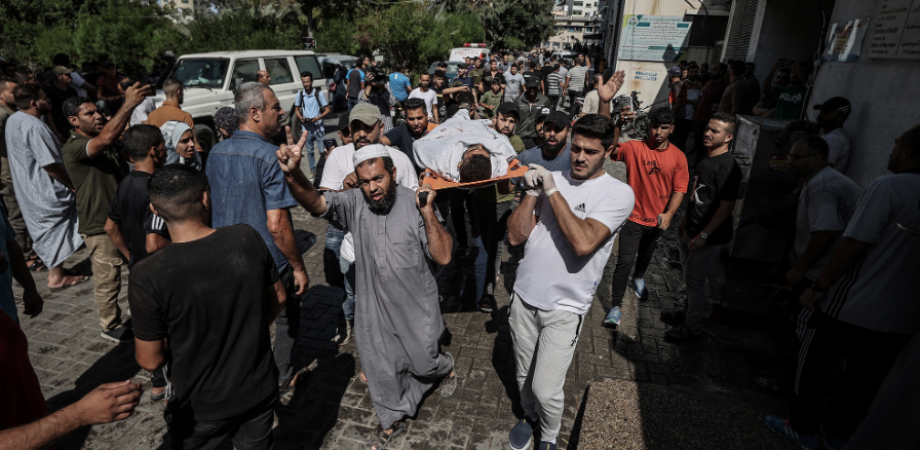
SAFA — Israeli attacks killed 14 Palestinian students, four teachers, and three other education workers in the Gaza Strip during October 2026, according to the Gaza Ministry of Education, as children attempting to return to classrooms continued to face gunfire, damaged schools, and severe shortages of essential learning supplies.
The ministry warned that the resumption of in-person education has not brought safety to Gaza's students and teachers, many of whom must travel through dangerous areas to reach classrooms operating in damaged buildings, tents, and makeshift learning spaces.
The latest casualties underscore the continuing risks facing Palestinian children as they struggle to reclaim their education after years of war, displacement, and widespread destruction.
Students and Teachers Killed as Schools Remain Under Threat
According to the ministry's October report, Israeli attacks killed 14 students, four teachers, and three other education workers during the month.
Several students were also injured by Israeli shelling and gunfire while traveling to school, the ministry said.
The report documented the complete destruction of two educational facilities: Al-Zahra Private School and Al-Basma Al-Saghira Kindergarten.
Educational institutions located near the so-called Yellow Line, which marks areas of Israeli military deployment and control, have faced repeated disruptions because of gunfire from nearby Israeli positions.
The ministry said these conditions have made it difficult for students and teachers to attend classes safely, leaving families to weigh the risks of traveling to school against the consequences of continued educational disruption.
For children who have already lost years of regular schooling, even the journey to a classroom can now carry serious danger.
Gaza's Children Return to Classrooms Amid Ruins
Efforts to resume in-person learning began in September, when hundreds of thousands of Palestinian students sought to return to education after prolonged disruption.
But the return has taken place under extraordinarily difficult conditions.
Many students attend lessons in damaged school buildings, temporary classrooms, and tents that lack adequate protection from the weather.
Basic facilities remain scarce, while families struggling with displacement, unemployment, and poverty often cannot afford notebooks, stationery, schoolbags, and other essential supplies.
The destruction extends far beyond the two facilities reported lost in October.
UNICEF has previously warned of extensive damage to Gaza's educational infrastructure since October 2023, with large numbers of schools destroyed or damaged during Israeli military operations.
The loss of classrooms, equipment, and safe learning environments has disrupted education for an entire generation of Palestinian children.
Scholarship Students Unable to Leave Gaza
The crisis also affects Palestinian students seeking higher education outside the Gaza Strip.
According to the Ministry of Education, hundreds of students who have secured university scholarships remain unable to travel to their institutions because of continuing restrictions on movement through Gaza's crossings.
The restrictions have left students unable to take up educational opportunities abroad, despite obtaining scholarships.
For many, the uncertainty threatens academic progress and future career prospects after years of interrupted schooling.
Inside Gaza, universities and other educational institutions are struggling to resume operations amid severe shortages of fuel, electricity, and essential supplies.
Damaged infrastructure and restrictions on movement further complicate efforts by students and teaching staff to reach educational facilities.
Shortages Threaten Education for Students With Disabilities
The ministry also highlighted shortages of computers, electronic devices, and other educational equipment needed to restore effective teaching and learning.
Students with disabilities face additional barriers because specialized equipment, accessible learning materials, and other essential resources remain in short supply.
Vocational and technical education programs have also been affected by shortages of tools, machinery, and training materials, limiting opportunities for students to develop practical skills.
These challenges compound the consequences of prolonged educational disruption, particularly for children and young adults who have already experienced repeated displacement and psychological distress.
An Education System Struggling to Survive
The Ministry of Education's findings highlight the enormous challenges facing Gaza's education sector as efforts to restore learning continue amid insecurity and widespread destruction.
The deaths of students and education workers, destruction of school facilities, shortages of supplies, and restrictions on movement have left Palestinian children facing obstacles at nearly every stage of their education.
For families across Gaza, reopening classrooms represents an important step toward restoring a sense of normal life.
Yet the ministry's October figures show that returning to school does not necessarily mean returning to safety.
As Gaza's children attempt to recover years of lost education, the continuing threat of violence and the lack of adequate learning facilities remain major obstacles to their future.
Source : Safa News


