
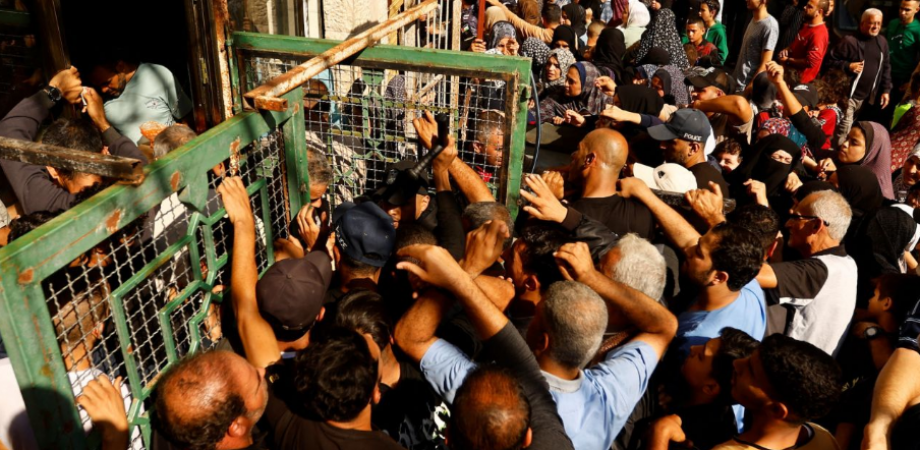
SAFA – Gaza's bread crisis is worsening as flour supplies fall more than 25% below daily needs, forcing Palestinians to wait for hours outside bakeries while Israeli restrictions on essential goods and declining humanitarian assistance threaten to further disrupt bread production.
According to the Palestinian Information Center, reduced subsidized flour deliveries, irregular commercial imports, and restrictions on the entry of essential supplies have left bakeries struggling to meet demand and maintain emergency reserves.
The shortages are particularly severe for displaced families and low-income households, many of whom depend on subsidized bread as a basic source of food.
Flour Supplies Fall More Than 25% Below Gaza's Daily Needs
Economic researcher Ahmed Abu Qamar told the Palestinian Information Center that Gaza requires approximately 450 metric tons of flour daily to meet the needs of households and bakeries.
However, he said current supplies fall more than 25% short of that requirement, leaving the territory increasingly vulnerable to disruptions in bread production.
The crisis has been compounded by cuts to humanitarian food assistance.
According to Abu Qamar, the United Nations World Food Programme (WFP) reduced its food assistance in October because of funding shortages, cutting the number of beneficiaries from 1.6 million to 1.1 million.
The reduction left approximately 500,000 Palestinians without the monthly assistance they had previously relied on to meet part of their food needs.
He added that household food rations were reduced from two parcels to one, with smaller quantities of flour included in the distributions.
Meanwhile, daily flour allocations to WFP-supported bakeries reportedly dropped from more than 260 metric tons to between 125 and 135 metric tons, significantly reducing their capacity to produce subsidized bread.
As humanitarian assistance declines, more families are turning to local markets, placing additional pressure on already limited commercial supplies.
Israeli Restrictions Prevent Bakeries From Building Emergency Reserves
Abu Qamar warned that commercial flour imports remain insufficient to compensate for reduced humanitarian deliveries or allow bakeries to maintain adequate emergency stocks.
He said bakeries need at least 10 truckloads of flour to enter Gaza each day, alongside additional supplies to establish reserves covering 12 to 14 days of production.
According to the report, existing crossing arrangements permit goods to enter five days a week, with deliveries suspended during holidays.
These interruptions, combined with Israeli restrictions and delays, leave bakeries exposed to sudden shortages.
Without sufficient reserves, even a temporary disruption in flour deliveries could force bakeries to reduce production or shut down.
The impact is already visible, with long lines forming outside bakeries as residents spend hours trying to obtain bread for their families.
For displaced Palestinians and households with limited incomes, the shortage is particularly difficult because they have few affordable alternatives and little ability to cope with rising food costs.
Fuel and Spare Parts Shortages Put Bakery Operations at Risk
Flour is not the only essential supply in short supply.
Abu Qamar also warned that shortages of fuel, industrial lubricants, generator oils, and machinery spare parts are placing additional pressure on Gaza's bakeries.
Without adequate maintenance materials, bakery operators have been forced to rely on limited resources and temporary repairs to keep their production lines running.
He explained that these conditions increase operating costs, accelerate equipment wear, and raise the risk of mechanical breakdowns that could further reduce bread production.
Prolonged use of generators and machinery without proper servicing also threatens the ability of bakeries to operate consistently.
Abu Qamar stressed that maintaining bread production requires more than regular flour deliveries. Bakeries also need reliable access to fuel, lubricants, spare parts, and maintenance equipment.
Gaza's Bread Supply Remains at Risk of Further Disruption
Abu Qamar called for regular deliveries of sufficient flour and essential operating supplies to prevent the crisis from worsening.
He emphasized the need to establish emergency flour reserves that would allow bakeries to continue operating during crossing closures or interruptions in deliveries.
The combined effects of reduced humanitarian assistance, insufficient commercial imports, and Israeli restrictions have left Gaza's bread supply increasingly fragile.
With demand continuing to exceed available supplies, any further disruption could deepen shortages and force additional bakeries to suspend operations.
For Palestinian families already struggling with displacement, poverty, and food insecurity, the ability to obtain bread has become another daily challenge amid the humanitarian crisis caused by Israel's military campaign and blockade.
Without reliable access to flour, fuel, and essential maintenance supplies, Gaza's bakeries remain at risk of further shutdowns, threatening one of the population's most basic sources of food.
Source : Safa News


