
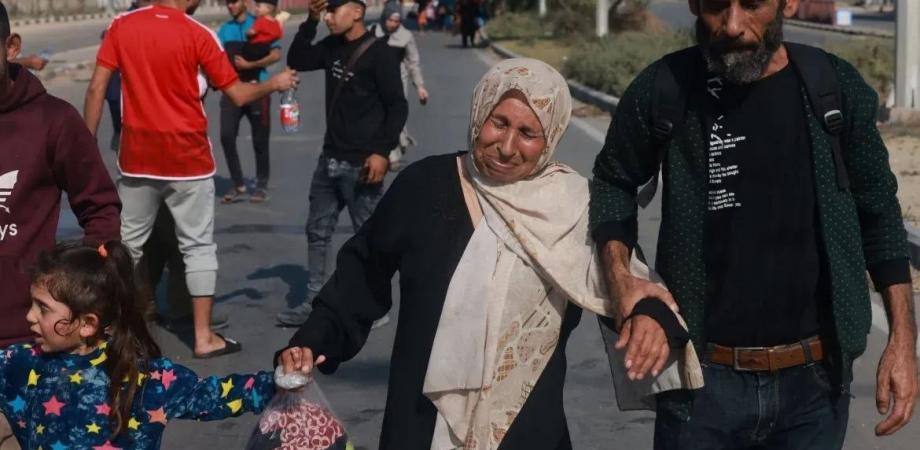
SAFA — Thousands of Palestinians have been forced to flee their shelters in central Gaza following a renewed Israeli military incursion near the Bureij and Nuseirat refugee camps, leaving already displaced families exposed to flooding, cold weather and worsening humanitarian conditions as winter approaches.
The operation, involving Israeli tanks, bulldozers, artillery fire and ground troops, struck areas near Salah al-Din Road, northwest of Bureij and northeast of Nuseirat, forcing residents to abandon temporary shelters and search for safety in a territory where much of the housing has been destroyed.
For many families, the latest displacement comes after months of living in overcrowded camps and makeshift tents, with little protection from heavy rain and falling temperatures.
The renewed military activity has intensified an already severe shelter emergency. According to figures attributed to the United Nations Office for the Coordination of Humanitarian Affairs (OCHA), storms between November 6 and 9 affected approximately 226,000 Palestinians and damaged more than 40,000 family shelters across Gaza.
Families Forced to Flee With Nowhere Safe to Go
Israeli armored vehicles and bulldozers advanced around Salah al-Din Road amid gunfire, shelling and drone activity, while military movements were also reported near al-Daawa Street in northern Nuseirat and the Wadi Gaza area.
The incursion forced thousands of Palestinians to leave areas where they had sought refuge after previous rounds of displacement. Some families were left sleeping outdoors because overcrowded displacement sites and widespread destruction had severely limited their options.
Salah al-Din Road, one of Gaza's main north-south routes, is essential for civilian movement and humanitarian access. Military activity along the road has raised concerns about disruptions to ambulance services, relief deliveries and the movement of families seeking medical care or safer shelter.
For Palestinians who have already fled their homes multiple times, the latest incursion has brought another wave of uncertainty.
Many have lost their homes, belongings and sources of income, leaving them increasingly dependent on humanitarian assistance that remains insufficient to meet growing needs.
The arrival of additional displaced families is placing further pressure on overcrowded shelters, where access to clean water, sanitation, food and medical care is already severely limited.
Winter Storms Leave Hundreds of Thousands Exposed
The renewed displacement comes as heavy rainfall and flooding have damaged thousands of tents and makeshift shelters across Gaza.
According to OCHA figures cited in the report, storms between November 6 and 9 affected approximately 46,000 households, or 226,000 people, while more than 40,000 family shelters sustained damage.
Floodwater has entered displacement camps, soaking mattresses, blankets, clothing and other essential belongings. Families living beneath damaged tarpaulins and improvised coverings have struggled to keep their children warm and dry.
The conditions pose particular risks to infants, young children, older people and those with chronic illnesses, especially as access to adequate shelter and medical care remains limited.
The World Health Organization has warned about the dangers of cold exposure among displaced Palestinians, including hypothermia. The report also cites the death of an eight-month-old infant from the condition.
The wider shelter crisis has left hundreds of thousands of Palestinians vulnerable to further flooding.
According to humanitarian figures cited in the report, approximately 950,000 people are living in flood-prone areas, including around 400,000 in locations considered particularly high-risk.
Meanwhile, more than 150,000 weather-resistant tents are reportedly awaiting Israeli clearance for entry into Gaza, restricting efforts to replace damaged shelters and prepare displaced families for further winter storms.
For those fleeing the latest military operation in central Gaza, the lack of adequate shelter means that escaping an area under attack does not necessarily bring safety.
Instead, many face the prospect of spending another winter in overcrowded camps, damaged tents or exposed areas where flooding and cold weather threaten their health and survival.
Continued Military Operations Undermine Ceasefire Protections
The incursion has also renewed concerns about the implementation of the October 2025 ceasefire agreement, as Israeli military operations and restrictions continue to affect civilian life across Gaza.
Despite the agreement, Palestinians have faced further displacement, reported demolitions and military activity in areas where families had attempted to rebuild some measure of stability.
The continued restrictions on essential shelter materials have further complicated humanitarian efforts, leaving aid organizations struggling to provide adequate protection for displaced families before additional winter storms.
The report also points to difficulties surrounding the U.S.-backed political framework intended to stabilize Gaza, including unresolved security arrangements and delays in implementing agreed measures.
These developments have heightened concerns about the durability of the ceasefire and the prospects for improving humanitarian conditions.
As winter conditions deteriorate, the consequences of renewed displacement extend beyond the immediate danger of military operations.
Families who have already lost their homes are being forced to move again, often without adequate tents, blankets, warm clothing or access to essential services.
For thousands of Palestinians in central Gaza, the latest incursion has compounded a humanitarian emergency in which the search for safety increasingly means choosing between exposure to military violence and the dangers of winter without shelter.
Source : Safa News


