
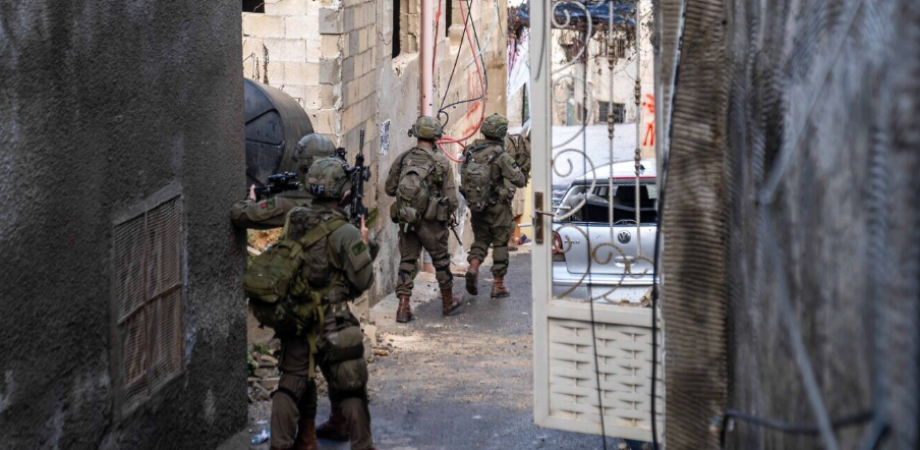
SAFA — Israeli occupation forces withdrew from Hebron in the southern occupied West Bank early Monday, November 2, ending a 10-day military assault that forcibly displaced more than 3,300 Palestinians, damaged homes and commercial properties, and caused widespread destruction to roads and essential infrastructure.
Hebron Governor Khaled Dudin announced the withdrawal, saying Palestinian security forces had resumed control of the affected areas and displaced families could begin returning to their homes.
Local authorities have begun assessing the damage and coordinating efforts to ensure residents can return safely after days of forced displacement and severe movement restrictions.
The Israeli military operation began on October 23, following a Palestinian shooting attack that killed two Israeli soldiers and wounded three others. Israeli forces subsequently killed the two Palestinians identified as carrying out the attack.
The military then imposed a siege on Hebron and surrounding villages, turning residential neighborhoods into restricted military zones and forcing families to abandon their homes.
Palestinian Homes Seized and Turned Into Military Positions
In the neighborhoods of Ain Deir Baha and al-Jalda, Israeli forces seized Palestinian homes and converted them into military barracks, forcing residents to leave their properties.
Israeli flags were raised over some of the occupied houses, compounding the distress of families who had been forced from their homes.
According to Hebron Municipality, the assault displaced or otherwise affected more than 3,300 Palestinians, while 15 homes and other structures were demolished.
The military operation also inflicted significant economic losses, damaged public infrastructure, and disrupted education and essential services.
Municipal spokesperson Ola al-Qawasmi confirmed that Israeli forces had withdrawn from Hebron and the two targeted neighborhoods.
She said Mayor Yousef al-Jaabari, municipal council members, and technical teams responsible for water, electricity, and maintenance had entered the affected areas to inspect damaged homes, roads, and essential networks.
Municipal crews are working to assess urgent needs, remove rubble, and restore basic services as displaced families begin returning to neighborhoods damaged by the assault.
Israeli Forces Target Schoolchildren Near Ramallah
Despite the withdrawal from Hebron, Israeli military raids and settler attacks continued across other parts of the occupied West Bank on Monday.
In al-Mughayyir, northeast of Ramallah, dozens of students suffered from tear gas inhalation after Israeli forces fired tear gas canisters toward the village's boys' school.
The incident disrupted the school environment and exposed Palestinian children to the effects of Israeli military operations.
Israeli Settlers Block Roads and Steal Palestinian Livestock
In Salfit, Israeli settlers burned tires and blocked roads near Kifl Haris and in the Wadi Qana area, obstructing Palestinian traffic.
The roadblocks followed an Israeli operation to evacuate a newly established settlement outpost in Jabal Awra, near the Israeli settlement of Rehelim. Settlers blocked roads in protest against the evacuation.
Meanwhile, in the northern Jordan Valley, Israeli settlers stole approximately 100 sheep belonging to Palestinian farmer Ali Majed Turki Sawafteh in the Salhab area northeast of Tubas.
Hassan Mleihat, head of the al-Baidar human rights organization, confirmed the theft, which targeted a Palestinian family's livestock and source of livelihood.
Israeli Raids and Arrests Continue Across the West Bank
Israeli forces also carried out overnight raids and arrests in several areas of the occupied West Bank.
In Nablus, Israeli troops detained journalist Samer Khweira, a correspondent for Al-Araby Al-Jadeed, during a raid on his home.
In the village of Tell, southwest of Nablus, Israeli forces withdrew after arresting Ammar Ahmad Ali Ramadan, the brother of slain Palestinian Imran Ramadan.
The raids and arrests came as displaced families in Hebron began returning to their homes and assessing the damage caused by the military assault.
Although the Israeli withdrawal has ended the immediate siege of the affected neighborhoods, thousands of Palestinians face the difficult task of repairing damaged properties, restoring essential services, and rebuilding their livelihoods.
For families returning to Hebron, the withdrawal does not erase the destruction left behind, while continuing Israeli military raids and settler attacks across the occupied West Bank leave Palestinian communities facing further displacement, insecurity, and threats to their livelihoods.
Source : Safa News


