
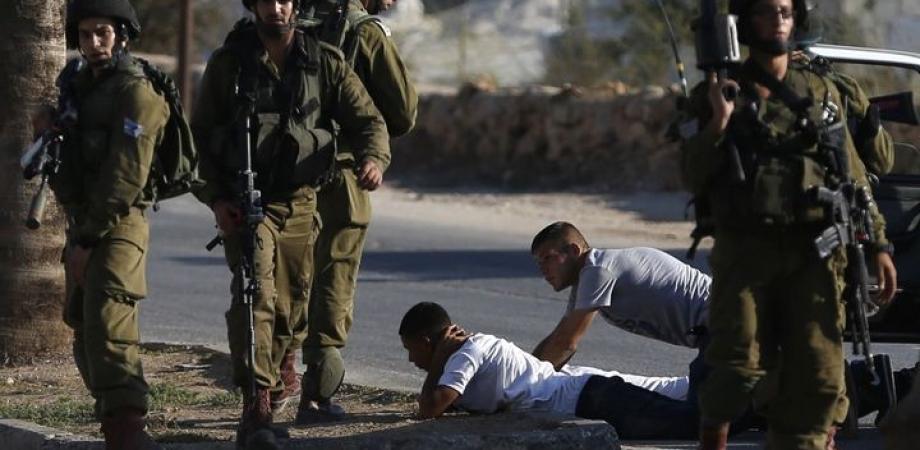
SAFA — Israeli occupation forces intensified their large-scale military assault on Hebron Governorate in the southern occupied West Bank on Sunday, forcing approximately 1,500 Palestinians from their homes, demolishing residential and commercial buildings, and imposing sweeping military closures for a third consecutive day.
The offensive, which began Friday, has spread across Hebron City and surrounding towns and refugee camps, with Israeli troops storming homes, conducting field interrogations, deploying military reinforcements, and blocking roads connecting Palestinian communities.
The most severe displacement has been reported in the Deir Baha and al-Jalda areas of Hebron, where hundreds of families have been ordered to evacuate their homes, leaving some residents without shelter and others fearing that they could be forced out next.
Local officials warned that the operation could expand further, placing thousands more Palestinians at risk of displacement as Israeli forces continue marking evacuated homes and issuing additional orders for residents to leave.
1,500 Palestinians Forced From Their Homes, Thousands More at Risk
Since Friday, Israeli occupation forces have displaced approximately 1,500 Palestinians from nearly 250 families in Deir Baha and al-Jalda, according to local reports.
The Hebron Governorate confirmed that more than 200 families had been forced from their homes, with some spending the night outdoors after Israeli soldiers ordered them to leave.
Hebron Mayor Youssef al-Jaabari warned that approximately 2,500 residents could be affected by the expanding military operation in the two areas, which together contain around 500 families across approximately 350 dunams of land.
Israeli forces have reportedly marked evacuated houses and delivered additional notices ordering residents to leave, intensifying fears that the forced displacement could spread to more neighborhoods.
For families already expelled from their homes, the operation has created an immediate humanitarian emergency, leaving parents and children struggling to find safe accommodation while military restrictions prevent normal movement through the city.
In response, Hebron Municipality declared a state of emergency and opened shelters for displaced residents.
Municipal officials also convened an emergency meeting with government institutions and community organizations to assess the damage, coordinate relief efforts, and identify the urgent needs of families who have lost access to their homes.
Israeli Forces Demolish Residential Building and Commercial Properties
Alongside the forced evacuations, Israeli occupation forces demolished a residential building containing three apartments in the Farsh al-Hawa area, west of Hebron.
Commercial facilities and shops were also demolished during the military operation, causing further damage to Palestinian property and livelihoods.
Israeli soldiers additionally seized Palestinian homes and converted them into military positions and barracks, according to local reports.
The destruction and seizure of residential properties have heightened concerns among Palestinians that the ongoing operation could lead to prolonged displacement and further damage to civilian infrastructure.
Meanwhile, Israeli military reinforcements continued arriving in Hebron as soldiers expanded their raids and searches across residential neighborhoods.
Raids Spread Across Hebron Towns and Refugee Camps
The Israeli military campaign extended to Halhul, al-Samu, Idhna, Tarqumiya, the Sanger area, and southern Hebron, where soldiers stormed residential buildings, searched homes, and detained Palestinians for field interrogations.
Israeli forces also seized a motorcycle during operations in Hebron.
Further raids were reported in Dura, Beit Ummar, Bani Naim, Surif, and the al-Fawwar and al-Arroub refugee camps.
Troops blocked entrances to towns and villages with earth mounds and concrete barriers, severely restricting movement between Palestinian communities and disrupting access to workplaces, schools, healthcare facilities, and essential services.
During overnight raids, Israeli soldiers stormed the Kriysa area of Dura and searched several homes, including the residence of the father of Palestinian prisoner Ibrahim al-Rajoub.
In Sama, west of Dura, Israeli forces detained Thaer Tayseer after reportedly beating him.
Several Palestinians also suffered breathing difficulties after inhaling tear gas fired by Israeli forces near the al-Fahs checkpoint, south of Hebron.
The expanding raids and closures have left communities increasingly isolated, with residents facing difficulty reaching neighboring towns or returning to their homes.
Hebron Governor Calls for Urgent International Intervention
Hebron Governor Khaled Dudin confirmed that more than 200 Palestinian families had been displaced during the Israeli offensive and called for urgent international and legal intervention to halt attacks on residents and their property.
The governorate is coordinating with official institutions, civil society organizations, and local community representatives to establish a joint emergency committee responsible for assessing the needs of displaced families and organizing assistance.
However, the continuing military operations, road closures, and growing number of displaced residents have complicated relief efforts and placed additional pressure on local authorities.
The displacement of families, demolition of buildings, and seizure of homes have also raised fears that the operation could produce longer-term consequences for Palestinian communities already facing extensive Israeli military restrictions.
Israeli Military Says Operation Could Continue for Days
The Israeli army launched the Hebron operation on Friday following a shooting attack targeting an Israeli military checkpoint near the city.
The Israeli army and Shin Bet security agency said the military campaign could continue for several days.
Since then, Israeli forces have expanded their presence across Hebron Governorate, carrying out raids, demolitions, forced evacuations, and road closures that have severely disrupted civilian life.
For the approximately 1,500 Palestinians already displaced from Deir Baha and al-Jalda, the immediate priority is securing shelter and basic necessities, while thousands of others remain fearful that their homes could be targeted next.
As the offensive enters its third day, the continued military siege and expanding displacement have deepened the humanitarian crisis in Hebron, leaving Palestinian families facing uncertainty over their safety, homes, and ability to return.
Source : Safa News


