
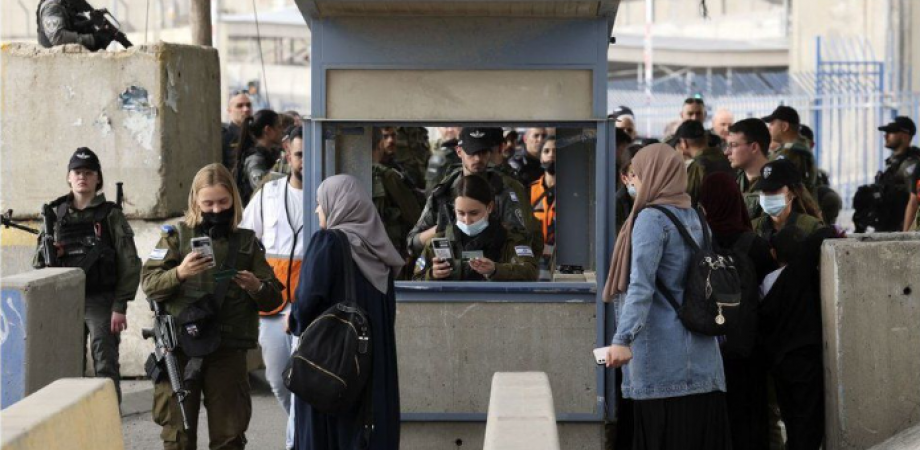
SAFA — The Israeli military siege of Hebron in the southern occupied West Bank entered its seventh consecutive day on Thursday, with nearly 5,000 Palestinians displaced, 10 major entrances sealed and commercial activity falling by an estimated 80%.
Figures from the Hebron Municipality, Palestinian rights organizations and local business representatives reveal mounting humanitarian and economic losses as Israeli occupation forces continue demolitions, forced evacuations, raids and mass arrests.
An analysis by Al Jazeera's Data Journalism Unit mapped the closures and military operations using municipal records, official figures and field reports.
Nearly 5,000 Palestinians Displaced
As of Tuesday night, Israeli forces had displaced 4,969 Palestinians from 780 families, according to the Hebron Municipality.
The displaced account for approximately 2% of Hebron's estimated 250,000 residents, with an average of 6.4 people per affected family.
The figure has nearly doubled since the fourth day of the assault, when the mayor reported approximately 2,600 displaced residents.
Municipal authorities and Hebron's Relief and Support Committee identified particularly vulnerable people among those uprooted, including 441 elderly residents, 336 children under two, 312 people with chronic illnesses, 216 pregnant or breastfeeding women and 44 people with disabilities.
Of the displaced families whose accommodation has been documented, 283 are staying with relatives, 266 are sheltering in unsafe locations and only 23 have secured rented accommodation.
Municipal officials said the main area designated for evacuation covers approximately 350 dunams (86 acres) and is home to around 500 families, comprising more than 2,500 people.
Israeli Forces Seal 10 Main Entrances
Field data reviewed by Al Jazeera indicate that Israeli occupation forces have effectively encircled Hebron by closing 10 principal entrances located between 2.4 and 7.6 kilometers from the city center.
The closures affect Halhul, Nabi Yunis and Ras al-Jura to the north; Beit Einoun to the northeast; Bir al-Mahjar to the northwest; Jabal Johar to the east; al-Fahis to the southeast; Qalqas to the south; and al-Harayiq and Dura to the southwest.
The main area of ongoing military operations lies approximately two kilometers west of central Hebron and covers at least 288 dunams (71 acres), according to boundaries mapped from field reports.
The restrictions have disrupted movement between neighborhoods, prevented access to workplaces and intensified the isolation of Palestinian communities.
Demolitions, Forced Evacuations and 110 Arrests
In Farsh al-Hawa, one of Hebron's western gateways, Israeli forces demolished a residential building containing three apartments, according to the Palestinian Anti-Wall and Settlement Commission.
The military also targeted a tile and ceramics company and several auto-parts businesses, while bulldozers leveled approximately seven dunams (1.7 acres) of land.
The commission documented forced evacuations in al-Jalda and Ayn Deir Baha, where Israeli troops also seized Palestinian homes and converted them into military positions, raising Israeli flags over the buildings.
Since the beginning of the assault, Israeli forces have detained 110 Palestinians in Hebron and its surroundings, including two young women, one of whom remains in custody.
Hundreds of other Palestinians have been subjected to field interrogations, according to the Palestinian Prisoners' Club.
Israeli forces say they have searched more than 500 locations, with troops from the Paratroopers Brigade's 202nd Battalion and the elite Maglan unit participating in the operation, according to Yedioth Ahronoth.
The siege follows months of Israeli military raids and settler attacks across Hebron Governorate.
In September, the Anti-Wall and Settlement Commission documented 272 incidents in the governorate, including 122 settler attacks and 19 demolition operations affecting 91 structures.
Hebron recorded the highest number of demolished structures among West Bank governorates that month.
Hebron's Economy Faces Millions in Daily Losses
The siege has brought much of Hebron's commercial activity to a standstill.
Adnan al-Natsheh, deputy head of the Hebron Chamber of Commerce and Industry, estimated daily commercial losses at approximately 12 million shekels ($3.1 million).
He said factories were operating at just 40% to 60% of capacity, while truck movement into and out of the city had largely stopped.
Businesses and factories demolished or damaged in Farsh al-Hawa alone have suffered losses exceeding two million shekels ($520,000), according to local business representatives.
Earlier assessments estimated an 80% decline in commercial activity within Hebron and a 70% decline across the wider governorate.
Local officials warned that losses are mounting as military closures continue to disrupt production, transportation and trade.
Israeli Assault Raises Questions Over Election Timing
The Israeli military assault began on Friday, October 23, following an attack that killed two Israeli soldiers and wounded three others. Israeli forces subsequently shot dead the two Palestinian men involved.
The operation began four days before Israel's Tuesday Knesset elections.
Israeli affairs analyst Mohammed Halsa argued that Prime Minister Benjamin Netanyahu sought to use the assault for electoral advantage by presenting himself as capable of delivering security.
Netanyahu visited the attack site shortly afterward and pledged demolitions and evacuations.
Analyst Adel Shadeed offered a different interpretation, arguing that the siege reflects a broader Israeli strategy aimed at what he described as “deciding the conflict” in Israel's favor, rather than simply responding to the shooting.
Israeli media have also reported disagreements over the operation's scope and duration.
According to Yedioth Ahronoth, Netanyahu and Israeli Defense Minister Yisrael Katz support continuing the campaign for what they describe as deterrence, while the military chief of staff favors ending it.
The debate has prompted comparisons with an Israeli raid on Qalandiya refugee camp in August, which ended after two days with limited operational results.
Meanwhile, thousands of displaced Palestinians in Hebron remain unable to return home, as military closures, demolitions and economic disruption continue to deepen the city's humanitarian crisis.
Source : Safa News


