
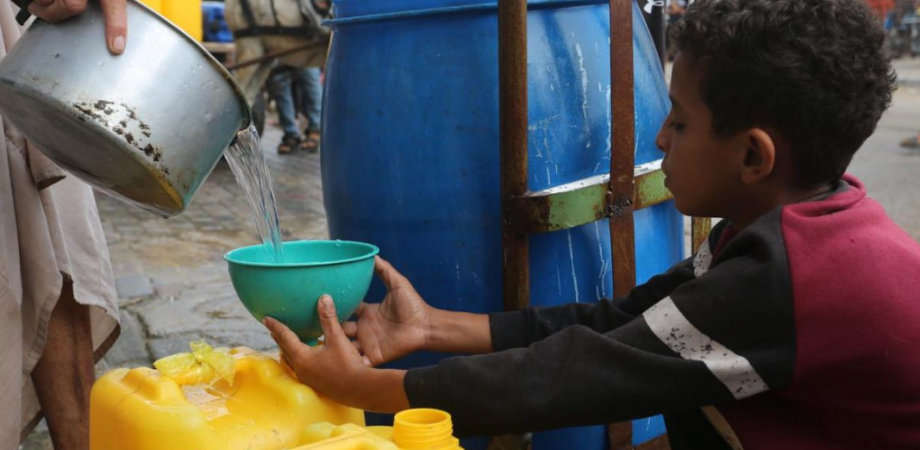
SAFA - The United Nations Relief and Works Agency for Palestine Refugees (UNRWA) has released a report detailing critical shortages of water, shelter, and healthcare across the Gaza Strip. Data from the agency and other UN sources outlines widespread damage to civilian infrastructure and worsening living conditions for roughly two million residents.
UNRWA states that approximately 85 percent of Gaza's population faces frequent and unpredictable interruptions in access to safe drinking water. Furthermore, 76 percent of Palestinian households lack basic hygiene supplies, raising the risk of disease outbreaks.
Damage to residential buildings and civilian facilities has left 94 percent of the total population, an estimated 1.98 million people, in urgent need of shelter and non-food relief items.
Nearly two million people are currently concentrated in an area of less than 100 square kilometers without functioning water or sewage infrastructure.
UN sources note that recent heavy rains have affected more than 220,000 people, damaging over 40,000 temporary shelters. The severe weather also impacted 960 sanitation facilities, nine medical centers, and several temporary learning spaces for displaced children.
According to UNRWA, newly displaced families seeking refuge in emergency centers face severely limited options for safe shelter, leading to unprecedented overcrowding in the remaining facilities.
UNRWA documented 1,059 attacks impacting its premises and the displaced people sheltering inside them from the start of the genocide through mid-November. The agency reported that 312 of its facilities have been damaged, representing nearly its entire infrastructure in the territory and limiting its capacity to deliver aid.
Rising Rates of Infectious Disease
Infectious illnesses are spreading fast across Gaza because Israeli genocidal campaign and blockade policies have ruined clean water access and left garbage piling up everywhere.
UNRWA data shows a sharp jump in meningitis cases throughout the strip, with suspected viral cases climbing 2.6 times and bacterial cases jumping to 4.1 times last year's rate.
Medical teams from UNRWA are working alongside the local Ministry of Health and international partners to track outbreaks, check vaccination records, and arrange medical referrals inside packed displacement camps, yet ongoing strikes and blocked equipment keep civil defense crews and aid workers from stopping this preventable health disaster.
Health officials link this surge to the lack of clean water and the accumulation of waste. UNRWA medical teams are working with the local Ministry of Health and international partners to monitor infectious diseases, verify vaccination records, and manage medical referrals within overcrowded camps.
However, UN sources indicate that international organizations, local municipalities, and civil defense teams lack the necessary equipment to manage the scale of the damage while military operations continue.
Source : Safa News


