
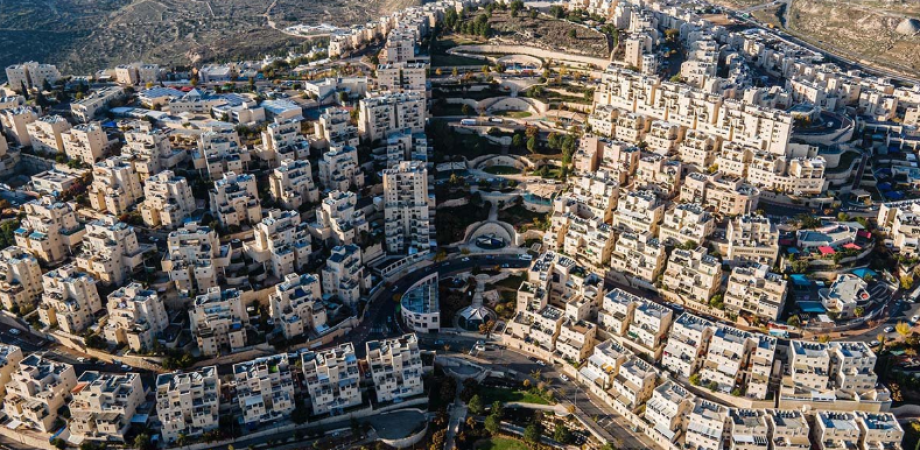
SAFA — Israeli authorities have advanced plans for a massive new settlement city in the occupied West Bank that could accommodate more than 200,000 Israeli settlers in approximately 60,000 housing units, according to Israeli media reports.
The proposed development, known as Rosh HaAyin East or Shira, would cover approximately 16,000 dunams of land between the Israeli city of Rosh HaAyin and the Gush Maarava settlement bloc, west of the Palestinian cities of Nablus and Salfit.
Israeli Channel 7 reported that the project would include low-rise and multistory residential buildings designed to accommodate both secular and religious Jewish residents.
If implemented at the proposed scale, the development would rank among the largest Israeli settlement projects in the occupied West Bank in recent years.
Planning and Administrative Steps
According to Israeli media, the project has been developed over the past two years through cooperation among the Samaria Regional Council, the Israel Land Authority and Israel's Finance Ministry.
Planning efforts reportedly accelerated following a December 2025 Israeli security cabinet decision promoted by Defense Minister Israel Katz and Finance Minister Bezalel Smotrich.
Since then, Israeli authorities have reportedly defined a municipal jurisdiction for the proposed settlement and assigned it a municipal code through the Interior Ministry.
These administrative measures represent progress toward establishing the settlement but do not, by themselves, confirm final construction approval for the proposed housing units.
Reports also indicate that an outpost named Shir David Farm was established in the area by the Lerner family in memory of an Israeli soldier killed in Gaza.
Settlement Expansion Framed as a Security Strategy
Israeli officials involved in the project have presented the proposed city as serving strategic and security objectives beyond residential development.
According to the reports, planners intend to establish a settlement corridor that would interrupt geographic connections between Palestinian communities in the western West Bank and areas near central Israel.
Israeli officials have cited security concerns following the October 7, 2023, attacks, along with efforts to prevent smuggling, waste burning and the unauthorized entry of Palestinian workers into Israel.
Yossi Dagan, head of the Samaria Regional Council, described the project as a strategic measure intended to strengthen security around central Israeli cities and connect settlements in the northern West Bank with the greater Tel Aviv metropolitan area.
The development is also linked to Dagan's broader “Million in Samaria” initiative, which seeks to expand the Israeli settler population in Area C of the northern West Bank to one million, with a longer-term goal of reaching two million.
The initiative envisions new residential developments, industrial zones, hospitals and railway infrastructure to support large-scale settlement expansion.
Israeli settlements in the occupied West Bank are considered illegal under international law, a position affirmed by the International Court of Justice and reflected in UN Security Council resolutions.
The proposed city would represent a major expansion of Israel's settlement presence in the territory if the plans proceed to construction.
Source : Safa News


