
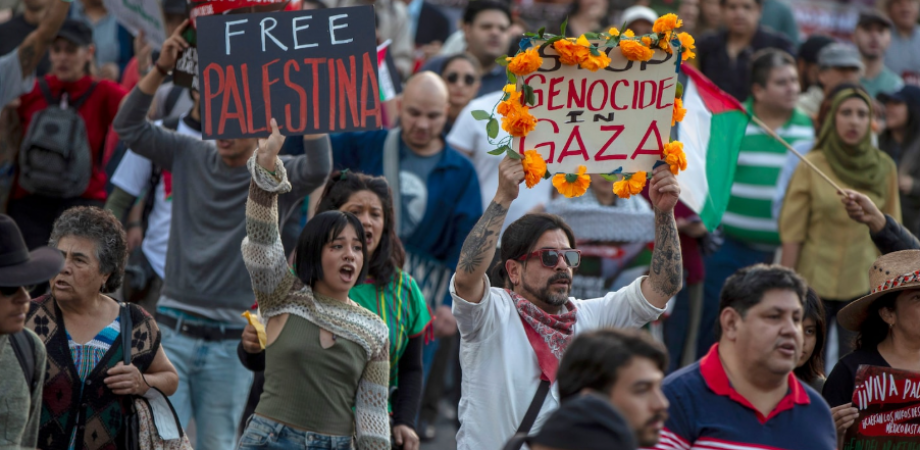
SAFA — A British Jewish-led organization has launched a formal challenge to the United Kingdom’s proscription of Hamas, warning that counterterrorism legislation is being used to suppress pro-Palestinian activism, silence criticism of Israel’s war on Gaza, and create a climate of fear among those advocating for Palestinian rights.
The Jewish Network for Palestine (JNP) submitted an application Thursday under Section 4 of Britain’s Terrorism Act 2000, seeking to remove Hamas from the country’s list of proscribed terrorist organizations.
The organization argues that the ban has severely restricted legitimate political debate, leaving activists fearful of arrest, prosecution, and other consequences for expressing their views on Palestine, Palestinian resistance, and the events of October 7, 2023.
The application follows the arrest of an 80-year-old Jewish academic and the prosecution of a 72-year-old Jewish writer, both members of JNP’s steering group, in connection with their pro-Palestinian and anti-Zionist statements.
A Climate of Fear Among Palestine Activists
Founded in 2018, JNP is one of 11 Jewish and Jewish-led organizations forming the UK’s Jewish Bloc for Palestine. According to its application, the organization has approximately 600 members and supporters.
JNP chair David Cannon said the proscription had made it increasingly difficult to discuss the events of October 7 or challenge prevailing narratives without risking accusations of supporting a banned organization.
The consequences, he said, extend beyond criminal prosecution. One member resigned from the organization over fears that her political statements could jeopardize her immigration status.
JNP argues that the legislation has created a chilling effect on political expression, discouraging individuals from participating in public discussions about Palestine out of fear of legal repercussions.
Challenging the Legality of Britain’s Hamas Ban
Britain initially proscribed Hamas’s armed wing in 2001 before extending the ban to the entire organization in November 2021 under then-Home Secretary Priti Patel.
At the time, the British government described Hamas as “fundamentally and rabidly anti-Semitic,” presenting the expanded proscription as a necessary measure to protect the Jewish community.
JNP is now challenging the necessity and proportionality of that decision, arguing that its consequences extend far beyond counterterrorism and interfere with fundamental civil liberties.
The organization maintains that the expanded ban disproportionately restricts the rights to freedom of thought, expression, and assembly guaranteed under Articles 9, 10, and 11 of the European Convention on Human Rights.
It further argues that the government has failed to demonstrate that Hamas poses a specific threat to Britain and that the previous arrangement, under which only its armed wing was proscribed, represented a less restrictive alternative.
Home Secretary Shabana Mahmood has 90 days to consider the application. Should it be rejected, JNP can appeal to the Proscribed Organisations Appeal Commission.
Jewish Activists Arrested and Prosecuted Over Political Expression
Central to JNP’s application are the experiences of two prominent Jewish anti-Zionist activists whose encounters with British counterterrorism authorities have raised concerns over the boundaries of political expression.
Tony Greenstein, a 72-year-old Jewish writer and activist, was charged in November 2024 under Section 12 of the Terrorism Act over a blog post published on October 7, 2023, titled “Full Support for the Gaza Ghetto Uprising.”
Prosecutors argued that a sentence in the article, together with Greenstein’s request for readers to share it, amounted to inviting support for Hamas.
After lengthy legal proceedings, Greenstein was acquitted in August 2026.
Speaking to Al Jazeera, he said his prosecution demonstrated how counterterrorism legislation could discourage political expression and impose consequences extending beyond the courtroom.
He revealed that five banks and building societies had closed his accounts during the proceedings.
JNP also highlighted the case of Haim Bresheeth-Zabner, an 80-year-old Jewish-Israeli filmmaker, academic, and anti-Zionist activist.
Bresheeth-Zabner was arrested in November 2024 after delivering a speech at a pro-Palestinian demonstration in north London. He was detained for 13 hours before being released without charge.
He argued that counterterrorism legislation was being used to restrict criticism of Israel and opposition to its military assault on Gaza, stressing that defending human rights must include the freedom to oppose genocide and discuss Palestinian resistance.
For JNP, the two cases illustrate how arrests and prolonged legal proceedings can discourage political participation even when they ultimately result in no conviction.
Britain’s Counterterrorism Laws Under Growing Scrutiny
The application raises fundamental questions about the use of counterterrorism legislation in Britain and the extent to which national security measures can restrict legitimate political dissent.
While the government maintains that proscription is necessary to combat terrorism, JNP argues that the expanded ban has blurred the distinction between prohibited support for a terrorist organization and legitimate advocacy for Palestinian rights.
The organization’s challenge comes amid continuing international scrutiny of Israel’s military campaign in Gaza and growing debate over the protection of freedom of expression for those opposing it.
At the heart of the case is whether individuals can freely discuss Palestine, criticize Israeli military actions, and participate in political activism without facing disproportionate restrictions or fearing criminal prosecution.
The outcome could have far-reaching implications not only for Palestinian solidarity movements but also for civil liberties, academic freedom, political debate, and the application of counterterrorism legislation across Britain.
For JNP, the challenge extends beyond the proscription of Hamas. It concerns the fundamental right to engage in political debate without fear of criminalization and the need to ensure that counterterrorism powers do not become instruments for suppressing legitimate dissent.
Source : Safa News


