
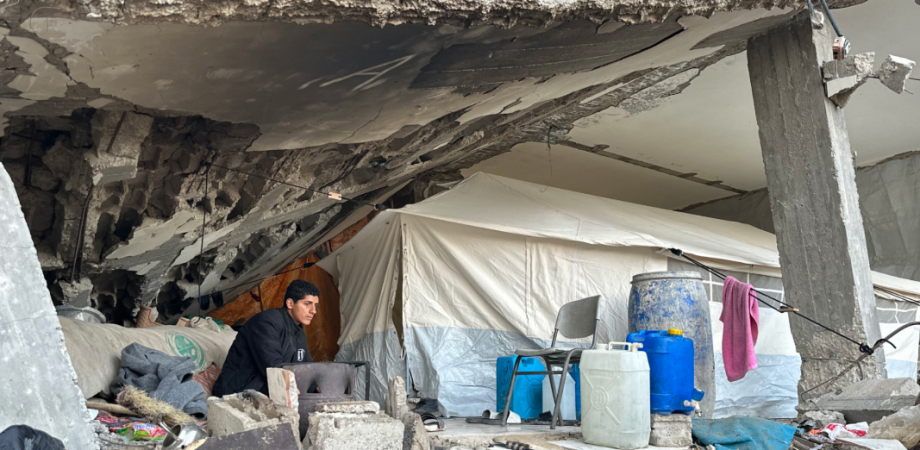
A winter storm sweeping the coastal enclave has laid bare the fragility of life after months of devastation, claiming the lives of a child and a young woman and leaving tens of thousands exposed. Torrential rain and gale-force winds tore through makeshift shelters overnight, flooding low-lying areas and ripping apart tents that have become home to families with nowhere else to go.
The woman, in her early thirties, was killed when a weakened wall, left unstable by earlier destruction during the genocidal war, collapsed onto the tent where she was sleeping in a central district of Gaza City. Relatives were injured as the structure gave way under violent gusts. Elsewhere, a child drowned after falling into a water well amid the chaos of rising water levels, as emergency crews struggled to reach families cut off by flooded streets.
Across the strip, the storm uprooted thousands of tents, particularly along the southern coastline where rough seas pushed water inland. Families were forced into the open in freezing conditions as rain pooled around camps and shelters. Rescue teams spent the night pumping water, clearing drainage paths and handing out plastic sheeting, while ambulances were repeatedly bogged down in deep floodwater.
The scale of displacement has turned harsh weather into a lethal threat. Close to a million people are now living in tents, many pitched on muddy ground with no drainage or insulation. Aid workers warn that without proper shelter and repairs to sewage and water systems, further loss of life is likely as winter deepens. Mobile housing units and basic construction materials remain scarce, compounding the emergency.
The storm comes against the backdrop of prolonged destruction. Since winter began, numerous deaths have been linked to exposure and flooding, and the vast majority of temporary shelters have been inundated at least once. Entire neighbourhoods, already hollowed out by the genocidal war, continue to crumble under rain and wind. Despite a declared ceasefire months ago, daily life has scarcely improved, as promised humanitarian deliveries and housing solutions have failed to materialise.
What was once a seasonal hardship has become an ongoing humanitarian collapse. With infrastructure shattered and families confined to flimsy tents, each bout of bad weather now carries the weight of catastrophe, prolonging suffering long after the guns have fallen silent.
Source : Safa News


