
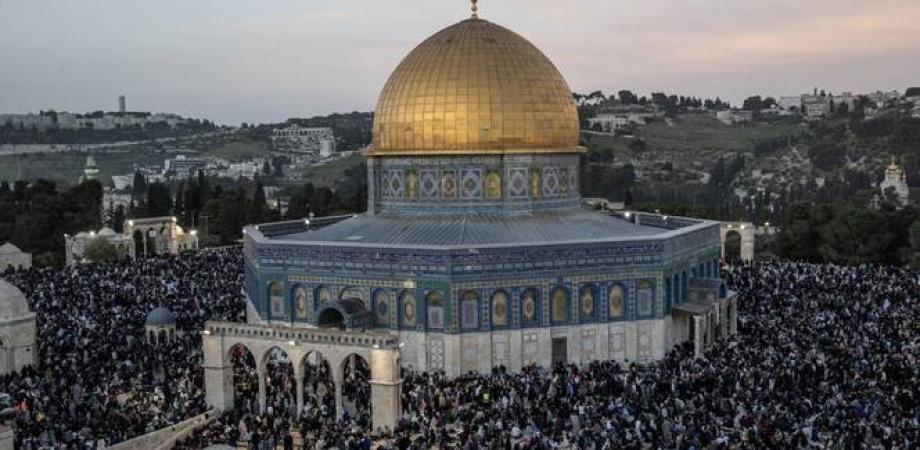
The compound of Al-Aqsa Mosque in Jerusalem has remained closed for ten consecutive days under strict restrictions imposed by Israeli authorities, preventing thousands of Muslim worshippers from reaching the site just as the final and most sacred days of Ramadan begin. Iron gates and heavy security measures now block access to the courtyards of Islam’s third holiest sanctuary, leaving the usually crowded compound largely empty during nights that traditionally draw vast numbers of worshippers for prayer and spiritual retreat.
The closure coincides with the last ten days of Ramadan, a period when many Muslims travel to Jerusalem to perform prayers and observe i‘tikaf within the mosque compound. Israeli authorities say the restrictions are linked to a declared emergency following recent regional escalation involving Iran. For many Palestinians in Jerusalem and the occupied territories, however, the decision has meant being deprived of long-established religious practices at the site during one of the most significant moments of the Islamic calendar.
Beyond the mosque itself, Israeli forces have also intensified restrictions around the Old City. The area surrounding Bab al-Amud (Damascus Gate) has been heavily secured, and local businesses were reportedly ordered to close after residents distributed iftar meals to passers-by. Prayer halls and open courtyards inside the mosque compound remain inaccessible, transforming a space normally filled with worshippers into what residents describe as a quiet and deserted sanctuary.
The closure has fuelled growing anger among Jerusalem’s religious institutions and community groups, who warn that prolonged restrictions risk altering the religious and historical character of the site. At the same time, local sources say gatherings and events have continued elsewhere in the city, including near the Western Wall, highlighting what many residents see as a stark imbalance in how restrictions are applied.
Amid the tension, religious scholars and community leaders have urged Muslims to maintain a presence around the mosque wherever possible. Calls have spread encouraging worshippers to pray at the gates of the compound if they are unable to enter. For many residents of Jerusalem, the empty courtyards of Al-Aqsa Mosque during Ramadan’s holiest nights have become a powerful symbol of a city where access to sacred space is increasingly contested.
Source : Safa News