
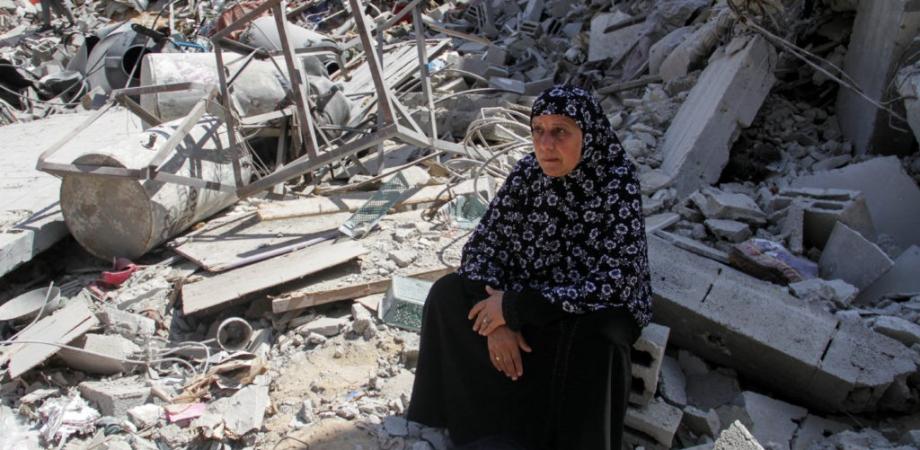
As the world observes International Women’s Day, daily life for women in the Gaza Strip unfolds in conditions shaped by displacement, grief and relentless uncertainty. Across the enclave, families living in tents or damaged homes continue to navigate the consequences of an ongoing genocidal war that has reshaped nearly every aspect of civilian life. In place of celebration, many women mark the day through the quiet labour of survival, carrying responsibilities that have multiplied as the crisis deepens.
Among the rows of temporary shelters and shattered neighbourhoods, women are working to rebuild fragments of routine for their families. With many households having lost relatives or their main providers, countless women have stepped into roles that once belonged to husbands, fathers or brothers. They manage scarce resources, search for food and water, and care for children and elderly relatives while coping with the emotional toll left by years of devastation. What once formed the ordinary rhythm of daily life has become a sequence of exhausting tasks carried out under the pressure of constant uncertainty.
For many residents, the day begins with a search for basic necessities. Water deliveries are sporadic, food is limited, and cooking often requires improvised methods due to the absence of gas and electricity. Long queues form outside community kitchens and water distribution points, where families wait patiently for supplies that may or may not arrive. Even simple domestic tasks such as washing clothes or preparing breakfast demand time, effort and scarce materials, turning everyday routines into struggles for endurance.
Displacement has further transformed family life across Gaza. Homes destroyed during the genocidal war have forced thousands into makeshift shelters where privacy, security and comfort are almost nonexistent. Mothers are increasingly responsible not only for providing food and care but also for supporting their children’s disrupted education. Many attempt to recreate lessons inside tents or damaged buildings, determined to maintain a sense of normality despite the collapse of schools and public services.
Yet beneath the weight of hardship lies a determination that continues to sustain families across the territory. Women remain at the centre of community resilience, preserving daily routines, caring for children and holding families together despite overwhelming loss. In a place where destruction has become part of the landscape, their persistence has become one of the few remaining threads keeping ordinary life intact.
Source : Safa News


