
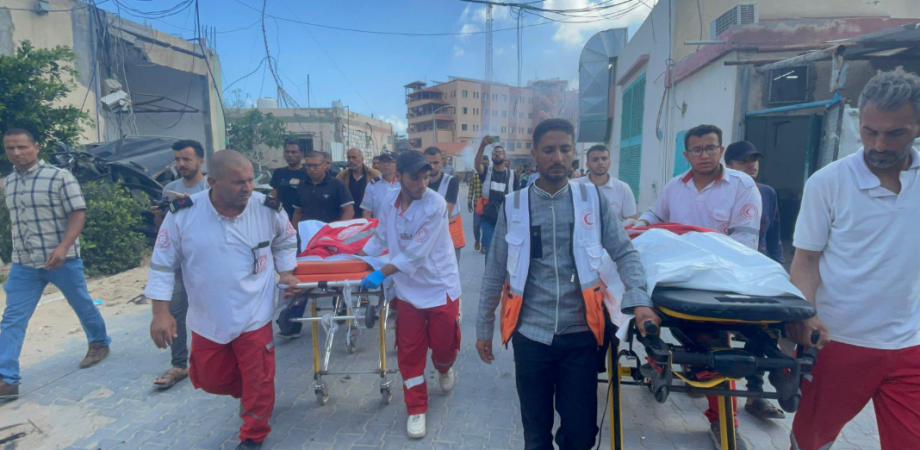
In Gaza, a new cohort of doctors has entered the medical profession under circumstances that defy any conventional understanding of higher education. More than three hundred medical students have completed their degrees while the territory remains trapped in a prolonged genocidal war, marked by destruction, displacement and the steady erosion of civilian life. Their qualification is being viewed locally not as a routine academic milestone, but as a rare assertion of continuity in a place where institutions have been systematically dismantled.
The students, drawn from Gaza’s main universities, finalised their studies as campuses were rendered unusable and hospitals themselves became sites of devastation. Many were forced to flee their homes, revise without electricity or reliable communications, and adapt to an environment in which lectures, clinical training and examinations were repeatedly interrupted. Learning often continued in improvised settings, shaped by scarcity and constant uncertainty, as the wider health system struggled to function amid repeated attacks.
Throughout this period, many of the students worked alongside exhausted medical staff in hospitals and emergency centres, providing assistance to the wounded as casualties mounted during the genocidal war. Assessments were delayed, rescheduled and eventually conducted during brief lulls, sometimes inside medical facilities or temporary spaces. Despite these constraints, the majority succeeded in meeting graduation requirements, underscoring an unusual level of perseverance under siege.
Their entry into the profession comes at a moment of acute need. Gaza’s healthcare sector has lost large numbers of doctors and nurses through killing, injury and displacement, leaving hospitals critically understaffed. The emergence of newly qualified doctors is therefore seen as both a practical necessity and a symbolic act, signalling an insistence on sustaining care, knowledge and public service despite the ongoing destruction.
For many observers, this graduation is less about ceremony than about survival. It reflects a collective resolve to protect education and medical ethics in the midst of a genocidal war, and the determination of a generation preparing to serve a population facing one of the most severe humanitarian catastrophes of the modern era.
Source : Safa News


