
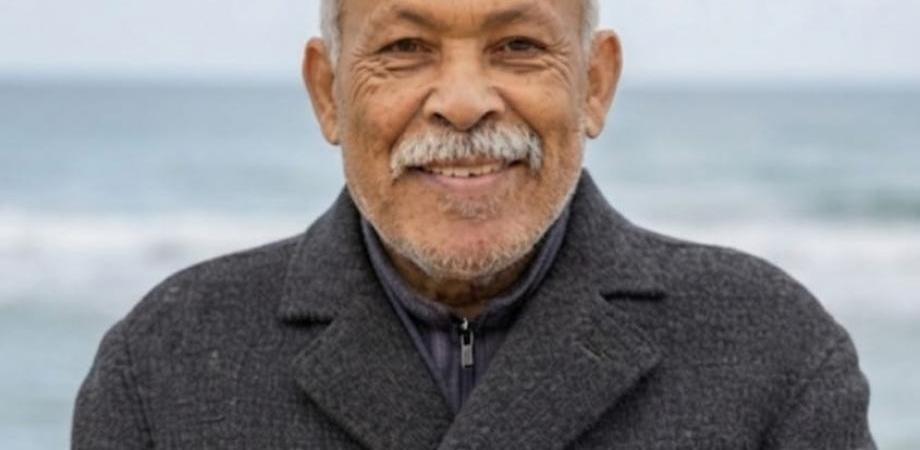
SAFA - For decades, 66-year-old Hajj Adnan Shaaban Jarad taught geography not just as a study of maps but as a testament to Palestinian identity. His life ended as it was lived: bound to the land. Jarad was killed along the road toward Yibna, the depopulated village of his origins, ending a lifelong pursuit to return to his ancestral home.
Born in 1956, Hajj Adnan carried an early awareness of his connection to place. A Palestinian refugee whose roots traced back to Yibna, depopulated in 1948, he spent his life holding on to the hope of return. He passed that dream on to his children and students at schools run by the United Nations Relief and Works Agency for Palestine Refugees (UNRWA), where he spent many years teaching geography.
“Abu Shaaban” was no ordinary teacher. He cherished every grain of soil in his homeland and would often tell his children with unwavering confidence: “We will return to Yibna one day.”
He was loved by everyone, known to children and adults alike for his cheerful spirit and special bond with children. He made time to play with them, bring smiles to their faces, hand out gifts, and organize evenings of entertainment, turning education into a lifelong mission rooted in love.
When the “Al-Aqsa Flood” battle began on October 7, 2023, Hajj Adnan and his family were not spared the cost of their homeland. That very day, his son Ibrahim, 29, a married father of three, was killed while defending Palestinian land. The grieving father received the news with the patience of a steadfast believer, entrusting his son to God, before turning to comfort his wife and family.
But a greater tragedy awaited the family on the bloody night of November 16, 2023, around 40 days after Ibrahim was killed. Without warning, an Israeli strike hit the family home in Gaza City’s eastern Zeitoun neighborhood, where family members had gathered with their relatives.
The strike killed his second son, Khaled, 35, and his young son-in-law, Moataz Abu Kweik, 37. His wife, Hajjah Umm Shaaban, and many other family members were also wounded.
The Final Goodbye
His eldest son, Shaaban Jarad, 43, recalls those harrowing moments in an interview with Felesteen newspaper: “The first strike came at night. We quickly left the area and split into groups, heading to nearby homes to rescue whoever we could.”
Shaaban continues, his voice heavy with grief: “My father, Hajj Adnan, went to check on the family members who had been wounded in the first strike. He was then directly targeted by a drone missile in what was a deliberate assassination, striking him as he checked on his family.”
Hajj Adnan was killed less than 20 minutes after Khaled and Moataz, joining the ranks of those the family had lost, remembered by them as a dignified and steadfast man.
Shaaban adds: “We learned of my father’s death the following morning, which made the tragedy even more devastating. But we thanked God and remained patient.”
Shaaban recalls his father’s presence in his absence, saying bitterly: “My father was not merely a father; he was our compass, guiding us toward patience. Today, we live with a void that nothing can fill. In every corner of the house, I can still hear the echo of his laughter and his stories about Yibna, a village he never visited but that lived within his soul.
What we miss most is the sense of reassurance he gave us so generously. His heart always seemed to sense our needs before we did. His departure has left a wound that will not heal, as though with him we lost the family’s memory and its beating heart.”
The family’s suffering did not end with the bloodshed. It was compounded by the harsh geography of the place itself, as the area was completely sealed off and surrounded by Israeli military vehicles and warplanes.
The family members explain that they were unable to take the bodies to hospitals or even reach a cemetery to bury the dead because of the tight siege. Faced with such harsh conditions, the family was forced to bury them in a plot of land near the house, leaving the graves of their loved ones close to their broken hearts.
A Patient Wife, Broken Pillar
Hajjah I’tidal Jarad, 65, tells Felesteen newspaper her heart is torn between grief and pride: “He was an example of a good and loving husband, always seeking to bring a smile to people’s faces through his generosity and noble character. I have lost one of the main pillars of our home.”
“Umm Shaaban” recalls his compassion: “After my son Ibrahim was killed, he was the one who comforted me and told me, ‘Hajjah, he will intercede for you on the Day of Judgment.’ He always hurried to help the poor and those in need.”
Speaking of the pain of loss, she continues in words filled with longing: “Every morning, I miss the sound of his prayers for me and our children. I miss the man who could see in our eyes what others could not. He always left the house with a smile that filled us with hope.
Today, the house feels desolate, as though time stopped at the moment we said goodbye. My longing for him is not fleeting; it is a pain that follows me through every detail of my life. He was my support both in exile and at home. With his death, I lost the hand that used to ease the burdens of life from my heart. Now, waiting has become the hardest part of my day, and memories are all I have left of him.”
Hajj Adnan Shaaban Jarad is gone, but his memory remains steeped in the scent of the land, teaching and resistance. The geography teacher who once traced the borders of the homeland and the longing for return for his students leaves behind a legacy of patience.
The deaths of Ibrahim, Khaled, Moataz, and Adnan remain a beacon on the road to freedom and a living testament that while the elders may pass away, they leave behind seeds of certainty that the promised return will come one day, just as he always said: “We will return to Yibna one day.”
Source : Safa News


