
SAFA - Under the fragile roof of a tent that offers little protection from the summer heat, Felesteen Abu Tuyoor sits surrounded by her husband and children, gazing for long stretches at the tent’s entrance as if waiting for her son Akram to suddenly appear. He has been forcibly disappeared since Israeli occupation forces arrested him.
The tent has become the family’s last refuge since they lost their home in al-Shouka village in Rafah, southern Gaza. Yet the mother’s heart remains at the place where her eldest son was taken away from her.
At 38, Felesteen is now displaced in the al-Mawasi area of Khan Younis, southern Gaza. But displacement is not the only burden weighing on her. Since her son Akram was arrested on July 12, 2024, she has lived in a state of endless waiting, searching for even the smallest piece of information to reassure her that he is still alive.
Forcible Disappearance
“More than two years have passed since Akram was arrested, and we have received no official notice explaining where he is, what condition he is in, or what has become of him,” Felesteen says. “Everything we know has come through prisoners released from the occupation’s prisons and returned to Gaza.”
Released prisoners told her they had seen Akram at the notorious Sde Teiman detention facility. Others said they later saw him at the Negev Desert prison before they themselves were released and returned to their families.
Yet while such accounts give her brief moments of hope, they offer no answer to the question that follows her every day: Where is Akram now?
Akram was 17 when IOF arrested him during a sudden incursion into Rafah as genocidal war was devastating the Gaza Strip and its people.
She remembers the moment he was arrested in front of the family. Israeli soldiers pulled him away and placed him, along with other detainees, inside an Israeli vehicle before taking them to an unknown destination.
The family never learned where he was taken. Since that day, the image of her son has become the only window through which she tries to imagine his life behind bars.
Tears streamed down the mother’s cheeks as she said, "I long to see my son. I am deeply attached to him, and I cannot go on living without him. I just want to know that he is okay.”
Felesteen says she asks for nothing more than clear information about her son. She cannot understand why IOF is subjecting him to enforced disappearance, or why his family is being denied even the basic knowledge of where he is being held or what condition he is in.
Displacement and a Profound Loss
Inside the tent, amid the hardships of displacement, the family has little left but to wait. The burdens of daily life are shared between her husband and children, while the mother tries to hide from them the depth of the fear she carries. Yet despite Akram’s absence, his presence remains woven into the smallest details of their everyday lives.
Felesteen wonders what her son eats, where he sleeps, whether he receives medical care when he falls ill, and who looks after him amid reports of abuses and crimes against prisoners inside the prisons.
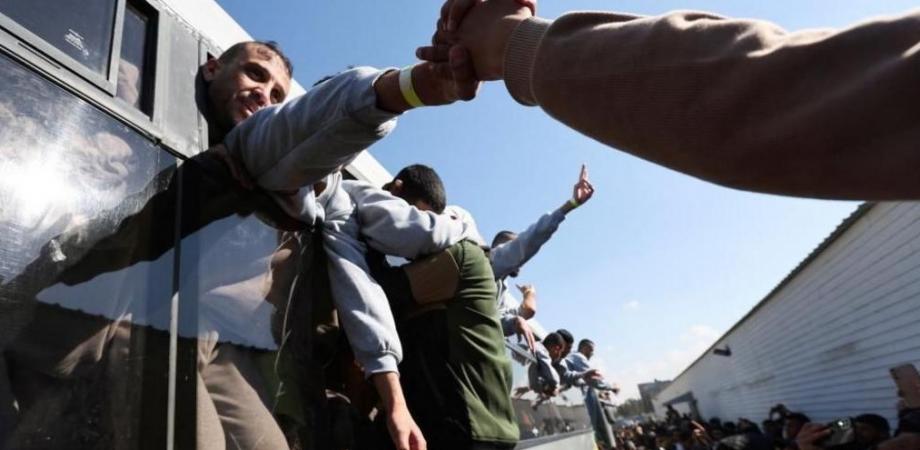
More than 100 prisoners have reportedly died since the start of the genocide, with the identities of only 89 of them publicly confirmed, according to reports by organizations that document the conditions of Palestinian prisoners.
For the mother, that fear grows each time she hears of a Palestinian prisoner dying inside the IOF prisons under conditions of abuse and torture.
She fears that the abuses and crimes prisoners are subjected to could put her son’s life at risk, particularly because he was only 17 when he was arrested.
Since his arrest, Akram’s absence has become more than a distance separating a mother from her son. It has become the loss of information itself. “I do not know whether he is being held somewhere specific, and we have no official account to help us understand what has happened to him since his arrest,” she says.
As more than two years have passed since his arrest, waiting has become part of her daily life. She follows news about prisoners, hoping to hear her son’s name among those released or to find any piece of information that might lead her to him.
But the news she has been waiting for has yet to come. For her, the hardest part of his detention is not simply his absence but the inability to know whether he is safe.
Her voice carries the weight of a deep, lingering pain. “My heart cannot rest,” she says. “I just want to know that he is okay.”
The Long Wait
Before the genocidal war that erupted in October 2023, which, under the ceasefire agreement that took effect in October 2025, has still not truly ended, Akram and his family lived a quiet life in Rafah, a city largely erased by Israeli demolition and destruction.
Today, everything around the family has changed. The home that once brought them together is gone, and they now endure displacement in a tent, with the war leaving behind immeasurable loss and fear.
The mother never imagined that the last time she would see her son would be as he was taken away in a military vehicle and that she would spend the following two years waiting, her heart already heavy with loss, for any news of him.
Yet amid all these losses, Akram’s absence remains what weighs most heavily on his mother. She still keeps a place for him in her memory and carries a question for which she has found no answer: Where is Akram?
Until she finds an answer, Felesteen will continue to wait, living under the weight of her son’s enforced disappearance.
Source : Safa News


