
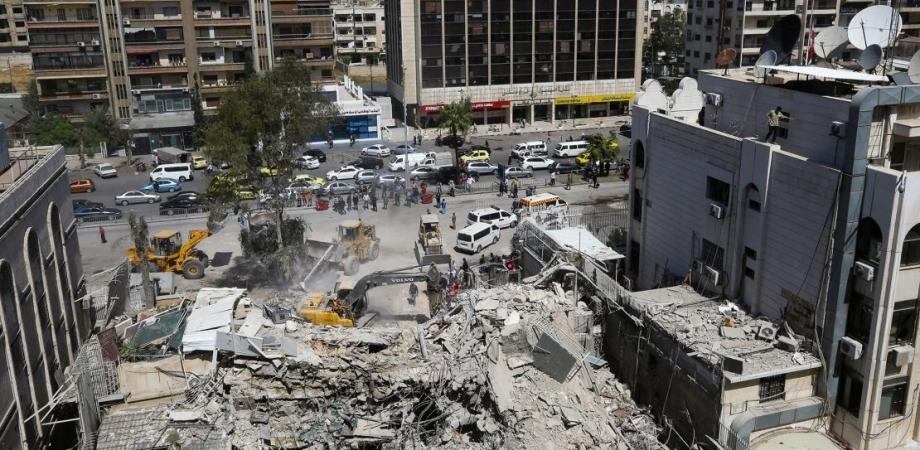
SAFA — The deadly collapse of a war-damaged residential building in Gaza City has renewed urgent calls for reconstruction as thousands of Palestinians continue to live in structures weakened by Israeli bombardment and at risk of collapse.
At least 20 Palestinians were killed and others injured when the multi-storey building collapsed on Wednesday. The building had previously been damaged by Israeli strikes and was sheltering displaced families who had few alternative housing options.
Gaza’s Civil Defense has warned that an estimated 2,000 damaged and occupied buildings across the Strip are at risk of collapse, leaving thousands of Palestinians facing potentially deadly conditions, particularly as winter approaches.
Residents and experts are calling for urgent international intervention to allow construction materials, heavy machinery and reconstruction equipment into Gaza and provide safe housing for families currently living in damaged buildings.
Gaza resident Mohammed Abu Issa warned that Palestinians have no more time to wait, saying winter rains and flooding could further weaken already damaged structures, block roads and deepen the suffering of displaced families.
He stressed that reconstruction should not be tied to political conditions, arguing that protecting lives and providing safe housing must take priority.
Suhaib al-Majdalawi similarly warned that Palestinians are being forced to choose between unsafe buildings and having nowhere to live.
With safe housing virtually unavailable, he said families may remain inside damaged structures despite knowing they could collapse, underscoring the urgent need to identify dangerous buildings and provide residents with alternatives.
Gaza’s Housing Crisis Deepens
The scale of destruction has left Gaza facing an unprecedented housing and reconstruction crisis. According to the final Gaza Rapid Damage and Needs Assessment conducted by the United Nations, European Union and World Bank, more than 371,000 housing units have been damaged or destroyed, while around 1.9 million Palestinians have been displaced, many repeatedly.
The assessment estimates that Gaza will require $71.4 billion for recovery and reconstruction over the next decade, including $26.3 billion during the first 18 months to restore essential services, rebuild critical infrastructure and support economic recovery.
Infrastructure and housing expert Mohammed al-Askari said the destruction extends far beyond housing, affecting water and sewage networks, roads, electricity systems, agriculture and industrial production.
He warned that Gaza’s severe shelter crisis has forced large numbers of displaced Palestinians to rely on tents, temporary shelters and damaged buildings that cannot provide safe or dignified long-term accommodation.
Economic affairs specialist Mohamad Skaik said Wednesday’s deadly collapse should not be treated as an isolated incident, but as a warning of the broader danger facing families living among Gaza’s bomb-damaged buildings.
He called for an urgent campaign involving public institutions, civil society, the private sector and international donors to assess structural damage, identify the buildings most at risk and provide safe alternatives before further collapses occur.
The danger is particularly acute as winter approaches. Heavy rain, wind and flooding could place additional pressure on structures already weakened by Israeli strikes, while families living in tents and damaged homes have few options for relocation.
The Gaza City collapse has exposed the consequences of delaying reconstruction: for thousands of Palestinians, buildings damaged during Israel’s war have become ticking time bombs, yet the severe housing shortage leaves many families with nowhere safer to go.
Source : Safa News


