
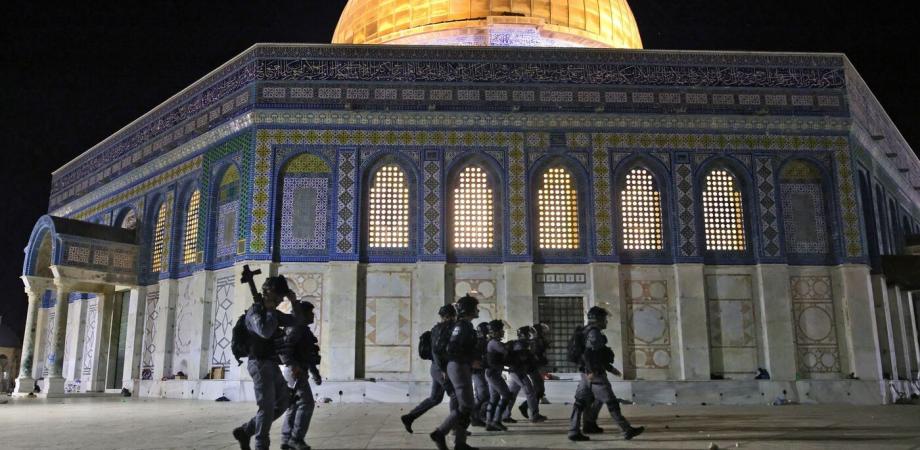
SAFA — With Israel’s Knesset elections approaching on October 27, far-right National Security Minister Itamar Ben-Gvir has intensified high-profile moves involving Al-Aqsa Mosque, Palestinian prisoners and Bedouin communities in the Negev, placing some of the most sensitive Palestinian issues at the center of his political messaging.
The moves come as Ben-Gvir, leader of the far-right Jewish Power party, seeks to consolidate support among Israel’s ultranationalist right ahead of the vote.
Ben-Gvir Pushes to Open Al-Aqsa on Saturdays
Ben-Gvir has formally backed demands to open Al-Aqsa Mosque to Jewish visitors on Saturdays, a move that would represent a significant change to longstanding arrangements at the holy site.
His position was submitted as part of proceedings before Israel’s High Court concerning a petition by Jewish activists seeking Saturday access to the compound during the Jewish holiday season.
Ben-Gvir also wrote to Prime Minister Benjamin Netanyahu earlier this month urging him to approve Saturday access, arguing that Jews should be allowed to enter the site seven days a week.
The demand comes amid a broader campaign by extremist Temple groups seeking to expand Jewish access and religious practices at Al-Aqsa. Such groups have increasingly pushed for changes to the longstanding status quo, while Palestinians warn that these moves are aimed at strengthening Israeli control over the mosque compound.
Ben-Gvir has repeatedly entered the Al-Aqsa compound himself, while Israeli police under his ministry provide security for Jewish visits to the site.
Palestinian Prisoners Turned Into Political Messaging
Ben-Gvir has also increasingly used Palestinian prisoners in his social media messaging.
Recent videos posted by the minister have drawn criticism for appearing to celebrate the harsh treatment of Palestinian prisoners. One AI-generated video depicted Palestinian detainees emerging from prison emaciated, while another video showed Ben-Gvir confronting Palestinian women prisoners at Damon Prison and boasting about worsening their detention conditions.
The Damon Prison footage showed Palestinian women raising complaints about their conditions while Ben-Gvir told them he was “proud” that prison conditions had been reduced to what he described as the minimum.
Palestinian prisoners’ rights groups have condemned his policies and prison visits as part of a broader campaign of abuse and humiliation against Palestinian detainees.
Confrontations With Bedouin Communities
Ben-Gvir has also stepped up his presence in Palestinian Bedouin communities in the Negev, where disputes over land, home demolitions and unrecognised villages have long fuelled tensions with Israeli authorities.
During a highly publicised visit to Bir Hadaj, Ben-Gvir toured residents’ lands amid protests and confrontations with local Palestinians.
Salim al-Denfiri, head of the local committee in Bir Hadaj, said the visit would not weaken residents’ determination to remain on their land and accused Ben-Gvir of supporting policies that have resulted in Palestinian homes being demolished.
The visit follows other high-profile actions targeting Palestinian institutions and communities. In August, Ben-Gvir entered an UNRWA facility in Qalandiya refugee camp north of occupied Jerusalem and announced steps aimed at removing the agency from the site.
Taken together, Ben-Gvir’s recent actions have placed Al-Aqsa, Palestinian prisoners and Palestinian land rights prominently within his public messaging ahead of Israel’s October election.
As the campaign intensifies, his focus on these highly sensitive issues is reinforcing his political identity among Israel’s far right while raising Palestinian concerns that electoral competition could drive further escalation against their holy sites, prisoners and communities.
Source : Safa News

