
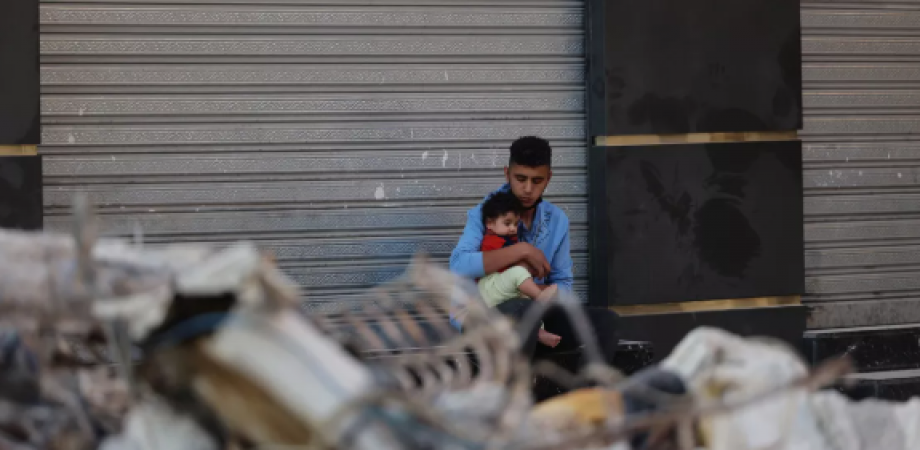
SAFA — Four Palestinian children have died from bacterial meningitis at Nasser Medical Complex in Khan Younis, southern Gaza, as doctors warn of a growing number of infections among children living in overcrowded displacement camps without adequate clean water, sanitation or nutrition.
Dr. Ahmed Al-Farra, head of the hospital's neonatal and maternity department, said the neonatal unit had recorded 15 cases of bacterial meningitis within a short period.
Other infected children have been admitted to pediatric wards and intensive care, with some developing dangerous bloodstream infections.
The four children died while receiving intensive care, highlighting the risks facing displaced families struggling to protect their children from disease amid deteriorating living conditions.
Four-Month-Old Baby Hospitalized With Meningitis
Among the hospitalized children is the four-month-old son of Anfal Al-Najili, who rushed him to Nasser Medical Complex after he developed a persistent high fever, vomiting and diarrhea.
His temperature remained elevated throughout the night despite cold compresses and fever-reducing medication.
When his condition failed to improve, doctors conducted further examinations and diagnosed bacterial meningitis.
Al-Najili said medical tests showed the infant's cell count had risen sharply to 1,600, prompting doctors to place him in isolation.
She fears that conditions inside the family's displacement tent in the Al-Attar area are exposing her children to further illness.
Overcrowding, sand, extreme heat and changing weather conditions make it difficult to maintain a clean environment or protect young children from infections.
With safe living conditions and basic hygiene supplies largely unavailable, families face constant anxiety over their children's health.
Child Injured During Israeli War Faces New Health Crisis
Another Palestinian family is confronting similar fears after young Nasim Sameh Saqr was hospitalized following repeated episodes of fever, exhaustion and convulsions.
His grandmother, Ikram Saqr, said the family had repeatedly sought medical attention whenever his temperature rose or he experienced seizures.
During his latest hospital visit, doctors collected a sample of cerebrospinal fluid, which surrounds the brain and spinal cord. Tests confirmed that Nasim had bacterial meningitis.
The child had already endured serious injuries during Israel's war on Gaza.
An Israeli strike on a neighboring house caused him to fall from the third floor of a building, leaving him in intensive care for approximately two weeks before his condition improved.
Because of those earlier injuries, his family initially believed his recurring convulsions were connected to the fall.
The meningitis diagnosis brought new fears as Nasim remained hospitalized for several days.
His relatives also struggled to travel to the hospital to visit him, while his grandmother worried that other children in the family, who continue to live in displacement tents, could become infected.
Malnutrition and Overcrowding Increase Infection Risks
Dr. Al-Farra linked the rise in bacterial meningitis cases to worsening humanitarian conditions across Gaza, particularly poor nutrition, weakened immunity, overcrowding and the lack of clean water and basic hygiene supplies.
Displacement tents packed with families create conditions that can facilitate the spread of infectious bacteria, while inadequate nutrition can weaken children's ability to fight disease.
The destruction of Gaza's roads and transport infrastructure has further complicated the situation, preventing some families from reaching hospitals quickly when children develop symptoms.
These delays can be particularly dangerous for bacterial meningitis, which requires urgent medical treatment.
The disease causes inflammation of the protective membranes surrounding the brain and spinal cord.
Without prompt diagnosis and treatment, it can lead to life-threatening complications, including hearing loss, vision impairment and permanent neurological disabilities.
Children who develop bloodstream infections face additional risks.
Dr. Al-Farra warned that early detection and immediate treatment are essential to preventing further deaths and long-term disabilities.
The deaths of four children and the growing number of infections underscore the vulnerability of Gaza's displaced children, whose families continue to face severe shortages of safe shelter, nutritious food, clean water and essential medical care.
Source : Safa News


