
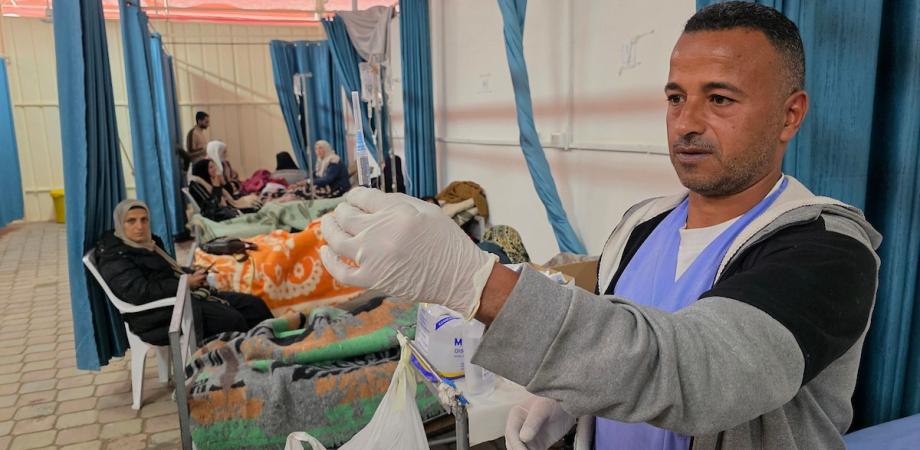
SAFA — Hospitals across the Gaza Strip are reporting a sharp rise in meningitis cases among children, with doctors warning that overcrowded displacement camps, contaminated water, malnutrition and collapsing sanitation systems are fueling the spread of the potentially deadly disease.
The increase comes as thousands of Palestinian families continue to live in overcrowded tents without reliable access to clean water, proper sanitation or adequate food, leaving children especially vulnerable to infections.
At Al-Rantisi Children's Hospital in Gaza City, approximately 145 children were diagnosed with meningitis between September 25 and October 25. On October 26 alone, 15 of the 19 children admitted to one inpatient ward had the disease.
Figures from the Palestinian Ministry of Health's Information Systems Department indicate that approximately 1,140 cases of viral meningitis have been recorded since the beginning of 2026, alongside 295 cases of bacterial meningitis. Eleven deaths have been linked to the disease.
Infants Face Life-Threatening Complications
Among the patients is three-month-old Aser Mohammed Al-Sendawi, who remains in isolation at Al-Rantisi Hospital after contracting bacterial meningitis.
Medical tests revealed 1,200 white blood cells in his cerebrospinal fluid, indicating a severe inflammatory response.
His mother told Al-Araby Al-Jadeed that the illness began with a sudden, persistent fever that prompted her to rush him to hospital, where doctors administered antibiotics and intravenous fluids.
His condition has since improved, and an ultrasound examination showed no visible brain abnormalities.
She expressed concern that sewage and accumulated garbage surrounding the family's living area may have contributed to his illness.
Pediatrician Ashraf Abu Amouna said the continued rise in meningitis cases during September and October is unusual, as infections typically increase during July and August before declining with cooler weather.
He attributed the prolonged spread to persistent heat and the deteriorating conditions facing displaced families, stressing that meningitis requires urgent treatment and close monitoring, particularly during the first 24 hours after hospital admission.
Pediatrician Saeed Marouf warned that bacterial meningitis poses a particularly serious threat to children living in overcrowded shelters with poor sanitation and inadequate nutrition.
The disease can cause seizures, paralysis, hearing or vision loss and other lasting neurological complications.
Infants may arrive at hospitals with fever, extreme weakness, vomiting or diarrhea rather than the more recognizable symptoms of meningitis, making early diagnosis especially important.
Marouf also warned that shortages of essential antibiotics, including cefotaxime, are complicating treatment. He said doctors are relying on alternatives that he considers less effective in some cases.
Four Children Die at Nasser Hospital
At Nasser Medical Complex in Khan Younis, pediatric department head Ahmed Al-Farra reported one or two meningitis cases daily in the neonatal unit, with similar numbers in the children's ward.
He said bacterial meningitis has become a growing concern, linking the infections to malnutrition, overcrowding, polluted water, sewage accumulation and weakened immune systems.
Four children died in the hospital's intensive care unit over the past three months after developing bacterial meningitis accompanied by severe bloodstream infections involving Neisseria bacteria, according to Al-Farra.
He warned that delayed treatment can result in permanent hearing or vision impairment and developmental complications.
In one particularly severe case, doctors recorded 30,000 white blood cells in a child's cerebrospinal fluid, reflecting an exceptionally intense inflammatory response.
As Gaza's healthcare system struggles with shortages of medicines and medical supplies, doctors warn that children remain at risk of preventable deaths and lifelong disabilities unless access to treatment, safe water, sanitation and adequate nutrition improves.
Source : Safa News


