
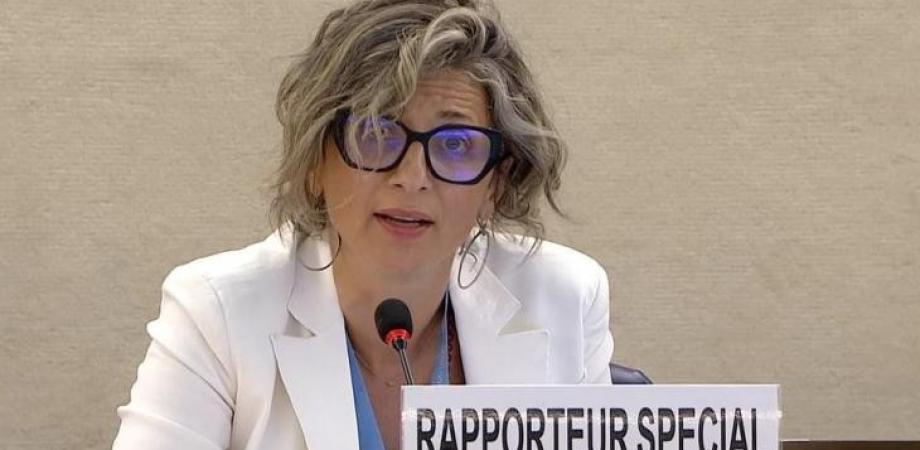
SAFA — UN Special Rapporteur Francesca Albanese has accused Israel of manipulating war coverage, targeting Palestinian journalists and suppressing evidence of its genocide in Gaza, warning that media organisations involved in concealing serious crimes must also face accountability.
Speaking to Al Jazeera on Tuesday, Albanese discussed findings from her new report, The Truth Under the Rubble: Media in Times of Genocide, which examines attacks on Palestinian journalists and restrictions on media coverage since Israel launched its war on Gaza in October 2023.
She said the killing of journalists, destruction of media facilities and targeting of media workers' families had contributed to silencing witnesses and concealing evidence of Israeli crimes.
According to figures cited by Albanese, Israeli attacks have killed 300 journalists during the war, including 70 whose deaths she linked to retaliation for their reporting.
She also cited the killing of 710 relatives of journalists and the destruction of approximately 80% of Gaza's media infrastructure.
Albanese Accuses Israeli and Western Media of Concealing Crimes
Albanese accused Israeli television channels, particularly Channels 12 and 14, of promoting rhetoric that encourages genocide.
She criticised media coverage that dehumanises Palestinians, including descriptions of Gaza as a "cancer".
The UN expert also accused major Western news organisations, including the BBC, The New York Times and CNN, of concealing essential facts and prioritising Israeli narratives over the experiences of Palestinian victims.
Albanese argued that such reporting does more than distort public understanding. She warned that marginalising Palestinian voices, downplaying Israeli crimes and amplifying the accounts of those responsible for attacks could help conceal abuses and shield perpetrators from accountability.
She specifically criticised The New York Times for attacking her report rather than adequately addressing its findings.
Referring to coverage by the American newspaper and The Times of Israel of Israeli actions in the occupied West Bank, Albanese said their framing placed greater emphasis on Israeli deaths than on the wider attacks against Palestinians.
Her report also examines restrictions on journalism, including bans on certain forms of coverage and the suppression or manipulation of tens of thousands of news items.
Albanese cited an average of 21 affected news items per day.
She called for investigations into media organisations whose reporting may have contributed to concealing serious crimes, stressing that journalists and news institutions have a responsibility to investigate abuses rather than protect those responsible.
Accountability Must Extend Beyond Military Perpetrators
Albanese accused Israel of using its influence and lobbying networks in Western countries to promote its narrative, arguing that ideological hostility towards Arabs had also shaped public debate.
She maintained that the failure to hold Israel accountable for systematic crimes against Palestinians reflected a lack of political will rather than insufficient evidence.
The UN expert warned that concealing information, silencing victims and prioritising the narratives of those accused of committing atrocities could make media institutions complicit in hiding serious violations.
She urged journalists, investigators and human rights organisations to preserve evidence, document abuses and ensure that Palestinian victims' testimonies are heard.
Albanese also referred to international criminal tribunals established for Rwanda and the former Yugoslavia, where media figures faced prosecution and, in some cases, convictions for their roles in inciting or supporting atrocities.
She said these precedents demonstrated that accountability for media involvement in grave international crimes was possible.
Media Coverage Could Have Changed Western Responses
Albanese argued that more comprehensive and accurate reporting on Israel's actions in Gaza could have influenced the positions of Western political leaders.
She said many people in Western countries had not been given a complete picture of the destruction, displacement and suffering endured by Palestinians.
Describing the performance of sections of the Western media during the Gaza war as shameful, she criticised news organisations for failing to give adequate attention not only to Palestinian civilian deaths but also to the killing of Palestinian journalists.
Albanese stressed that documenting these violations was essential beyond Palestine itself, arguing that preserving evidence, exposing abuses and pursuing accountability could help prevent future atrocities.
She said the international community must challenge the impunity that has allowed grave violations against Palestinians to continue.
Despite the insults and criticism she has faced within the United Nations, Albanese insisted that efforts to secure justice must continue.
She concluded that political circumstances could change and that accountability remained possible if evidence was preserved and those responsible for serious crimes were brought to justice.
Source : Safa News


