
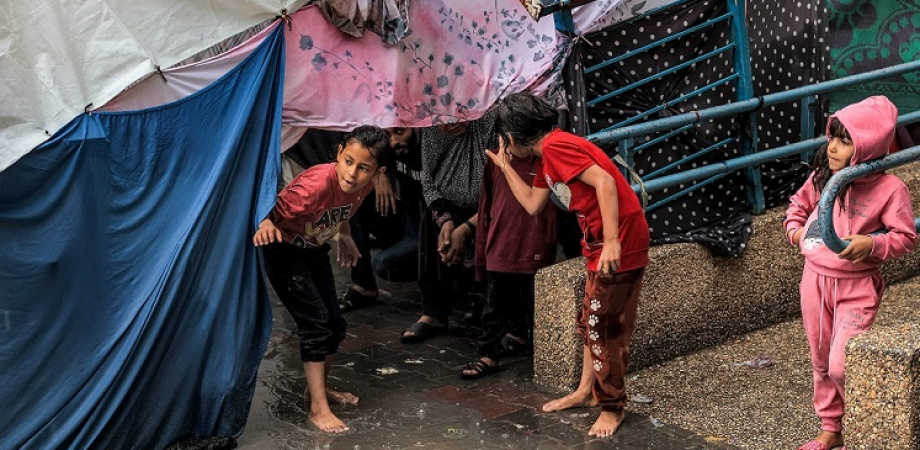
SAFA – Gaza is approaching another potentially devastating winter as hundreds of thousands of displaced Palestinians remain crowded into deteriorating tents and damaged buildings, while Israeli restrictions on shelter materials, fuel and humanitarian supplies leave families increasingly exposed to cold, rain and flooding.
Mohammed Saleha, coordinator of the Palestinian NGO Network in the Gaza Strip, has warned that more than 75% of tents used in displacement shelters have deteriorated or been damaged and urgently need replacement as winter approaches.
Saleha said Palestinians are now concentrated in less than 30% of the Gaza Strip, creating extreme overcrowding and forcing families to shelter in tents, along roads and streets, or inside damaged buildings because safer alternatives are unavailable.
His warning comes as international humanitarian organizations raise similar concerns. The Norwegian Refugee Council warned this week that 1.65 million Palestinians could spend a fourth winter in worn-out tents and war-damaged buildings, exposed to rain and cold.
The organization said Israeli restrictions on shelter materials and severe funding shortages have left Gaza dangerously unprepared for winter, despite the enormous scale of displacement and destruction.
Aid Deliveries Remain Far Below Gaza’s Needs
Saleha said the crisis has been aggravated by the continuing gap between Gaza’s humanitarian needs and the volume of supplies entering the Strip.
According to September crossing data, 5,265 trucks entered Gaza through Kerem Shalom during the month. Of those, 3,781 were commercial trucks, 1,244 carried humanitarian and relief supplies and 240 transported fuel.
The figures show a significant decline in humanitarian deliveries compared with August, when 2,182 humanitarian trucks entered Gaza. September’s total of 1,244 represented a decrease of 938 trucks, or approximately 43%.
Commercial shipments, meanwhile, increased slightly from 3,688 trucks in August to 3,781 in September, while fuel deliveries declined from 288 to 240 trucks.
Overall truck movements fell from 6,158 in August to 5,265 in September, a decline of approximately 14.5%.
The September figures also reveal the growing imbalance between commercial goods and free humanitarian assistance. Commercial shipments represented approximately 71.8% of all trucks entering Gaza during the month, while humanitarian aid accounted for 23.6% and fuel for just 4.6%.
That distinction is critical in a territory where widespread unemployment, displacement and the destruction of livelihoods have severely eroded families’ purchasing power. Goods may be present in markets, but that does not mean displaced and impoverished Palestinians can afford to buy them.
Only 139 trucks carrying shelter and emergency-relief supplies entered Gaza during September, fewer than five per day on average. Just five trucks carrying zinc sheets used for repairing roofs and makeshift shelters were permitted to enter.
Shelter Materials Face Severe Israeli Restrictions
International humanitarian organizations say restrictions on materials Israel classifies as “dual-use” are creating a particularly severe obstacle to winter preparations.
According to the Norwegian Refugee Council, Israeli authorities currently permit only 15 trucks carrying such materials to enter Gaza from Jordan each week across all humanitarian sectors. Items affected include tents and tarpaulins essential for sheltering displaced families.
NRC says at least 500 truckloads of Israeli-designated dual-use shelter materials are already in the humanitarian pipeline. At the current rate of entry, even under favorable conditions, bringing those supplies into Gaza would take more than seven months.
For families preparing for winter, that timetable means essential materials could arrive long after the coldest and wettest months have passed.
The shelter crisis was already severe months before winter. NRC reported that 94% of Gaza households required some form of shelter assistance, while nearly two-thirds were living in tents or makeshift shelters. More than half of families living in tents had already been using the same tent for over a year.
More than 100,000 households were living in shelters whose deteriorated floors, walls and frames posed serious risks to their health, safety and dignity.
Fuel Shortages Threaten Essential Services
The crisis extends beyond shelter.
Saleha warned that shortages of fuel, lubricants, spare parts and other operational materials are threatening hospitals, water wells, vehicles and generators across Gaza.
These shortages are particularly dangerous because much of Gaza’s surviving infrastructure depends on generators following extensive destruction to electricity, water and public-service networks.
Saleha said shortages of fuel and mineral oils have contributed to the shutdown of hospitals and health centers and have disrupted generators serving medical facilities and water wells.
Any prolonged interruption in fuel supplies risks triggering cascading failures across essential services. Hospitals require generators to operate medical equipment, water wells need power to pump and distribute water, and humanitarian organizations depend on vehicles and fuel to move supplies through the devastated territory.
A Fourth Winter in Worn-Out Tents
For displaced families, winter is now the most immediate threat.
Many tents have been exposed to years of sun, wind, rain and repeated displacement. Tarpaulins have torn, frames have weakened and flooring has deteriorated. Families frequently lack adequate mattresses, blankets, waterproof materials and drainage around their shelters.
The Norwegian Refugee Council says 1.65 million Palestinians could spend the coming winter in worn-out tents and damaged buildings.
Earlier assessments found that around 170,000 households, representing nearly one million people, were living in tents, while thousands of additional families were sleeping outdoors or in overcrowded shelters.
The risks increase dramatically during winter storms. Many displacement sites have been established in low-lying coastal areas or locations with inadequate drainage and severely damaged infrastructure, leaving tents vulnerable to flooding.
Rainwater can enter shelters within minutes, soaking mattresses, blankets, clothing and the few possessions displaced families have managed to preserve.
For children, older Palestinians, people with disabilities and those suffering from chronic illnesses, prolonged exposure to cold and damp conditions can become a direct health threat.
No Safe Alternative for Displaced Families
The problem is compounded by the lack of alternative shelter.
Large areas of Gaza have been destroyed, while many surviving buildings are structurally unsafe. Families who leave deteriorating tents may have nowhere to go except damaged buildings that themselves pose a risk of collapse.
In September, the collapse of a war-damaged seven-story building sheltering displaced Palestinians killed at least 20 people, including children, highlighting the dangers confronting families forced to choose between deteriorating tents and unstable structures.
The result is a humanitarian trap: tents provide little protection from winter, damaged buildings can collapse, and restrictions on construction and shelter materials obstruct efforts to create safer alternatives.
Saleha has called for immediate international action to ensure the entry of shelter materials, fuel, spare parts and humanitarian supplies at a scale corresponding to Gaza’s enormous needs.
Humanitarian organizations are issuing the same warning.
One year after the ceasefire, Gaza’s displaced families are approaching another winter without adequate shelter, while materials already waiting to enter could take months to reach them under current restrictions.
For hundreds of thousands of Palestinians, winter preparation no longer means repairing a home, checking a roof or preparing heating for colder weather. It means trying to reinforce a worn-out tent with whatever plastic, wood or fabric can be found.
After three years of destruction and displacement, those tents were never supposed to become permanent homes.
Yet for many families in Gaza, another winter is about to begin inside them.
Source : Safa News


