
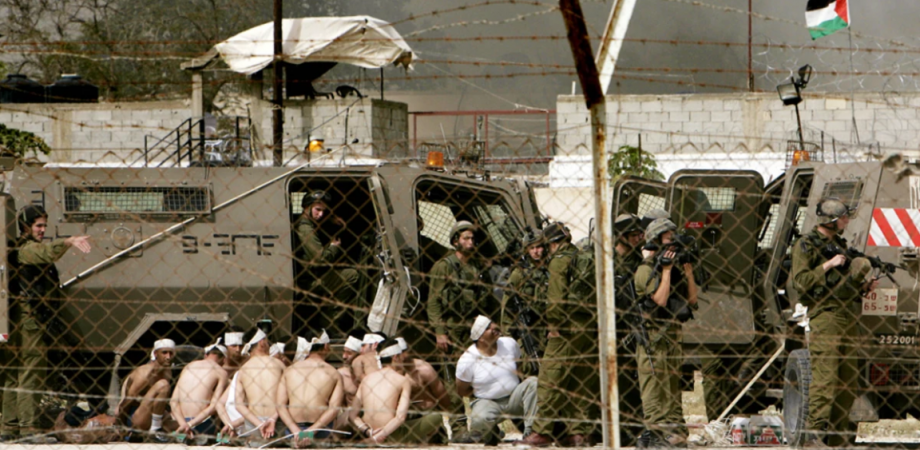
SAFA — Families of Palestinian prisoners held in Israeli jails have warned that more than 1,500 sick detainees face the threat of a "slow death" as medical neglect, delayed treatment, inadequate nutrition, and deteriorating detention conditions put their lives at risk.
During a protest outside the International Committee of the Red Cross (ICRC) office in western Gaza City on Monday, relatives and prisoners' rights advocates demanded urgent international intervention to protect Palestinian detainees and ensure access to essential medical care.
The weekly sit-in, organized by the Prisoners' Committee of the National and Islamic Forces and the Higher National Committee for Families of Gaza Prisoners, highlighted the worsening conditions faced by prisoners suffering from chronic and life-threatening illnesses.
Speakers warned that continued denial of medical treatment could have fatal consequences, while families remain unable to obtain reliable information about the health and safety of their imprisoned relatives.
They also cautioned against exploiting prisoners' suffering in Israeli political disputes and election campaigns.
More Than 1,500 Sick Prisoners Denied Adequate Medical Care
Islam Abdo, a media official at the Palestinian Ministry of Prisoners' Affairs, said more than 9,000 Palestinians are currently held in Israeli prisons, including over 1,500 suffering from various illnesses.
Many require continuous medication, specialized treatment, regular medical examinations, or urgent surgical procedures.
"The suffering of sick prisoners is deepening because they are denied adequate medical care, face long delays in examinations and surgeries, and endure poor nutrition and a lack of hygiene supplies," Abdo told protesters.
"These conditions greatly increase the health risks they face," he added.
Abdo warned that sick prisoners face compounded suffering as they struggle with serious medical conditions while being denied timely treatment and regular medical follow-up.
He stressed that delays in examinations, medication, and surgery can aggravate existing illnesses and place prisoners at risk of permanent disability or death.
He called for urgent measures to guarantee access to medicines, medical supplies, specialist care, and necessary treatment without delay.
Families Fear Receiving News of Deaths in Custody
For the families of Palestinian prisoners, the lack of information about their loved ones has become another source of suffering.
Wesam Salem, wife of Palestinian prisoner Hazem Salem, described the constant anxiety experienced by families who struggle to obtain reliable updates about their relatives' health.
Speaking on behalf of the Higher National Committee for Families of Gaza Prisoners, she warned that some sick detainees have become so weak they can no longer stand, while others are losing their eyesight.
She also highlighted the plight of prisoners suffering from cancer who require continuous specialized treatment.
"Inside a cell, illness becomes a double suffering when the prisoner is deprived of medicine and a doctor," Salem said.
She warned that families live in constant fear of receiving news that a loved one has died in Israeli custody.
The uncertainty is particularly devastating for children growing up without their imprisoned fathers.
According to Salem, children repeatedly ask their mothers when their fathers will return, while wives are left to support their households and care for their families under the constant burden of fear.
She called on international humanitarian and human rights organizations to move beyond statements of concern and take concrete steps to protect prisoners.
These include visiting detention facilities, documenting prisoners' medical conditions, and pressing Israeli authorities to provide treatment before their health deteriorates further.
Reports of Torture, Starvation and Assaults Inside Israeli Prisons
Ismail Abdel Bari, a representative of the Popular Front for the Liberation of Palestine in the Prisoners' Committee, warned that Palestinian detainees face multiple forms of mistreatment, including torture, food deprivation, solitary confinement, and repeated physical assaults.
He also cited accounts of Israeli prison personnel using live ammunition against detainees inside their cells, causing serious injuries that required surgical intervention.
Abdel Bari called for independent investigations into these allegations and accountability for those responsible.
He warned that the combined effects of physical assaults, inadequate nutrition, isolation, and medical neglect place prisoners' health and safety in serious danger.
The situation is particularly alarming for detainees already suffering from chronic illnesses, wounds, or disabilities, who may require specialized care unavailable within detention facilities.
Palestinian Children Face Disease and Medical Neglect
Abdel Bari also raised concerns about the conditions facing Palestinian children held in Israeli detention.
He said child detainees suffer from shortages of clothing, inadequate hygiene supplies, the spread of disease, and restrictions on access to medical treatment.
Such conditions, he warned, expose children to additional physical and psychological harm while depriving them of essential protections.
He called for immediate measures to ensure that detained children receive appropriate healthcare, adequate nutrition, clean clothing, and sanitary living conditions.
He warned of "grave consequences" for prisoners' health and safety if the reported practices continue.
Families Demand International Action Beyond Condemnation
Speakers at the Gaza City protest urged international organizations to take immediate action rather than limit their response to statements condemning abuses.
They demanded independent investigations into alleged violations inside Israeli prisons, accountability for those responsible, and effective measures to guarantee prisoners' access to medical treatment.
Abdel Bari emphasized the importance of the International Committee of the Red Cross in monitoring detention conditions, assessing prisoners' medical needs, and seeking regular access to detainees.
He called for particular attention to sick prisoners, children, women, older detainees, and those suffering from injuries or disabilities.
The protesters also urged coordinated Palestinian, Arab, and international efforts to secure the release of prisoners, prioritizing those whose health conditions place them at immediate risk.
A Race Against Time for Sick Palestinian Prisoners
The families' appeal comes amid growing concern over the treatment of Palestinians held in Israeli detention facilities, particularly those suffering from serious illnesses.
International human rights law requires that detainees be treated humanely and receive appropriate medical care.
For prisoners with chronic or life-threatening conditions, delays in diagnosis and treatment can have irreversible consequences.
Families at Monday's protest warned that the continued deterioration of detention conditions threatens to turn imprisonment into a prolonged struggle for survival.
Their demand was urgent: independent access to prisoners, immediate medical treatment for the sick, protection from abuse, and international action before more Palestinian detainees die in custody.
Source : Safa News


