
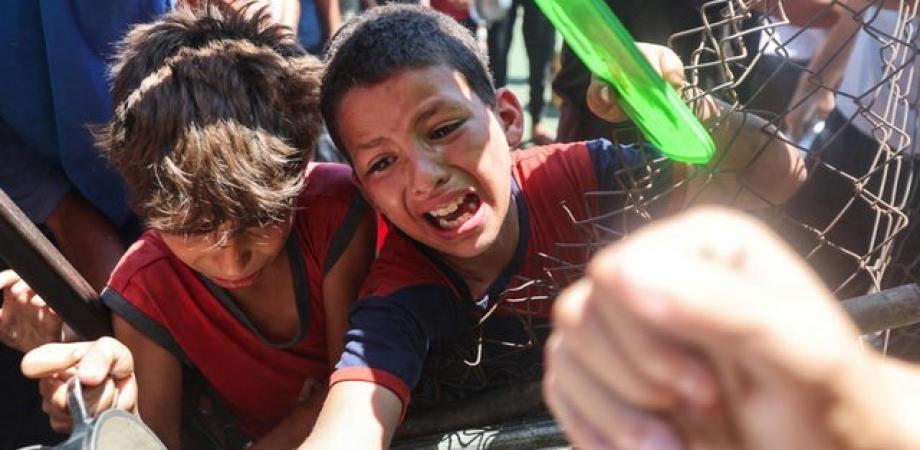
SAFA — Severe child malnutrition remains widespread in the Gaza Strip nearly a year after a ceasefire agreement, with Palestinian health officials reporting hundreds of deaths and tens of thousands of children at risk as poverty, displacement, and the collapse of basic services persist amid the continuing impact of Israel’s genocidal war.
Since early 2024, 466 Palestinians, including 157 children, have died from malnutrition and starvation-related causes, according to figures released this month by Gaza’s Health Ministry.
The ministry warned that more than 1.4 million people could face food insecurity through the end of 2026 if conditions do not improve.
Health officials say 158,001 cases of acute malnutrition among children under five were recorded between 2024 and August 2026.
Of those cases, 28,716 involved severe acute malnutrition, a potentially life-threatening condition.
Approximately 12.2% of children show signs of stunting, while the ministry estimates that 74,200 children will require treatment for acute malnutrition by April 2027.
UNICEF reported in September 2025 that 13% of Gaza’s children were affected by malnutrition.
Hunger Behind Tent Walls: Families Struggle to Keep Their Children Alive
Doctors and parents say many families now rely primarily on meals provided by community kitchens, which typically serve simple soups, lentils, pasta, beans, rice, and stews.
Although these meals help ease hunger, they often fail to meet children’s nutritional needs, particularly those of infants under one year old.
At the malnutrition ward of Rantisi Children’s Hospital in Gaza City, most beds are occupied by infants and toddlers showing visible signs of wasting.
One mother, preparing to leave the ward with her 16-month-old daughter, said the child had been admitted with a high fever and diarrhea before being diagnosed with severe acute malnutrition.
“She doesn’t have any chronic disease,” the mother told Quds News Network.
“She came in weighing 7.5 kilograms. Her initial upper-arm measurement was 11.2, and now it’s 11.5 after a week of IV fluids, vitamins, and treatment,” she added.
The family lives in a tent and relies on meals from local charity kitchens, which the young girl also eats.
Because of soaring food prices, the child receives only small amounts of fruit — “a banana and an avocado a day,” according to her mother.
The girl has undergone treatment for severe malnutrition four times since she was five months old.
Babies Go Hungry as Formula Prices Soar Beyond Families’ Reach
Parents and medical staff report persistent shortages of infant formula and diapers despite the formal end of large-scale hostilities.
Even when infant formula is available, its price is often beyond the reach of struggling families.
One mother said a single can of quality infant formula now costs approximately 65 Israeli shekels (roughly $17), forcing her to reduce her baby’s daily intake from three feedings to just one.
With three other children and no steady income, she cooks over a wood fire because cooking gas is rarely available.
Another mother at Rantisi Children’s Hospital said her nine-month-old daughter was admitted with vomiting, diarrhea, and fever and was subsequently diagnosed with severe malnutrition.
The infant’s mid-upper-arm circumference measured 11 on admission and increased to 13 after nine days of intensive nutritional treatment involving therapeutic milk formulas (F-75 and F-100), vitamins, and antibiotics.
The baby now weighs six kilograms and has begun eating again.
Wounded, Orphaned, and Starving: Gaza’s Children Bear the Scars of War
Doctors say injuries sustained in Israeli attacks have further aggravated the crisis, leaving children with long-term complications that interfere with eating and digestion.
In a tent in the central Gaza town of al-Zawayda, 14-year-old Saif Allah Hijazi, who was wounded by shrapnel in the neck a year ago and left partially paralyzed, weighs just 22 kilograms.
His mother said he frequently vomits, is repeatedly hospitalized with urinary tract infections and fevers, and struggles to keep food down.
His father was killed in a separate Israeli strike, she said, leaving the family without a source of income.
“I try to buy fruit, vegetables, milk, and white meat for him, but prices are extremely high,” she explained.
“He can’t do anything. He’s always dizzy, has headaches, and sleeps most of the time,” she added.
Gaza’s Malnutrition Wards Struggle to Save Children Amid Deepening Poverty
Rantisi Children’s Hospital’s therapeutic nutrition unit, which has eight to 10 beds, operates at approximately 70% capacity on most days and admits only the most severe cases, according to Dr. Ahmed Basal, head of clinical nutrition and a pediatric consultant at the hospital.
Basal said the ward receives 25 to 30 new cases of severe malnutrition each month, while children with mild or moderate malnutrition are treated on an outpatient basis.
“Malnutrition has not stopped,” Basal told Quds News Network.
“The economic situation is still very bad. Extreme poverty affects about 80% of people in Gaza. Many parents cannot afford basic items like meat, milk, and eggs,” he said.
“Even public employees receive salaries of no more than 1,000 shekels every 70 days. This inevitably leads to child malnutrition,” he added.
Basal said many of the goods entering Gaza through border crossings are processed foods and snacks with limited nutritional value rather than nutrient-dense essentials.
“People need dairy products, fresh meat and poultry, and fresh vegetables,” he said, adding that many available cheese and dairy products contain palm oil and are “not healthy.”
Children under three, particularly infants under one, account for approximately 70% of admissions to the malnutrition ward, he said.
Contaminated Water and Medicine Shortages Deepen Gaza’s Child Health Emergency
Public health specialists in Gaza say the malnutrition crisis is driven not only by food shortages and poverty but also by unsafe water and damaged infrastructure.
Basal said contamination of household water supplies with sewage has contributed to widespread meningitis and intestinal infections, particularly among children whose immune systems have been weakened by inadequate nutrition.
“Malnutrition exhausts the immune system. It makes children more vulnerable to meningitis, middle ear infections, respiratory infections, and gastrointestinal illnesses,” he said.
The hospital also faces shortages of essential medicines, including antibiotics, anti-inflammatory drugs, ointments, and specialized oral rehydration solutions.
One critical product, ReSoMal, an oral rehydration solution designed for severely malnourished children, is frequently unavailable.
As a result, medical staff are forced to prepare alternative solutions, potentially delaying effective treatment.
Basal warned that the cycle of inadequate nutrition, disease, and economic hardship would continue to fuel child malnutrition as long as Gaza’s economy remained devastated and its health care and water systems were not fully restored under the continuing Israeli blockade.
Source : Safa News


