
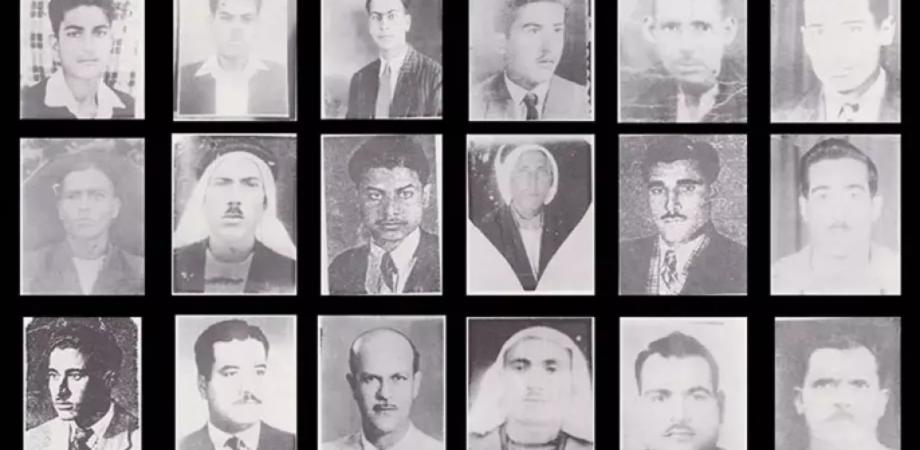
SAFA — Tuesday, November 3, 2026, marks the 70th anniversary of the Khan Younis massacre, carried out by Israeli occupation forces on November 3, 1956, during the tripartite aggression against Egypt. The massacre claimed the lives of hundreds of Palestinian civilians, leaving a deep wound in the memory of the city and its people.
Seven decades later, Khan Younis remembers one of the bloodiest chapters in its history, when Israeli forces killed hundreds of civilians in an atrocity whose details remain deeply rooted in the collective memory of Palestinians.
Dr. Naji al-Batta, head of the committee documenting the 1956 Khan Younis massacre, said the atrocity was not merely a tragic chapter in the city's history but an act of mass killing committed by the Israeli army against hundreds of innocent Palestinian civilians.
Speaking to the Palestinian news website Filastin, al-Batta stressed that 70 years later, Khan Younis is enduring one of the darkest periods in its history as Israel's ongoing genocidal war devastates the Gaza Strip.
He said Israeli attacks have killed and wounded large numbers of Palestinians, destroyed entire neighborhoods and homes, and forcibly displaced residents of Khan Younis and other areas across Gaza.
Gaza's Present Reopens the Wounds of 1956
Al-Batta explained that the devastation inflicted on Khan Younis during the current war has brought renewed attention to the 1956 massacre, making the responsibility to document it more urgent than ever.
He said the parallels between the city's past and present suffering have given the documentation process greater historical, legal, and humanitarian significance.
According to al-Batta, the committee's work goes far beyond collecting the names of those killed, eyewitness accounts, testimonies, and historical documents.
Its efforts also include building a comprehensive legal case supported by evidence, with the aim of pursuing those responsible for the massacre before the relevant judicial authorities and ensuring accountability.
He emphasized that preserving the details of the atrocity is essential not only to honoring its victims but also to protecting the Palestinian people's right to historical truth and justice.
Preserving the Memory of the Victims
Al-Batta acknowledged the contributions of researchers and writers who have worked to document the Khan Younis massacre and preserve its history for future generations.
Among them, he highlighted Dr. Ihsan al-Agha and Dr. Mohammed al-Farra, whose research and writings helped safeguard the details of the massacre against oblivion.
He stressed that documenting both the atrocities committed in 1956 and the crimes being committed against Palestinians today represents a defense of the Palestinian people's right to memory, truth, and justice.
For the people of Khan Younis, he said, remembering the massacre is not simply an act of looking back at history. It is a continuing demand for recognition, accountability, and justice for the victims and their families.
Seven Decades Without Justice
Al-Batta emphasized that massacres do not become less serious with the passage of time and that the lives of those killed must never be reduced to statistics or forgotten as history moves forward.
He said Khan Younis, which suffered immense bloodshed in 1956 and continues to endure devastating losses today, will remain a witness to the truth.
The 70th anniversary comes as the city once again faces widespread destruction, displacement, and loss of life, reinforcing the importance of preserving historical records and documenting violations against Palestinian civilians.
Al-Batta concluded by reaffirming the committee's commitment to continuing its documentation and legal efforts until the memory of the victims is preserved, justice is achieved, and those responsible for the 1956 massacre are held accountable.
For Khan Younis, seven decades have passed, but the demand for justice remains alive.
Source : Safa News


