
SAFA – More than a year after the ceasefire agreement took effect in Gaza, promises of reconstruction, humanitarian relief, and political transition remain largely unfulfilled, raising mounting questions over the credibility and effectiveness of the Board of Peace, chaired by US President Donald Trump.
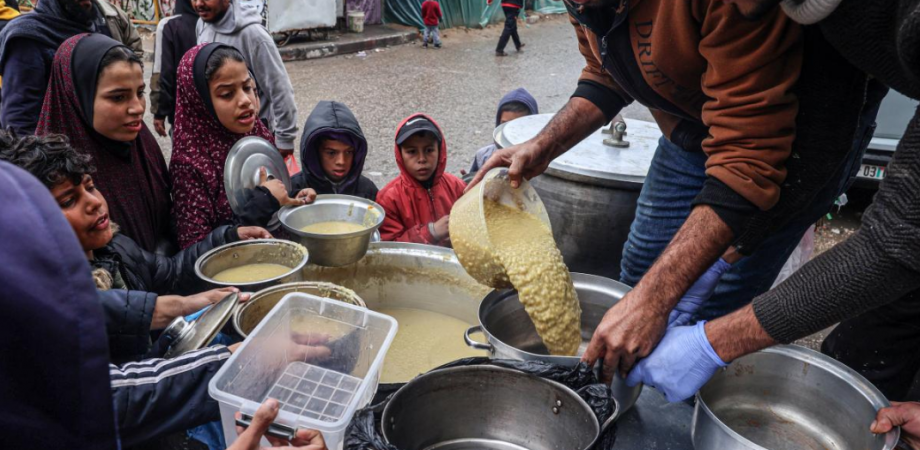
While international commitments have generated billions of dollars in pledges, displaced Palestinian families continue to endure homelessness, hunger, and deteriorating humanitarian conditions. Hundreds of thousands remain trapped in makeshift shelters, exposed to heavy rainfall and bitter cold, as Israeli restrictions continue to obstruct the entry of essential humanitarian and reconstruction supplies.
The widening gap between international promises and Palestinian suffering has placed the Board’s mandate under growing scrutiny. Despite its stated commitment to Gaza’s recovery, it has yet to overcome Israeli restrictions or enable the Palestinian administrative committee to begin its work.
Billions in Pledges, Little Relief on Ground
According to the Board’s report to the UN Security Council, donor pledges have reached approximately $17 billion, yet only around $280 million had been deployed during the preparatory phase — equivalent to less than 2% of the pledged amount.
Meanwhile, the National Committee for the Administration of Gaza has prepared a six-month recovery program comprising 66 projects at an estimated cost of $2.45 billion, while the Board estimates Gaza’s overall recovery and reconstruction needs at $71.4 billion.
These figures expose the enormous gap between financial commitments and actual implementation.
For Palestinians who have lost their homes, livelihoods, and access to basic services, billions of dollars in announced pledges mean little when reconstruction remains stalled and even temporary shelter is beyond their reach.
More than 150,000 tents procured by humanitarian organizations and donor countries remain outside Gaza awaiting entry, while displaced families struggle to survive in deteriorating shelters.
The UN Office for the Coordination of Humanitarian Affairs (OCHA) reported in November that at least 60,000 of the more than 90,000 tents previously brought into Gaza needed replacement.
The continuing shelter crisis illustrates how Israeli restrictions can undermine humanitarian efforts regardless of the availability of international funding and supplies.
Israeli Restrictions Paralyze Gaza’s Recovery
Israel’s continued control over key crossings and restrictions on the entry of humanitarian supplies, construction materials, and essential equipment remain among the most significant obstacles to Gaza’s recovery.
Despite repeated international commitments to facilitate humanitarian access and reconstruction, Palestinian families remain dependent on an aid delivery system constrained by Israeli decisions.
The political transition faces a similar deadlock.
The National Committee for the Administration of Gaza, headed by Ali Shaath, has yet to enter the territory and assume its responsibilities, despite holding its inaugural meeting in Cairo on January 15, 2026.
Nearly eleven months later, the Palestinian technocratic body remains unable to operate inside Gaza, restore public services, or implement its recovery program.
The situation exposes a fundamental contradiction in the Board’s mandate: an international body tasked with overseeing Gaza’s recovery has been unable to secure access for the Palestinian institution designated to administer the territory.
Without addressing Israeli restrictions, commitments to reconstruction and Palestinian administration risk remaining little more than declarations on paper.
Hamas Condemns Board’s “Dismal Weakness”
The prolonged paralysis has drawn sharp criticism from Hamas, which has questioned the Board of Peace’s ability to pressure Israel into implementing the agreed transitional arrangements.
On Saturday, Hamas spokesperson Hazem Qassem described the Board’s failure to secure the Palestinian administrative committee’s entry into Gaza as evidence of its “dismal weakness.”
Qassem called on all relevant parties to facilitate the committee’s immediate entry so it could begin humanitarian relief and reconstruction efforts, reiterating Hamas’ readiness to transfer administrative responsibilities to the Palestinian body.
His remarks came amid reports that Israel’s security cabinet was expected to meet on Sunday to discuss further steps toward implementing Trump’s Gaza plan.
The Board itself acknowledged the risk of Israeli obstruction in a document dated November 20, warning that Israel could be viewed as an obstacle to the plan if it failed to provide commitments corresponding to those accepted by Hamas.
However, such warnings have yet to translate into measures sufficient to overcome the political and humanitarian deadlock.
Ceasefire Without Recovery, Transition Without Implementation
The second phase of Trump’s plan envisages transferring Gaza’s administration to a Palestinian technocratic committee, deploying an international stabilization force, addressing the issue of armed groups, and launching reconstruction alongside a gradual Israeli military withdrawal.
Yet the absence of a clear implementation timetable, effective accountability mechanisms, and guarantees of humanitarian access threatens to turn the transitional period into an indefinite arrangement.
For Palestinians, a ceasefire that leaves families without adequate shelter, obstructs reconstruction, and fails to restore essential services cannot deliver meaningful recovery.
The continued inability of the Palestinian administrative committee to enter Gaza also raises serious questions about whether the proposed transitional arrangements can guarantee Palestinians meaningful authority over their own affairs.
Gaza Needs Accountability, Not More Promises
The Board of Peace’s credibility cannot be measured by the number of meetings it holds, the reports it publishes, or the billions of dollars it announces.
It must be measured by tangible outcomes: humanitarian supplies reaching displaced families, homes being rebuilt, hospitals and schools being restored, Palestinian institutions being allowed to function, and restrictions obstructing recovery being removed.
Without effective mechanisms to ensure Israeli compliance and hold those obstructing humanitarian relief and reconstruction accountable, the Board risks becoming an international framework for managing Gaza’s devastation rather than ending it.
For Palestinians enduring another winter amid the ruins of their homes, the cost of political paralysis is measured in human suffering.
Gaza does not need another cycle of international promises followed by inaction. It needs immediate humanitarian relief, genuine reconstruction, accountability, and the restoration of Palestinians’ right to live in safety and dignity and determine their own future.
Source : Safa News


