
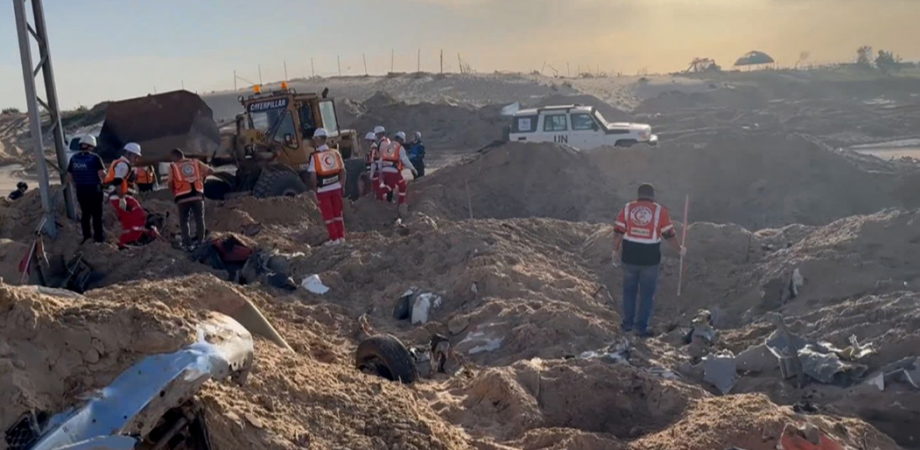
Across northern Gaza, families are still searching for relatives who never returned after heading towards aid lorries last summer, as new evidence paints a disturbing picture of how people were killed during the deepening famine triggered by the genocidal war, and how their bodies were later hidden.
Accounts from survivors, aid-lorry drivers and former soldiers, alongside extensive visual material, indicate that people who approached the Zikim crossing in the hope of securing flour were met with Israeli gunfire. Many never made it back home. Their remains, according to multiple testimonies, were later pushed into the sand by military bulldozers or left exposed for days in areas no one was permitted to reach.
One of those who vanished was a young man who sent a final message to his mother before setting out, aware that even collecting basic supplies could cost him his life. His phone was eventually found by a stranger; his family never saw him again. He became one of many whose fate was obscured by a mixture of lethal force and later attempts to erase any trace of what had taken place.
Videos from the area show trails of people running with bags of flour under heavy fire, some collapsing as shots ring out from nearby military positions. Independent audio analysis indicated that the gunfire was consistent with the distance separating civilians from Israeli forces stationed at the crossing. Other footage depicts bodies lying near overturned aid lorries, partially buried in sand, long before any medical teams were allowed access.
Drivers who regularly transported supplies through Zikim described seeing decomposing bodies scattered along the route, sometimes cleared away by bulldozers that pushed them into the dunes. They recalled closing their car windows to block the smell. Visual evidence from the summer months shows repeated bulldozer movements around the crossing, matching the accounts of those who witnessed bodies being buried or crushed.
Families searching for missing sons and daughters discovered remains mixed with aid boxes, others reportedly flattened beneath bulldozer tracks. Civil defence teams later managed to retrieve only a fraction of the bodies, leaving the rest behind because of restrictions on entry and the dangers posed by ongoing gunfire.
Former soldiers, speaking anonymously, described similar scenes elsewhere in Gaza over the course of the genocidal war, saying that bodies were often left in the open for days before bulldozers were ordered to cover them with sand. Some recalled dogs scavenging remains near bases, while no effort was made to document identities or inform families who might still be searching.
Such accounts point to a pattern in which people killed while trying to access food were either buried in makeshift, unmarked graves or left where they fell in military zones no one could safely enter. With no records kept of where bodies were pushed or covered, relatives may never know what became of their loved ones.
As Gaza continues to endure the consequences of two years of genocidal war, these testimonies raise grave questions about the treatment of civilians and the fate of the missing, questions that families say remain unanswered as they cling to the last messages, photos or belongings of those who never returned.
Source : Safa News


