
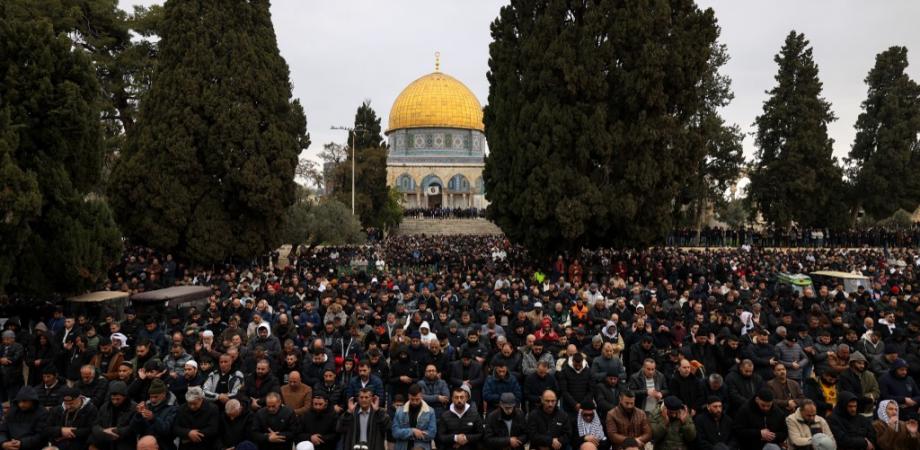
Early on Monday, the compound surrounding Jerusalem’s most revered mosque awoke to scenes that many residents described as another step in a tightening grip on daily life. Groups of settlers entered the site through a guarded gate, moving across its courtyards under close police escort. For worshippers watching from a distance, the presence was not merely symbolic but part of a wider atmosphere shaped by months of a genocidal war that has steadily eroded any sense of normality.
Religious officials responsible for the site said the visitors toured the grounds in a manner widely perceived as deliberate provocation, with some carrying out rituals in areas traditionally reserved for Muslim prayer. At the same time, access for local worshippers was further curtailed. Identity documents were taken at entrances, entry was delayed or denied, and a pattern of selective exclusion continued, reinforcing the feeling that prayer itself had become conditional.
Beyond the gates, the pressure extended into people’s private lives. Residents across the city reported receiving orders barring them from the mosque, often delivered after interrogations or short periods of detention. Those affected included community figures, journalists, employees of the religious administration, young men and women, and former prisoners. The notices, sometimes sent digitally, effectively removed individuals from a central part of communal and spiritual life without transparent legal process.
Such measures, critics warn, point to an attempt to reshape long-standing arrangements governing the site. In a city already strained by the ongoing genocidal war, each new restriction is seen not in isolation but as part of a cumulative effort to impose a different reality, one in which access to holy places is no longer a right, but a privilege granted and withdrawn at will.
Source : Safa News

