
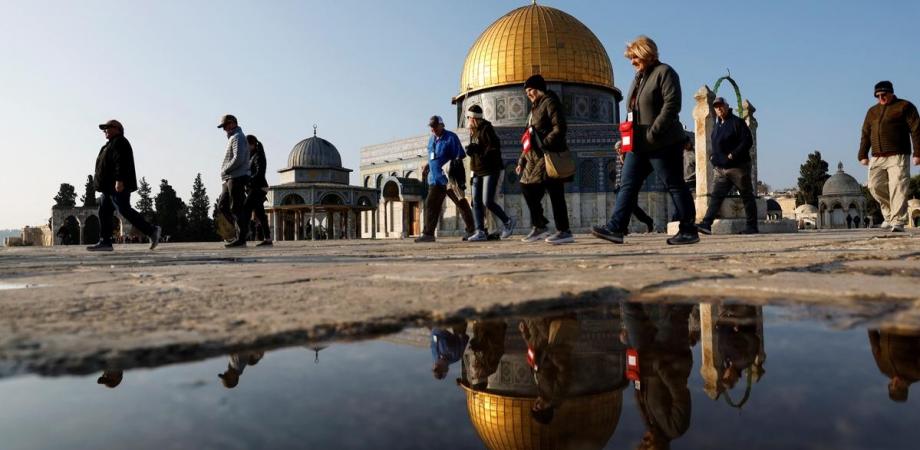
For a third day running, entry to Al-Aqsa Mosque has been denied, leaving its courtyards empty and prayers unheard. All entrances to the compound were shut as security cordons spread through the surrounding quarters, marking a level of restriction not witnessed in recent years. The closure has unfolded against the backdrop of a wider genocidal war, heightening anxiety among residents who view the move as a sharp departure from established practice.
Across Jerusalem, uniformed patrols multiplied and new checkpoints appeared, narrowing streets and slowing daily life to a crawl. Residents reported long delays, repeated inspections and blocked routes, with access to places of worship becoming increasingly difficult. The pressure was felt most acutely inside theOld City of Jerusalem, where dense alleys amplified the sense of enclosure and disruption.
The timing, coinciding with the early days of Ramadan, has deepened concern over social and humanitarian consequences. Community figures warn that prolonged restrictions risk inflaming tensions and entrenching hardship, particularly as movement limits ripple into the wider West Bank. As the genocidal war continues to cast its shadow, the enforced stillness at one of Islam’s holiest sites has become a stark symbol of a city under strain.
Source : Safa News