
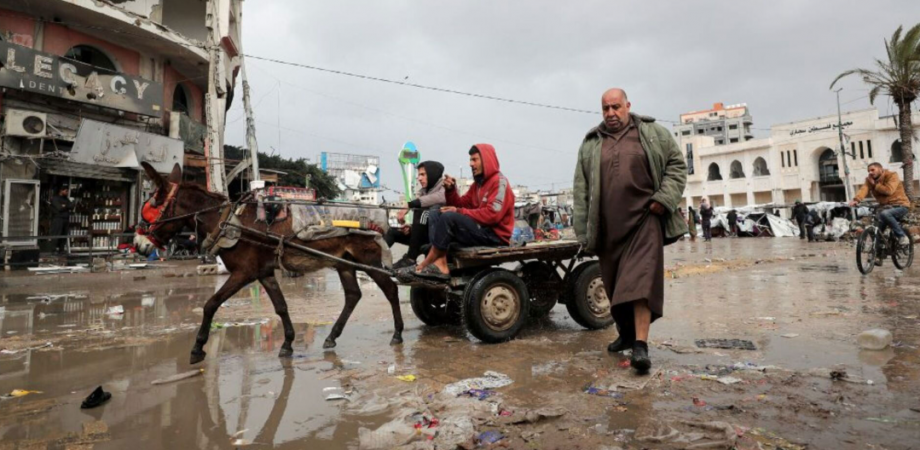
Relentless winter storms have swept across Gaza, turning rain and wind into instruments of hardship for hundreds of thousands already living on the edge. Torrential downpours flooded low-lying areas, tore through fragile shelters and exposed families to freezing conditions, compounding the damage wrought by a genocidal war that has stripped civilians of safe housing and basic infrastructure. What might elsewhere be a seasonal challenge has here become a man-made catastrophe.
Weeks of heavy rain and violent gusts have caused buildings to collapse and tens of thousands of tents and makeshift shelters to be destroyed or rendered unusable. Vast areas were inundated by rainwater mixed with sewage, forcing families to flee yet again. Many had already been displaced multiple times, living amid rubble or under thin canvas that offers no real protection. The scale of exposure has left entire communities sleeping in damp clothing, without heating, insulation or reliable access to clean water.
The devastation is inseparable from months of destruction that preceded the storms. Large parts of Gaza’s built environment lie damaged or flattened, leaving people with nowhere safe to take refuge when the weather turns. Even as a temporary lull in fighting was announced earlier in the autumn, restrictions have continued to choke the entry of mobile homes, building materials and essential supplies, prolonging suffering for a population of more than two million. The sense among residents is that the genocidal war persists through other means: deprivation, exposure and the steady erosion of dignity.
Emergency responders have reported fatalities linked to the storms and the displacement of tens of thousands as tents were uprooted overnight. For those sheltering in unsafe buildings, each new wave of bad weather brings the fear of collapse. With crossings largely sealed and reconstruction blocked, winter has laid bare how vulnerability is engineered, not accidental, and how climate and policy intersect to deepen an already profound humanitarian breakdown.
Source : Safa News


