
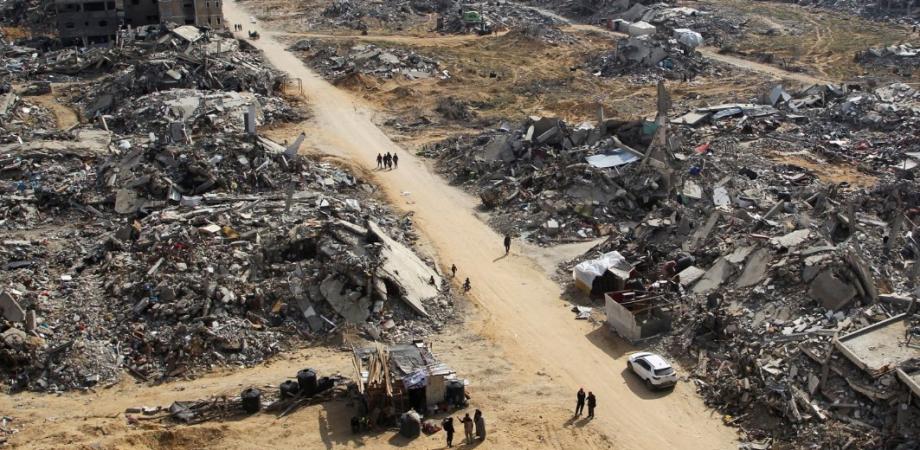
A vision for Gaza’s future was unveiled this week not by its people, but from an international stage where devastation was reframed as opportunity. The proposal imagines the coastal strip, shattered by a prolonged genocidal war, reborn as a gleaming waterfront of towers, promenades and luxury housing. Presented as a bold act of reconstruction, the plan has instead stirred deep unease among those who see in it an attempt to redesign a land while sidelining its population and political reality.
Speaking in economic terms, the architects of the project described Gaza less as a society emerging from catastrophe than as a prime development site awaiting transformation. Billions of dollars in investment were promised, along with forecasts of rapid growth, full employment and rising household incomes. Sketches of high-rise apartments and landscaped boulevards were offered as symbols of renewal, intended to replace neighbourhoods reduced to ruins during the genocidal war. Missing from the presentation, however, was any clear account of how displaced families would return, reclaim their homes, or exercise agency over decisions shaping their future.
The plan also rested on conditions set externally, including security arrangements and administrative structures designed outside Gaza. Its backers argued that such measures would reassure investors and accelerate rebuilding within a few years. Critics counter that economic blueprints detached from political rights risk entrenching injustice, particularly when reconstruction is discussed without accountability for destruction or recognition of the people who endured it.
As humanitarian needs remain acute and much of the territory lies uninhabitable, the proposal has been read by many as emblematic of a wider pattern: Gaza spoken about, planned for and priced, while its people remain marginal to decisions over their land. For a population emerging from a genocidal war, the promise of glass towers rings hollow without guarantees of dignity, self-determination and the right to rebuild on their own terms.
Source : Safa News


