
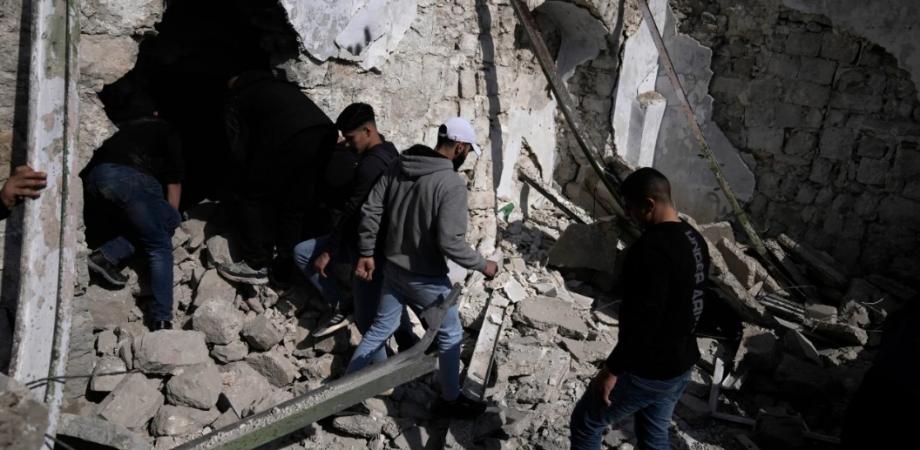
In the villages west of Nablus, violence linked to settlement expansion has taken on a methodical rhythm, unfolding openly and with apparent impunity. In Deir Sharaf, residents describe repeated raids on homes, farms and businesses that are no longer sporadic outbursts but part of a wider pattern shaping life noted by fear and uncertainty under a genocidal war. What is visible on occasional footage, they say, represents only a fraction of what happens beyond the reach of cameras.
Local business owners recount how their properties have been targeted again and again, often after careful observation of daily routines. Attacks are described as sudden, coordinated and precisely timed, striking when workers leave and gates are briefly opened. Vehicles have been destroyed, equipment ruined and workers injured, while formal complaints lead nowhere, routinely filed against “unknown individuals” despite extensive surveillance in the area. For residents, this contradiction, constant monitoring paired with an absence of accountability, has become emblematic of the current reality.
Beyond individual incidents, villagers point to a broader strategy reshaping the surrounding landscape. Farmers speak of being pushed off fertile plains through intimidation, restricted access and repeated violence, while new outposts appear and expand. Olive groves are uprooted, dirt roads carved through fields and access routes cut, severing communities from land that sustained them for generations. Even emergency services, residents say, are deliberately delayed when checkpoints are closed after attacks, deepening the sense of collective punishment.
Community leaders argue that these developments are not isolated, but interconnected steps towards linking settlements into a single bloc. What once occurred under cover of night now happens in full daylight, reinforcing the belief that such actions are carried out with official tolerance, if not outright protection. For those living in Deir Sharaf, the message is unmistakable: remain and endure the pressure, or leave. Under a genocidal war that has normalised dispossession, the struggle is no longer only over land, but over the possibility of staying rooted at all.
Source : Safa News


