
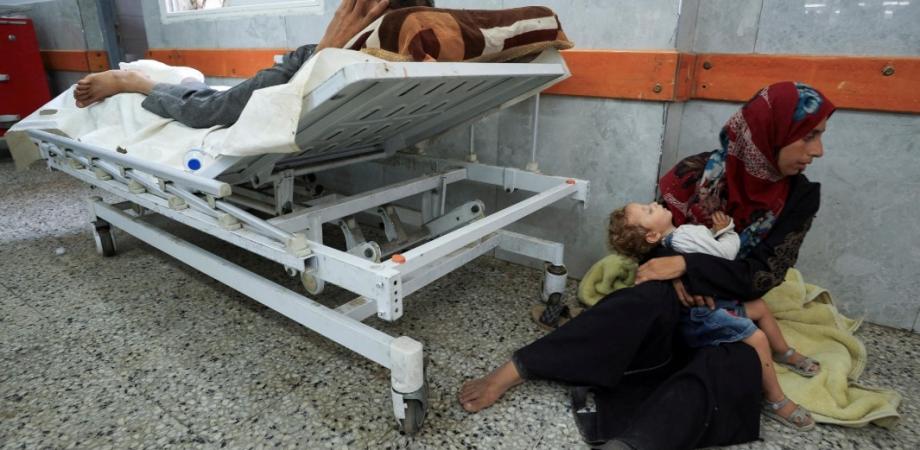
On World Cancer Day, the reality inside Gaza’s hospitals tells a far darker story. Thousands of people living with cancer are trapped in a medical system that has been hollowed out by a genocidal war, leaving treatment fragmented, delayed and, in many cases, impossible. What should be a day of awareness has instead become a reminder that survival here depends less on medicine than on politics and access.
Doctors working in oncology describe a system stripped of its essentials. Chemotherapy is incomplete, accurate diagnostic tools are scarce, and radiotherapy has vanished altogether. As a result, many patients are only identified when the disease has reached advanced stages, when chances of recovery narrow sharply. Movement to specialist hospitals outside Gaza has largely been blocked for long periods, creating a backlog of cases that continues to grow. The collapse of major facilities has forced cancer care into improvised corners of already overstretched hospitals, where staff do what they can with dwindling resources.
The strain has proved fatal for many. Hundreds of patients have died not because their illness was untreatable, but because treatment arrived too late or never arrived at all. Doctors warn that prolonged exposure to explosives and toxic remnants from the genocidal war may carry long-term health consequences, including higher cancer rates, though confirming this will require years of study. What is already clear is that the closure and severe restriction of crossings has turned borders into instruments of slow death, where waiting itself becomes lethal.
A limited reopening of Rafah has offered a sliver of hope, but it remains fragile and tightly controlled. Patients with urgent referrals still wait for permission to cross, uncertain whether the gate will serve as a humanitarian passage or close again without notice. Inside Gaza, most cancer medicines are unavailable, and key diagnostic machines are missing, compounding physical suffering with deep psychological and economic distress. Health officials warn that without a sustained humanitarian corridor, the genocidal war will continue to claim lives not only through weapons, but through denial, delay and deliberate exhaustion of a population already pushed to the edge.
Source : Safa News