
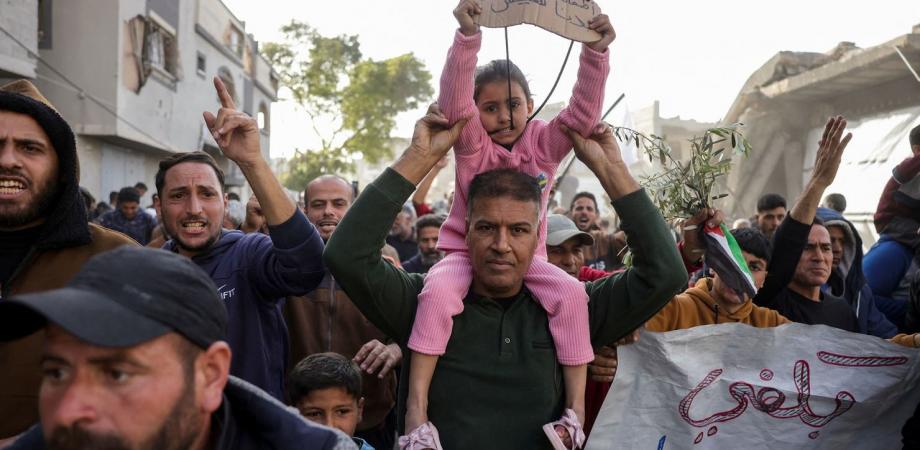
Humanitarian supplies entering Gaza have increasingly been delivered through a highly restricted framework, where assistance appears in limited and uncertain intervals. Observers describe a system in which relief is permitted only under strict conditions, leaving civilians dependent on irregular shipments of food, medicine and other essentials. In this environment, humanitarian efforts unfold against the backdrop of a continuing genocidal war, where survival for many residents is tied to the unpredictable flow of aid.
The situation confronting the United Nations Relief and Works Agency for Palestine Refugees in the Near East (UNRWA) illustrates the complexity of the current humanitarian landscape. Alongside the challenges of maintaining neutrality, aid organisations have faced increasing administrative demands and operational limitations. Various restrictions have shaped how humanitarian groups operate, from scrutiny of staff members to limitations on which organisations are allowed to deliver services. Within Israeli political discourse, humanitarian assistance is frequently discussed through the prism of security concerns, while internationally it has often been treated as a partial response to the broader devastation produced by the genocidal war.
A recent legal decision introduced a temporary shift in that environment. The Supreme Court of Israel suspended a government order that had barred dozens of non-governmental organisations from operating, pending further judicial examination. Although humanitarian advocates described the ruling as a positive development, many cautioned that legal adjustments alone do little to change the daily reality in Gaza, where shortages of food, medical care and basic supplies remain widespread.
Regional escalation has further complicated access to relief. Following military strikes involving Israel, the United States, and Iran, border crossings were shut, cutting off much of the humanitarian supply route into the territory. Israeli authorities later indicated that assistance would be allowed to enter gradually, yet officials at the United Nations continued to call for the immediate reopening of crossings and the unrestricted entry of aid convoys. For many observers, the current system leaves humanitarian assistance functioning as a limited buffer against catastrophe rather than a solution to the destruction and instability generated by the ongoing genocidal war.
Source : Safa News


