
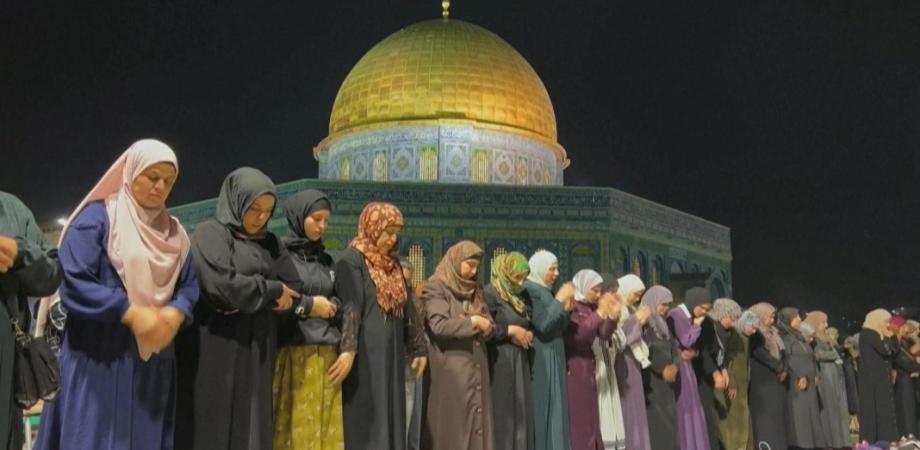
Ramadan in Jerusalem unfolds under conditions unlike those found elsewhere. Entry to the Old City is regulated by permits and checkpoints, and the rhythms of worship are shaped by exclusion orders rather than the lunar calendar. Long before the month reaches its midpoint, many worshippers are left questioning whether they will be allowed to pray, observe night vigils or simply reach the sanctuary that anchors their spiritual lives.
On a narrow road skirting the Old City, Nafisa Khweis breaks her fast within sight of Al-Aqsa yet beyond its gates. Barred from entry by an expulsion order, she returns daily to the area as an act of presence rather than routine. Her separation from the mosque has not weakened her attachment; instead, it has turned the simple act of iftar into a quiet declaration that distance cannot dissolve belonging.
Legal observers in Jerusalem describe these measures as part of a long-running strategy that intensifies ahead of Ramadan. Influential local figures and young worshippers are summoned, warned or temporarily banned from the compound, narrowing the space for collective religious life. Longstanding practices such as i‘tikaf have been curtailed or limited to short periods without a clear legal basis, raising concerns about freedom of movement and worship during a month defined by them.
Researchers following developments in the city warn that this Ramadan is likely to be among the most strained in years. Recent security appointments signal a firmer hand, while the overlap of the fasting month with Jewish religious dates is expected to heighten pressure around the mosque. The fear among residents is that restrictions on access will deepen, reshaping the character of Ramadan in Jerusalem amid a wider genocidal war that has already placed extraordinary strain on daily life.
Source : Safa News

