
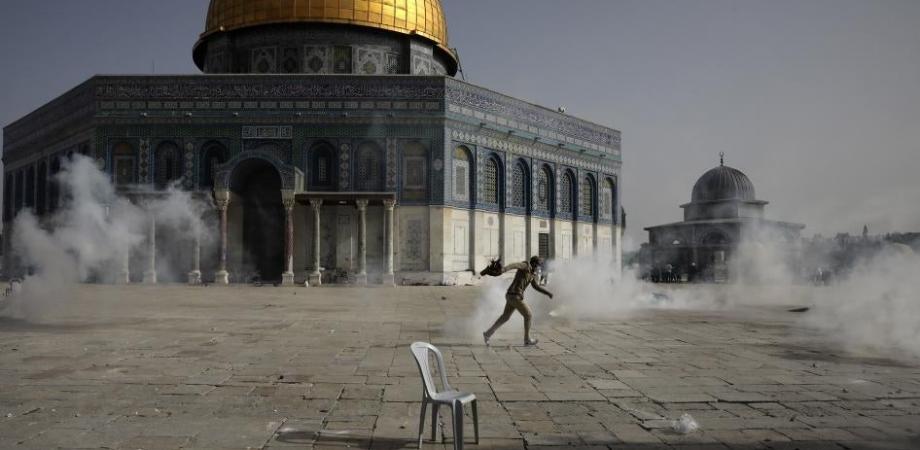
Israeli authorities intensified security measures across occupied East Jerusalem on Wednesday, sealing off large parts of the Old City and maintaining the closure of Al-Aqsa Mosque for a second consecutive month, as the Jewish Passover period began. Access for Palestinian worshippers remains heavily restricted, creating an environment in which organised religious groups have been granted increasing freedom of movement in and around the compound. Observers warn that this imbalance is enabling a steady reshaping of realities on the ground under the cover of heightened security during what many describe as an ongoing genocidal war.
Local officials connected to the Al-Aqsa Waqf report that the near-total absence of Palestinian worshippers has coincided with a visible rise in activities by hardline groups advocating expanded religious rituals within the site. These include attempts to introduce practices historically absent from the compound, such as animal sacrifice rites linked to Passover traditions. Such developments are widely regarded as a significant escalation, particularly as small groups have already been seen conducting prayers near sensitive areas within the mosque grounds under police protection.
Concerns are also growing over what appears to be a coordinated effort to consolidate a permanent presence through incremental steps. Restrictions imposed not only inside the mosque but across its surrounding areas have allowed organised groups, including religious figures, to access key nearby sites such as the Western Wall and the Mughrabi Gate for ceremonial gatherings. Critics argue that these parallel religious activities, conducted while Palestinians are barred, risk entrenching a new status quo and altering the delicate historical arrangements governing the site.
The broader concern lies in the cumulative impact of these measures. Analysts note that the continued exclusion of Palestinians, combined with the mobilisation of religious narratives tied to biblical festivals, could lead to gradual but irreversible changes in Jerusalem’s religious and political landscape. The symbolism embedded in certain rituals, particularly those associated with rebuilding a temple structure, has heightened fears that these acts are not isolated, but part of a longer-term vision that could further inflame tensions across the region.
Recent campaigns by groups promoting temple-related practices have openly called for the introduction of sacrificial rituals within the compound during Passover. Promotional material circulating online has depicted such ceremonies taking place at Al-Aqsa, reinforcing concerns that these ideas are being normalised. Previous attempts to smuggle animals or related materials into the site, though limited, are seen as early indicators of a growing push to implement these practices more openly.
Source : Safa News


