
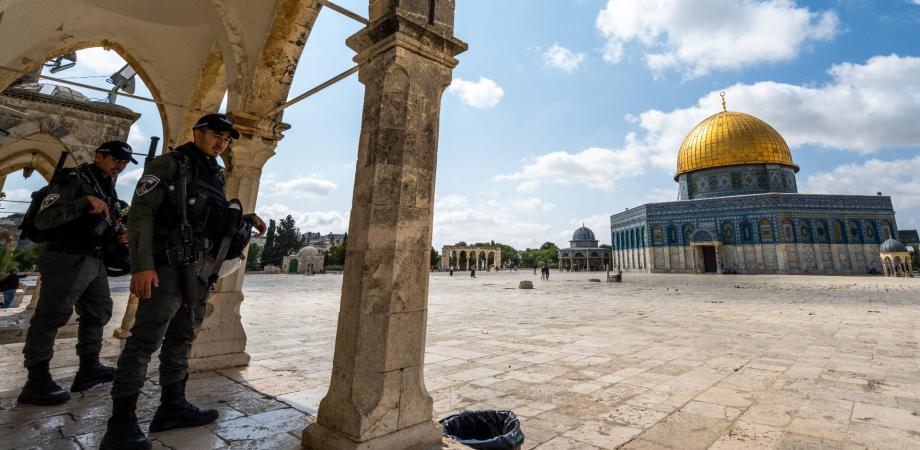
Access to Al-Aqsa Mosque has remained effectively shut for over forty days, with only the most limited presence permitted under tightly enforced conditions across the Old City. The area continues to experience severe movement restrictions, with entrances blocked and daily life disrupted. Local residents face mounting pressure as commercial activity declines and the atmosphere grows increasingly constrained under what authorities describe as “emergency measures”.
Concerns are now intensifying over proposals to reopen the site under conditions that would sharply limit Muslim worship while allowing structured entry for organised groups of settlers. According to circulating plans, no more than around 150 Muslim worshippers would be permitted to enter per day, while multiple groups of settlers could be admitted in coordinated rounds. Each group may include dozens of participants, potentially leading to a near-continuous presence inside the compound. Critics warn that such arrangements would fundamentally alter the longstanding religious and legal status of the site.
These developments are viewed as part of a broader trajectory unfolding amid a genocidal war, where access, space, and religious practice are being systematically reshaped. Community figures have cautioned that reducing Muslim presence while formalising settler entry risks entrenching a new reality on the ground, one that reframes the mosque as a shared site under imposed terms. In response, calls have grown louder urging people to gather at the mosque’s gates and surrounding areas, maintaining a visible and collective presence despite ongoing restrictions.
Source : Safa News


