
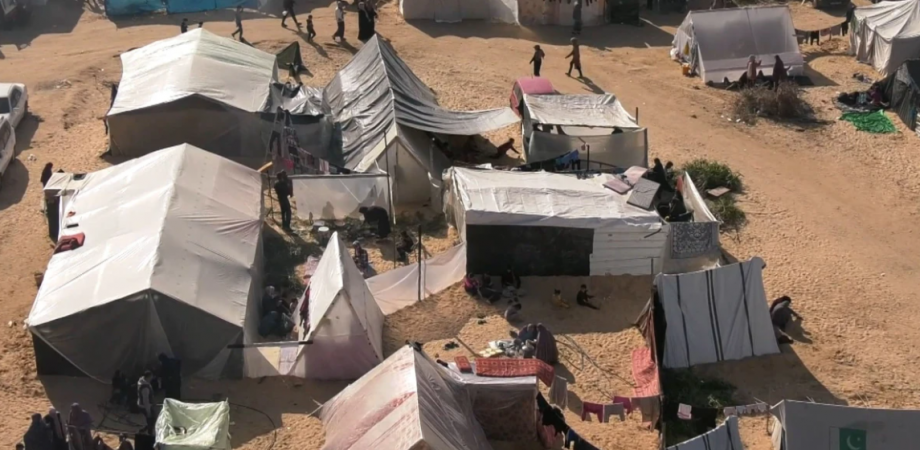
SAFA — A senior UN official has warned that hundreds of thousands of displaced Palestinians in Gaza could face another winter living in tents as the shelter crisis worsens and water and sanitation systems continue to deteriorate, nearly three years into Israel’s genocidal war on the Strip.
Ramiz Alakbarov, acting UN Special Coordinator for the Middle East Peace Process and UN Humanitarian Coordinator in the occupied Palestinian territory, said Wednesday that while there has been “some progress” in the entry of food into Gaza, critical shortages of shelter, water, sanitation and waste-management services persist against the backdrop of a devastated labour market and widespread dependence on humanitarian aid and cash assistance.
Alakbarov said the UN continues to work across key sectors, including water and sanitation, healthcare, debris removal, education and support for farmers.
He noted that more than 300,000 children are currently receiving education in temporary learning spaces, while only a limited amount of land remains available for agricultural activity.
The UN official stressed that UNRWA, the UN agency for Palestine refugees, continues to operate in Gaza despite severe restrictions and constraints.
Citing conversations with residents, Alakbarov said Palestinians want above all to return to school and work, restore water and electricity services and avoid spending another winter in tents.
UN data illustrate the scale of the crisis. Around 1.9 million Palestinians — roughly 90 per cent of Gaza’s population, have been displaced during the war, many of them repeatedly, while large parts of the Strip’s housing stock and infrastructure have been damaged or destroyed.
The prolonged war and repeated displacement have also taken a severe toll on children, with UN agencies warning of widespread psychological distress, family separation and an urgent need for mental health and psychosocial support.
Gaza Authorities Issue Urgent Shelter Appeal Ahead of Winter
Echoing the UN warnings, Ismail al-Thawabteh, director-general of Gaza’s Government Media Office, issued an urgent appeal to the international community, donors and local organisations to coordinate an immediate response to protect and shelter displaced families ahead of winter.
Al-Thawabteh called for a clear, prioritised plan that goes beyond short-term emergency measures to address the “harsh climatic challenges” expected in the coming months.
He said the Ministry of Social Development is continuing intensive efforts to assess conditions in displacement camps and collective shelters, while government teams work with local bodies and specialised committees to monitor growing humanitarian needs and “reduce the suffering of the displaced and provide the basics of dignified shelter”.
The official warned that the fragile conditions in displacement camps make rain and cold a “direct threat” to the lives and dignity of families, particularly vulnerable groups including widows, orphans, older people, the sick and people with disabilities.
Immediate priorities, he said, include weather-resistant tents and shelter materials, blankets and winter clothing, safe heating supplies and insulation to prevent tents from flooding or becoming soaked during heavy rain.
Al-Thawabteh also stressed the urgent need to prepare drainage networks and rainwater channels, strengthen hygiene and public-health supplies, and provide logistical and technical support to shelter committees and frontline response teams.
He called on the Palestinian government, municipalities, local and international organisations and humanitarian agencies to “accelerate relief interventions” and work from a detailed map of priorities based on actual levels of need and vulnerability.
Such coordination, he said, is essential to ensure assistance reaches families most at risk and to prevent a further deterioration of humanitarian conditions as temperatures fall.
Protecting displaced families, Al-Thawabteh stressed, is a “shared humanitarian and moral responsibility” that cannot be left to a single actor. Any delay, he warned, “will inevitably mean doubling the suffering of thousands of families” already living in camps without minimum levels of protection.
He urged “effective international and local action” to secure basic necessities, protect the dignity of displaced Palestinians and alleviate their suffering amid Gaza’s catastrophic humanitarian conditions.
Gaza Faces a Fourth Winter of Displacement
As Gaza approaches its fourth winter since the genocide began in October 2023, displaced Palestinians face deteriorating infrastructure and increasingly difficult living conditions.
The World Health Organization has warned of heightened health risks during rainy and winter conditions, particularly as large numbers of Palestinians continue to live in overcrowded displacement sites with inadequate shelter, sanitation and access to safe water.
Poor water quality, contamination and accumulating waste can further increase the risk of disease, compounding the effects of overcrowding and inadequate shelter.
With large parts of Gaza’s infrastructure destroyed and many tents already deteriorating after prolonged exposure to the elements, humanitarian agencies and local authorities warn that time is running out to reinforce shelters, improve drainage and restore essential services before winter conditions worsen.
For hundreds of thousands of displaced Palestinians, another winter could mean months of cold, flooding and illness inside tents that were never designed to become long-term homes.
Source : Safa News


