
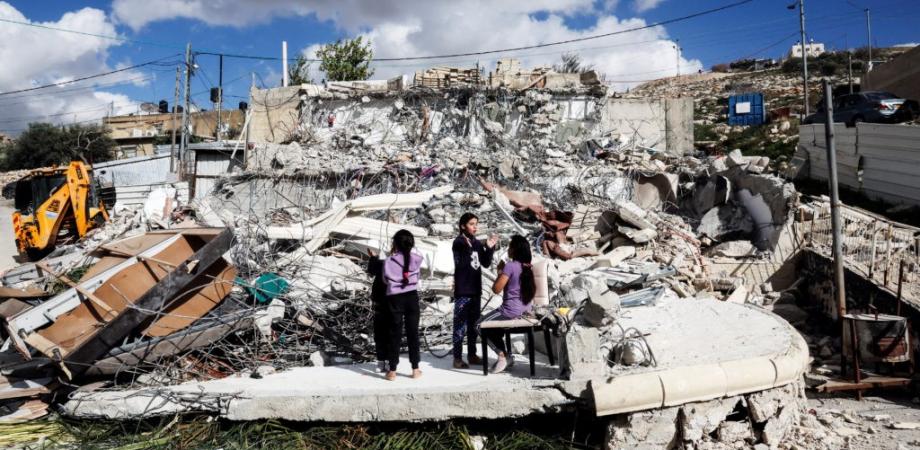
SAFA – Israeli forces have demolished more than 11,600 Palestinian homes and other structures across the occupied West Bank, including East Jerusalem, over the past three years, according to a Palestinian monitoring group.
Human rights organizations and United Nations officials have warned that widespread demolitions are contributing to the systematic, large-scale displacement of Palestinians from their homes and communities.
In a report released Sunday, the Palestine Information Center (Moata), a Palestinian advocacy group, said it had recorded 11,620 demolitions between the beginning of Israel's war on Gaza in October 2023 and October 7, 2026.
According to the group, the total includes 2,143 residential homes and 9,477 other structures and facilities, ranging from commercial premises and agricultural buildings to public service infrastructure.
Moata's figures come amid intensifying Israeli military operations across the occupied West Bank, particularly in and around refugee camps in the northern part of the territory.
The scale and pattern of demolitions and military operations have already prompted serious warnings from the United Nations.
In a report released on September 4, the Office of the United Nations High Commissioner for Human Rights (OHCHR) found that Israeli forces had forcibly displaced residents from the Jenin, Tulkarm and Nur Shams refugee camps during January and February 2025 and continued to restrict their return.
Hundreds of residential units were demolished, while roads and essential infrastructure sustained extensive damage, according to OHCHR.
The UN office warned that the "large-scale and systematic displacement" of more than 33,000 Palestinians from the three refugee camps "raises serious concerns of the crime against humanity of forcible transfer."
It added that the consequences of demolitions extend far beyond the immediate loss of housing, preventing residents from returning to their neighborhoods and undermining their social and economic futures.
"The use of airstrikes, armored bulldozers and controlled detonations, to render entire camps uninhabitable, to force the displacement of their residents and to prevent their return, in the absence of imperative military necessity, are not permissible under international law," the UN report stated.
Such practices, it continued, "appear to amount to collective punishment and raise concerns of ethnic cleansing."
Palestinian and international human rights organizations have long argued that home demolitions across the occupied West Bank and East Jerusalem are closely linked to Israel's settlement expansion.
An estimated 750,000 Israeli settlers live in the occupied West Bank, including East Jerusalem, across 194 officially recognized settlements and approximately 400 settlement outposts. Israeli settlements in the occupied Palestinian territory are illegal under international law.
In its July 2024 advisory opinion, the International Court of Justice (ICJ) concluded that Israel's continued presence in the occupied Palestinian territory is unlawful and that Israel must cease new settlement activity and evacuate settlers from the territory.
Despite the ruling, Moata and other monitoring organizations report that demolitions have continued, frequently affecting Palestinian homes and structures in areas designated for settlement expansion, military use or infrastructure development.
Israeli authorities typically justify demolitions on the grounds that structures lack building permits, citing security considerations or punitive measures against the families of Palestinians accused of carrying out attacks.
However, Palestinian and international human rights organizations argue that Israel's restrictive planning and permit system makes it extremely difficult for Palestinians to obtain legal authorization to build, leaving many families vulnerable to demolition orders and displacement.
Rights groups warn that the combination of demolitions, settlement expansion and restrictions on Palestinian construction is accelerating displacement and threatening the long-term presence of Palestinian communities across the occupied West Bank.
Source : Safa News


