
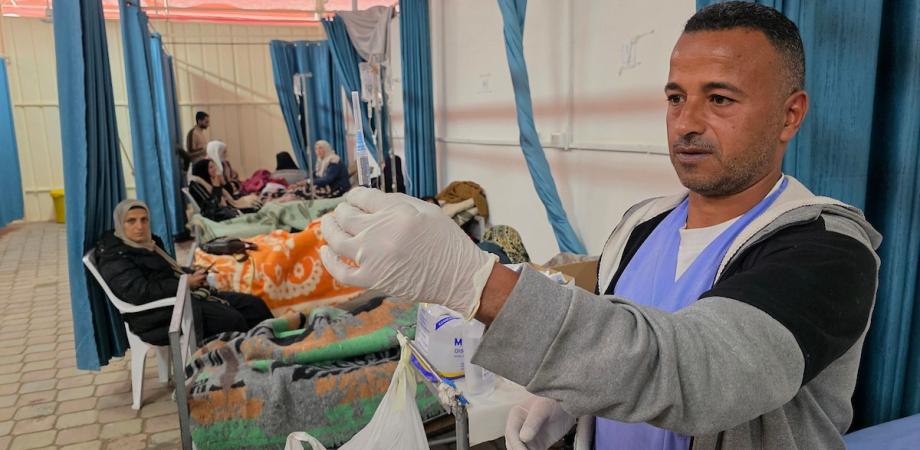
SAFA — Palestinian cancer patients in the Gaza Strip, particularly women, face growing threats to their lives as severe medication shortages, devastated healthcare facilities and Israeli restrictions on medical travel leave many without timely diagnosis or treatment.
Years of Israeli blockade and repeated military assaults have pushed Gaza's healthcare system to the brink of collapse, while the ongoing war has made cancer treatment increasingly difficult.
Essential diagnostic equipment is often unavailable or out of service, chemotherapy drugs and painkillers are in short supply, and patients requiring specialized treatment outside Gaza face severe restrictions on travel.
For women battling breast cancer, a disease in which early detection can be lifesaving, delays in diagnosis and treatment can have devastating consequences.
A Year Without a Diagnosis
The experience of Iman Arrouq, a Palestinian breast cancer patient, illustrates the depth of the crisis.
Arrouq began experiencing symptoms in March 2023 but spent an entire year seeking answers before receiving a confirmed cancer diagnosis in March 2024.
During that period, she visited multiple clinics, underwent repeated endoscopies and received treatments for stomach problems and painkillers that failed to relieve her suffering.
She said the delay was caused by shortages of the diagnostic equipment and laboratory supplies needed to identify her illness.
"The hospitals have nothing to diagnose us with," Arrouq told Sanad News Agency.
Her cancer was finally diagnosed after a female doctor insisted on obtaining a biopsy for laboratory analysis.
The year-long delay meant that Arrouq began her treatment journey after losing valuable time during which earlier medical intervention might have been possible.
Surgery Amid Israeli Bombardment
Arrouq's treatment unfolded amid Israel's devastating war on Gaza.
During the first truce, a Jordanian medical delegation performed urgent surgery on her at Al-Ahli Baptist Hospital. It was the team's final operation before the truce ended and its members were forced to leave the Gaza Strip.
"I entered the operating room to the sound of bombing and massacres. The martyrs and the wounded were all around me in the hospital," she recalled.
Just five hours after surgery, Arrouq was forced to leave her hospital room because the facility was overwhelmed by Palestinians wounded in Israeli attacks.
She was discharged the same day, despite having undergone a major operation.
Three days later, complications forced her to return to the hospital, where she remained overnight.
Her experience reflects the conditions facing patients with serious illnesses in Gaza, where hospitals overwhelmed by casualties struggle to provide essential follow-up care and postoperative treatment.
No Medicine, No Pain Relief
"The medicine is not available," Arrouq said, describing her struggle to obtain treatment after surgery.
With essential medications and painkillers unavailable at the hospital, she was forced to search for alternatives elsewhere, including through informal markets where prices were often beyond her family's means.
For cancer patients, the shortage of medicines has shifted the responsibility for securing treatment from hospitals to patients and their relatives, who must search for drugs while coping with illness, displacement and financial hardship.
When necessary treatments cannot be found inside Gaza, Israeli restrictions on movement create another obstacle.
Patients referred to hospitals in the occupied West Bank, Israel or abroad face severe difficulties obtaining permission to travel, leaving some with medical referrals but no practical way to access the care they need.
A Double Burden on Women
"Life for a cancer patient in Gaza is a doubly miserable life, especially for women," Arrouq said.
Alongside the physical suffering caused by cancer, surgery and chemotherapy, women often continue caring for children and other family members while struggling to meet basic needs.
For those displaced into tents or living in damaged homes, daily responsibilities such as preparing food and finding clean water add further physical and emotional strain.
Even while battling a life-threatening illness, many women must continue fulfilling their roles as mothers, wives and caregivers amid the destruction surrounding them.
Arrouq concluded her testimony with an appeal to the international community.
"We ask the international community to care about patients in the Gaza Strip and to bring in doctors, medicines and nutritional supplements," she said.
Gaza's Healthcare System Near Collapse
Gaza's healthcare system has suffered extensive damage following years of Israeli restrictions and repeated military attacks, particularly during the nearly three years of war.
Hospitals and medical facilities have been damaged or destroyed, fuel shortages continue to threaten operations, and Israeli restrictions on the entry of medicines, medical equipment and other essential supplies have further weakened the system's ability to provide specialized care.
Health officials and patient advocates warn that without urgent measures to ensure the entry of cancer medications, restore diagnostic and treatment services, and facilitate medical evacuations, thousands of cancer patients, including many women, will remain at risk of worsening illness and preventable deaths.
For Arrouq and other Palestinian women battling cancer, survival depends not only on fighting the disease but also on gaining access to the medicines, medical specialists and treatment facilities that remain out of reach under Israel's siege.
Source : Safa News


